Updated February 3, 2026 02:20PM
Why Winter Is the Best Time to Visit Zion National Park
With its scenic drive open for drivers and permits to its most popular trail easier to snag, our national parks columnist argues this is the ideal season to visit Zion.
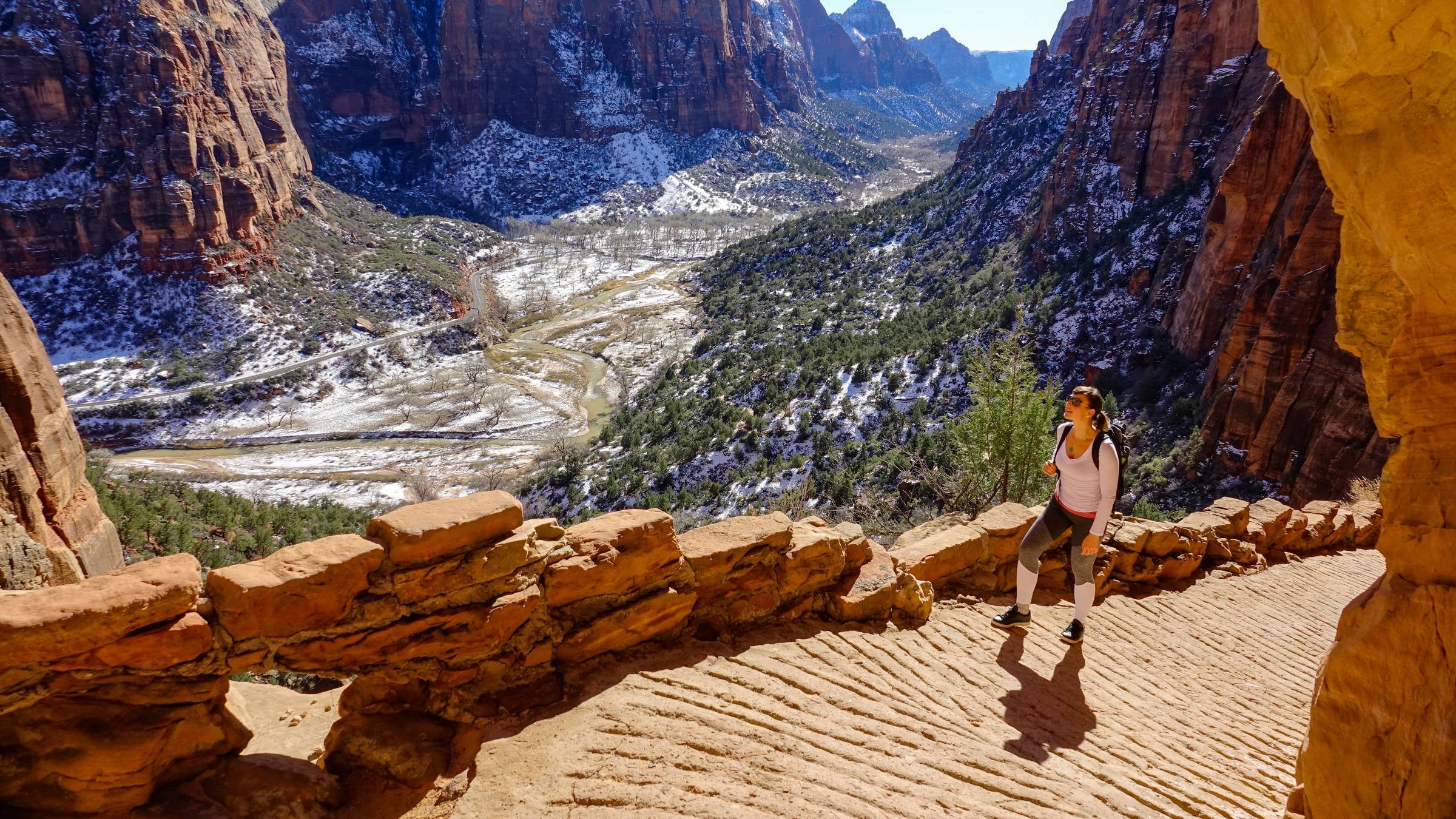
A hiker walks along the Angels Landing trail on a sunny winter day. (Photo: Getty)
Zion National Park is crowded. There’s no way to sugarcoat it. In the last decade, the small park in southern Utah has risen up the ranks to become the second most visited national park in the country, with 4.94 million people a year exploring its canyons.
That’s a lot of boots on the ground, especially when you consider Zion is just a fraction of the size of the other top five national parks. Grand Canyon, for example, which comes in third on the list just behind Zion with 4.91 visitors, is 2.2 million acres. Zion is just 176,000 acres, and most visitors are funneled along the same corridor surrounding the 15-mile-long Zion Canyon Scenic Drive.
Social media has helped in that rise, as Zion offers some of the most dramatic, Instagram-friendly landscapes in the entire national park system. A selfie on Angels Landing, or deep inside the Narrows, is a sought-out photo.
ADVERTISEMENT
The park is so popular that personal vehicles aren’t allowed on the scenic drive for the majority of the year (shuttle buses are mandatory), and you have to be a lottery winner to set foot on the park’s most popular trail, Angels Landing. As of 2022, all would-be hikers have to enter a lottery system and hope their number gets called to win a permit to hike that trail. I’ve visited Zion several times over the last 20 years and took note of how the growing crowds and added logistics of having to catch shuttles and score permits have made the park more difficult to explore during the busy, warm months of the year.
Here’s a solution: visit Zion National Park in the winter, and all of those logistical issues disappear. I spent two glorious days inside Zion National Park in mid-December and I didn’t have to deal with any of the crowds that I found on countless other visits to the park during summer months. It felt like I was traveling back in time to when the park wasn’t on everyone’s radar. Was it cold? A bit. Zion will occasionally see snow, but the park has mild temperatures compared to some of the higher elevations in Utah. In the mornings it was in the low 40s at the beginning of my adventure and the temps rose into the 50s by the afternoon. I’d describe it as “chilly” not “cold.”
With proper cold-weather hiking gear (hat, gloves, and a puffy jacket) I was able to tick off the park’s most sought-after bucket list adventures without worrying about crowds or shuttle schedules.
ADVERTISEMENT
Here are five reasons why I think Zion is better in winter.
Zion Scenic Drive is Open
Getting around Zion is very straightforward. The majority of the park’s destinations are located along the 15-mile Zion-Mount Carmel Highway. In the summer, this gorgeous highway is closed to private vehicles during the day. I have no problem with public transportation in our national parks—it’s a safer, more eco-friendly way to move a lot of people through a fragile landscape—but it causes some logistical issues. In Zion, you can wait in long lines to catch a bus at the Visitor Center at the base of the park, and then you have to squeeze your adventures into the shuttle’s schedule. Hopping on a bus on a whim to check out one more trail before the end of the day isn’t as easy as deciding to pull over in your own vehicle when you see something pretty that you want to explore.
This is one of the top reasons why I like Zion in the winter. With unfettered access to the park, you have more control over your day. You can do sunrise and sunset hikes, hurry from one trailhead to another, or just pull over at a pretty parking lot and have a picnic.
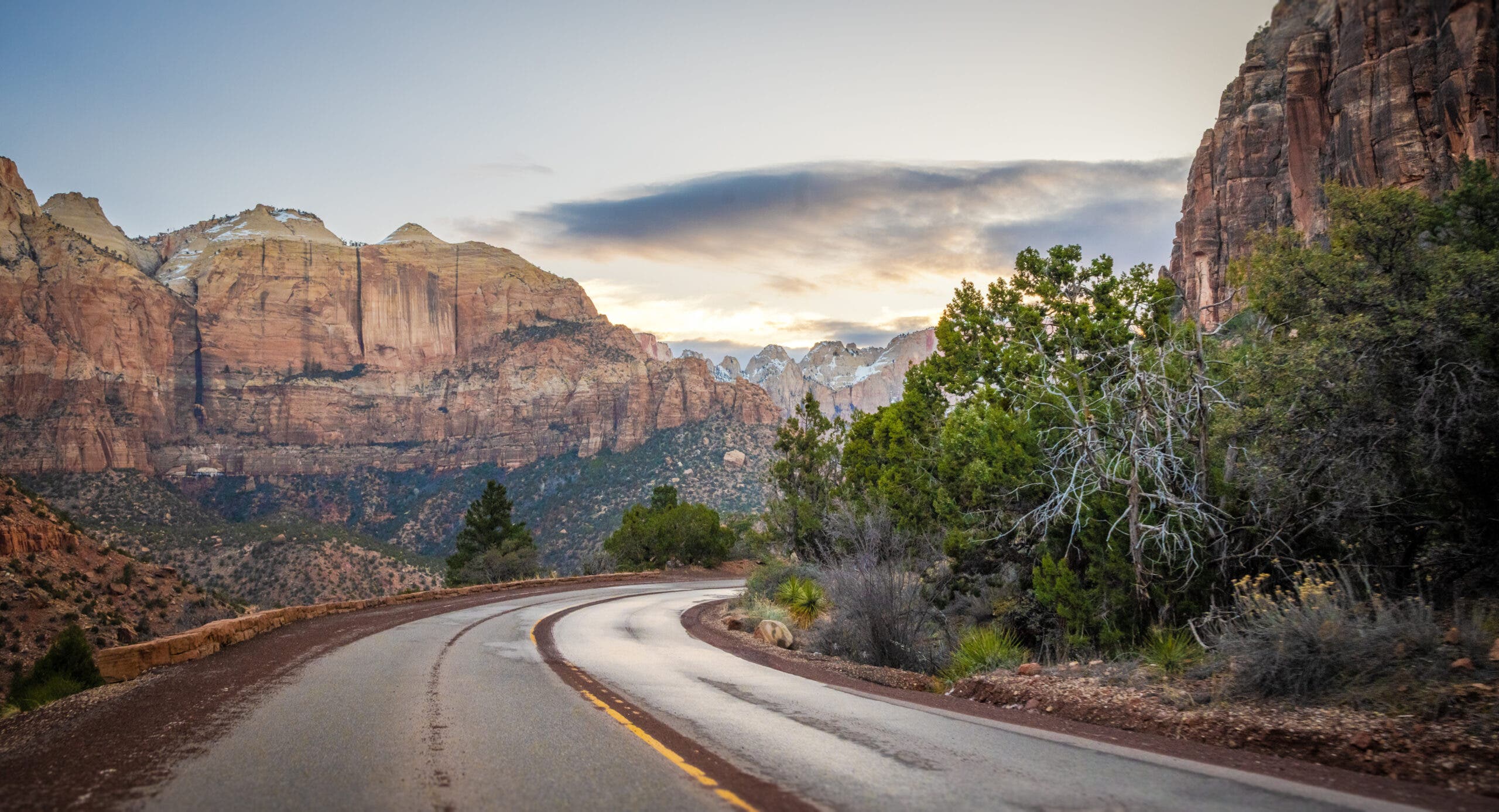
One thing to note, the Kolob Canyons road is often closed during winter. This is a scenic drive through the higher elevations of the park and completely separate from the main unit where the majority of Zion’s most popular attractions reside. The Kolob Canyons area is beautiful, and absolutely where you should go to avoid the crowds in the summer, but it’s winter, so you should focus on the heart of the park while it’s empty.
ADVERTISEMENT
You Can Get a Permit to Hike Angels Landing
The only way you can hike Angels Landing at any point during the year is by entering the park’s lottery system and winning a permit. Your best chance of success is by applying for the permit well in advance during the two established windows for the Seasonal Lottery (between Oct. 1 and Oct. 20 if you want to hike during the winter; between Jan. 1 and Jan 20 if you want to hike between March through May). There’s also a Day Before Lottery, where you can apply between 12am and 3pm the day before you hope to hike.
Getting one of these permits during peak season is difficult. They call it a “lottery” for a reason. You have much better chances of landing a permit during the winter when there are far fewer people entering the lottery system. I was able to score a Day Before Lottery permit on my first try during my most recent visit, and when I hiked the trail on a crisp December morning, I shared the top of Angels Landing with just three other hikers. That kind of solitude is unheard of during the summer.
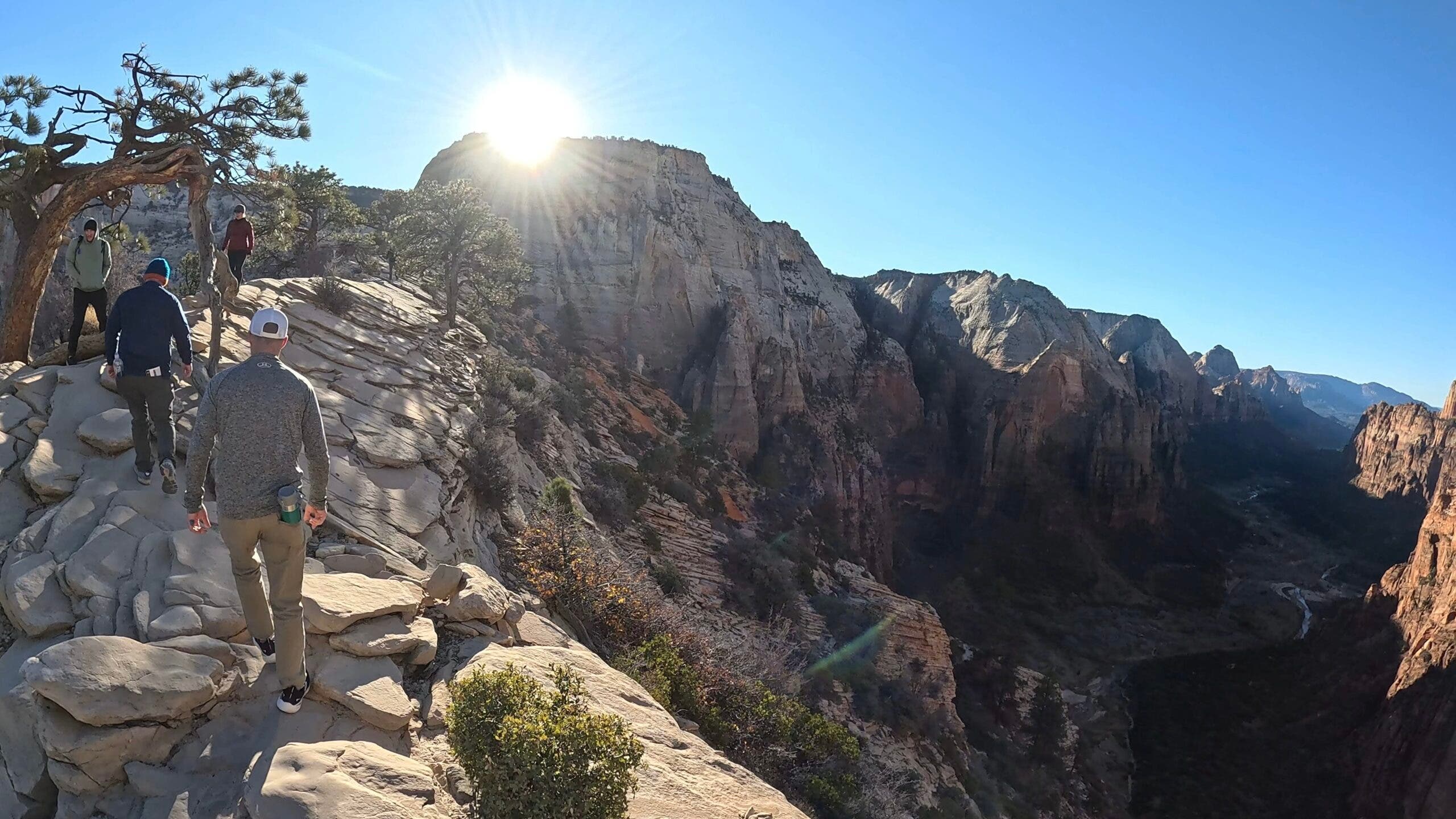
Don’t underestimate this adventure. It’s a legitimately difficult hike that begins in the valley floor next to the Virgin River and climbs more than 2,000 feet to the top of the sandstone precipice that is so isolated, one local minister claimed only an angel could land there. You don’t need a permit to hike the majority of this trail, but the last half mile is restricted to ticket holders. Even in the dead of winter, I saw NPS employees checking permits at Scouts Lookout, where the Angels Landing trail branches off from the West Rim trail, and the final push to Angels Landing begins. That last stretch includes some rock scrambling with the aid of bolted-in chains. It’s not the hike to attempt if you’re scared of heights as the exposure is daunting. During my adventure, I saw a couple of people who decided to turn back because the extreme heights made them nervous.
ADVERTISEMENT
If you do the Angels Landing hike in the winter, be prepared with the right gear. I got warm on the first two miles of the hike, but as soon as I hit the Angels Landing scramble, the wind picked up and I got pretty chilly. Bring layers that you can remove and put on easily, and don’t forget your gloves. You’ll be grabbing chains for much of the last part of the hike, and that steel is cold. I know because I forgot my gloves and totally regretted it.
Also, your permit will come in the form of an email confirmation. Make sure you print it, or take a screenshot. This is your proof of a permit, and there’s no service at Angels Landing where an NPS employee might be checking.
The Narrows Is Better in Winter
That’s a controversial statement because the Narrows is arguably the quintessential summer hike, not just in Zion, but in the entire national park system. Why? Because you’re treading through the Virgin River for miles as the canyon walls rise steeply on either side of the corridor. There’s no way to avoid the water so you’re going to get wet. You’d think that hiking thigh-deep through a river would be more appealing in the summer, but with the right gear, the experience is actually warmer in the winter.
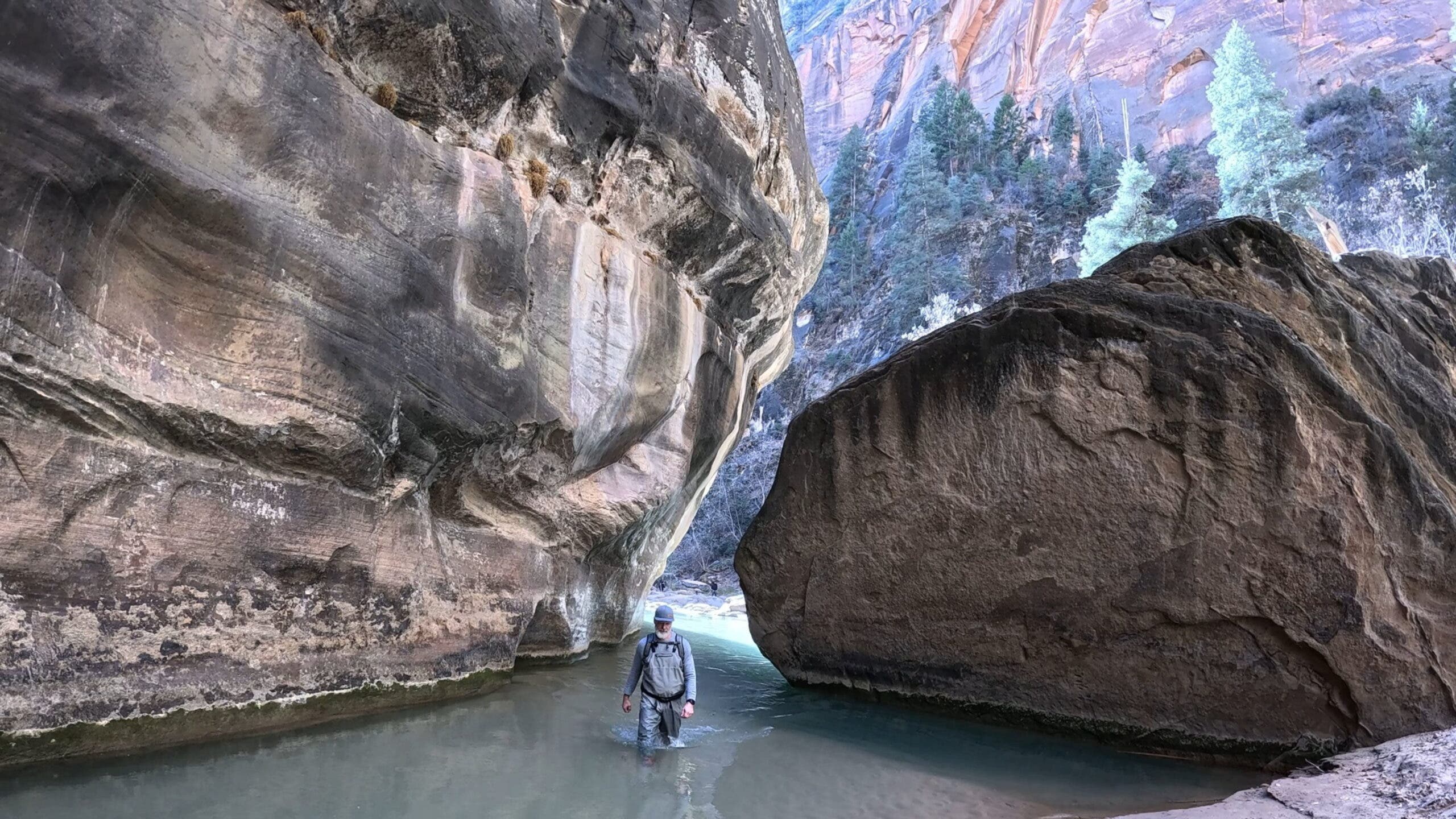
The key is to rent a dry suit package from one of the outfitters in Springdale, which will come with bibs, neoprene booties, and canyoneering boots designed for handling water and rocks. I rented my kit from Zion Outfitter, just before the entrance of the park, and added a waterproof backpack too ($75 for all of it). The air temps were in the low 40s during my morning trek, and the water temps were even colder, but I was so warm, I ended up ditching layers during my hike. Not only was I toasty, but by the time I got to Wall Street, which is the point in the canyon where the walls narrow to about 20 feet across, I had the entire scene to myself for about 20 minutes.
If you show up to hike the Narrows on a warm day in the summer, you’ll be slogging through the river shoulder to shoulder with hundreds of other trekkers. The crowds that flock to this particular adventure have turned me off of the Narrows in the past, but I’m so glad I took the time to explore the canyon in the winter. It’s an absolutely stunning adventure that I would put on the top of any national park traveler’s bucket list.
ADVERTISEMENT
Springdale Is a Sleepy Town Again
Springdale, the primary gateway town that sits on the edge of the southern entrance to the park, is absolutely buzzing during the summer. If you want to score a hotel room, you need to plan well in advance and expect to pay premium prices. You’ll also likely stand in line to eat dinner. That’s not the case during winter. The town is sleepy, much like it was 20 years ago, but not dead. Restaurants and hotels are still open, you just don’t have to share them with 4.1 million other people.
I like the location of The Red Cliffs Lodge Zion, a Tribute Portfolio Hotel, which is in the heart of downtown within walking distance of most restaurants and coffee shops, but less than a mile from the entrance of the park. There are cozy fire pits scattered throughout the property, as well as a heated pool and hot tub. I finished each day of my trip with a soak in the hot tub, which has amazing views of the Virgin River’s sandstone canyon walls, which turn fiery red as the sun sets against the slabs. The hotel also partners with local guides if you want to tack on an adventure like canyoneering to your trip. The in-house restaurant, Scout Bar and Grill, serves a delicious breakfast that starts at 6am, so you can fuel up and hit the park early. Order the Denver Omelette.
For a winter treat, spend a day soaking in the new Zion Canyon Hot Springs, just a 30-minute drive from the park’s west entrance. There’s over 50 natural geothermal and mineral pools her to try out.
ADVERTISEMENT
You’ll Be Able to Add Extra Hikes
Zion is hot during the summer when most people visit. This is the desert, after all, and summer temps often reach triple digits. I took my family to Zion when my kids were four, and the crowds coupled with the extreme heat sent us packing for Las Vegas and the promise of air conditioning and swimming pools. I’m not proud of it, but it’s the truth. I remember trying to hike the 1-mile out and back Canyon Overlook Trail with my kids, and spending the entire time trying to find shade to avoid heat stroke. I don’t think we ever made it to the end of that trail, and we certainly weren’t looking to add on extra hikes throughout the day.
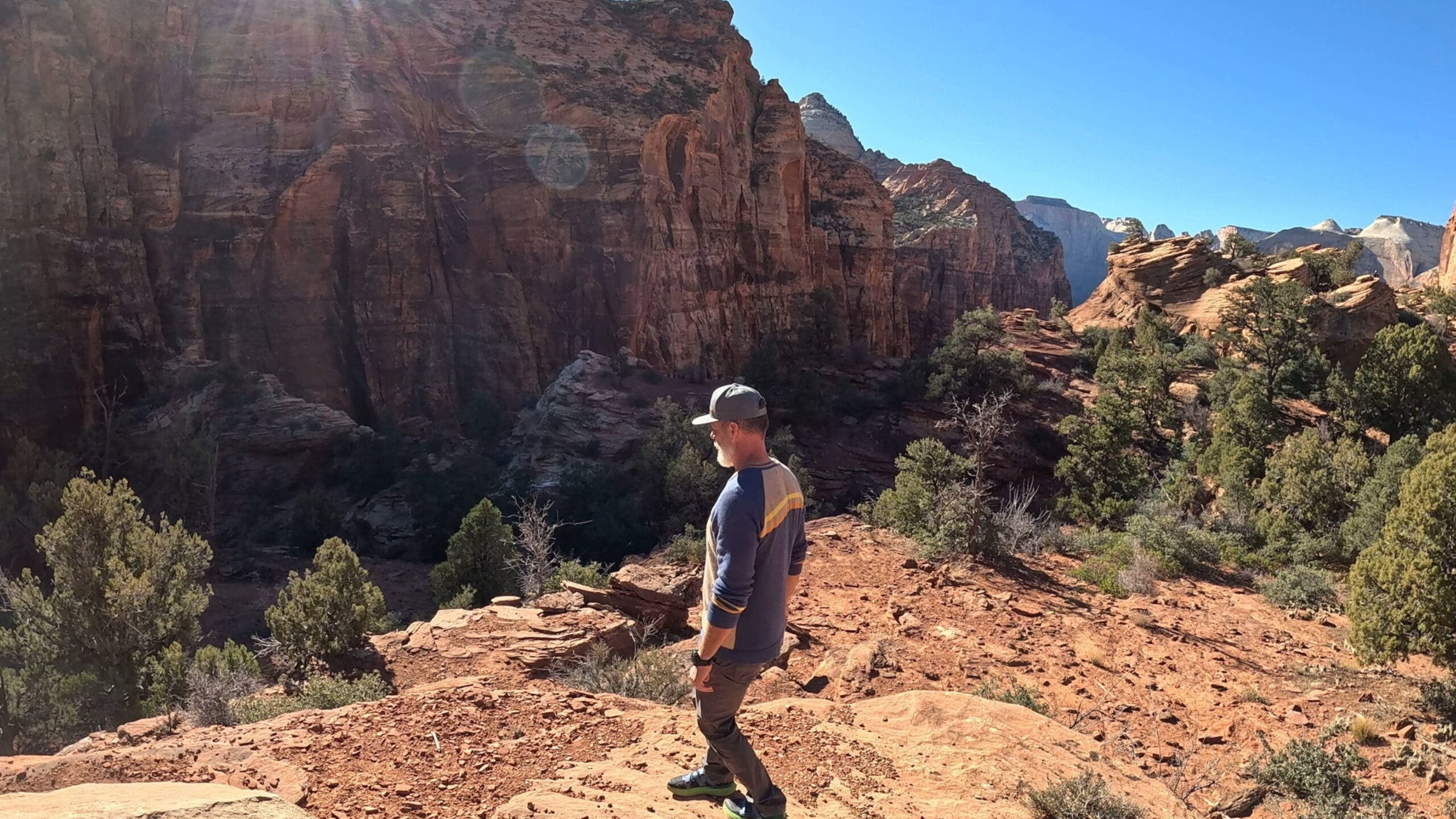
During my recent winter trip, the temperatures were only reaching in the 50s after I was finishing my primary adventures around lunch time. Parking lots at various trailheads were relatively empty and the sun was out, so I added a number of hikes on a whim as I was driving through the park. You can’t do this during the summer. I went back to the Canyon Overlook Trail and loved every step of the journey. It was 52 degrees, with clear views of the Zion Canyon at the culmination of the trail, and minimal crowds. I barely broke a sweat.
Graham Averill is Outside magazine’s national parks columnist. He’ll typically argue that summer is the best time to explore our national parks, even if they are the most crowded at that time, but this recent winter trip to Zion has him second guessing his opinion on the matter. He recently wrote about the best hot springs to visit during winter.
