Published September 23, 2025 03:34AM
If you buy through our links, we may earn an affiliate commission. This supports our mission to get more people active and outside.Learn about Outside Online's affiliate link policy
In Search of Michelle Vanek
She was the only hiker ever to die while seeking the summit of central Colorado’s most famous 14er. A member of the successful search team investigates who she was, how her death—and her recovery 19 years later—impacted her family, and what we all need to consider before heading into the alpine.
(Photo: Eren Wilson)
I’m sort of praying as I’m strapped inside a helicopter attempting a one-skid landing in a boulder field above treeline on Mount of the Holy Cross, the northernmost and most famous of the 15 fourteeners in central Colorado’s Sawatch range.
Jesus H. Christ, Randy, park this thing!
At the stick in the cockpit’s left seat is Randy Oates, a Helitack pilot rocking a ZZ Top beard in a flight helmet and Nomex coveralls. God, I trust, occupies the empty right-hand seat of the cockpit. Belted in on my left elbow is Jolen Anya Minetz, a fortysomething forensic anthropologist who specializes in human bone identification. Anya, also a professional snowboard instructor, must be reliving the summer she spent in Montana as a wildland firefighter with the Lolo Hotshots. Because, unlike me, she’s grinning ear-to-ear as Randy waves off and spurs 1,400 fire-breathing horses screaming from the turbine engine, sending the helicopter soaring up a 1,000-foot granite wall for another landing attempt. Sitting on the yawing deck between my knees is a black Lab named Stryker, a beauty of a scent detection beast I acquired during the pandemic. He comes from a Connecticut breeder known for producing lines of legendary cadaver dogs for FEMA and other agencies. Sweet Stryker’s gazing up at me, eyes wide with concern yet brimming with trust as if saying, “This not fun. When we have fun, Boss?”
ADVERTISEMENT
Soon, buddy. Soon.
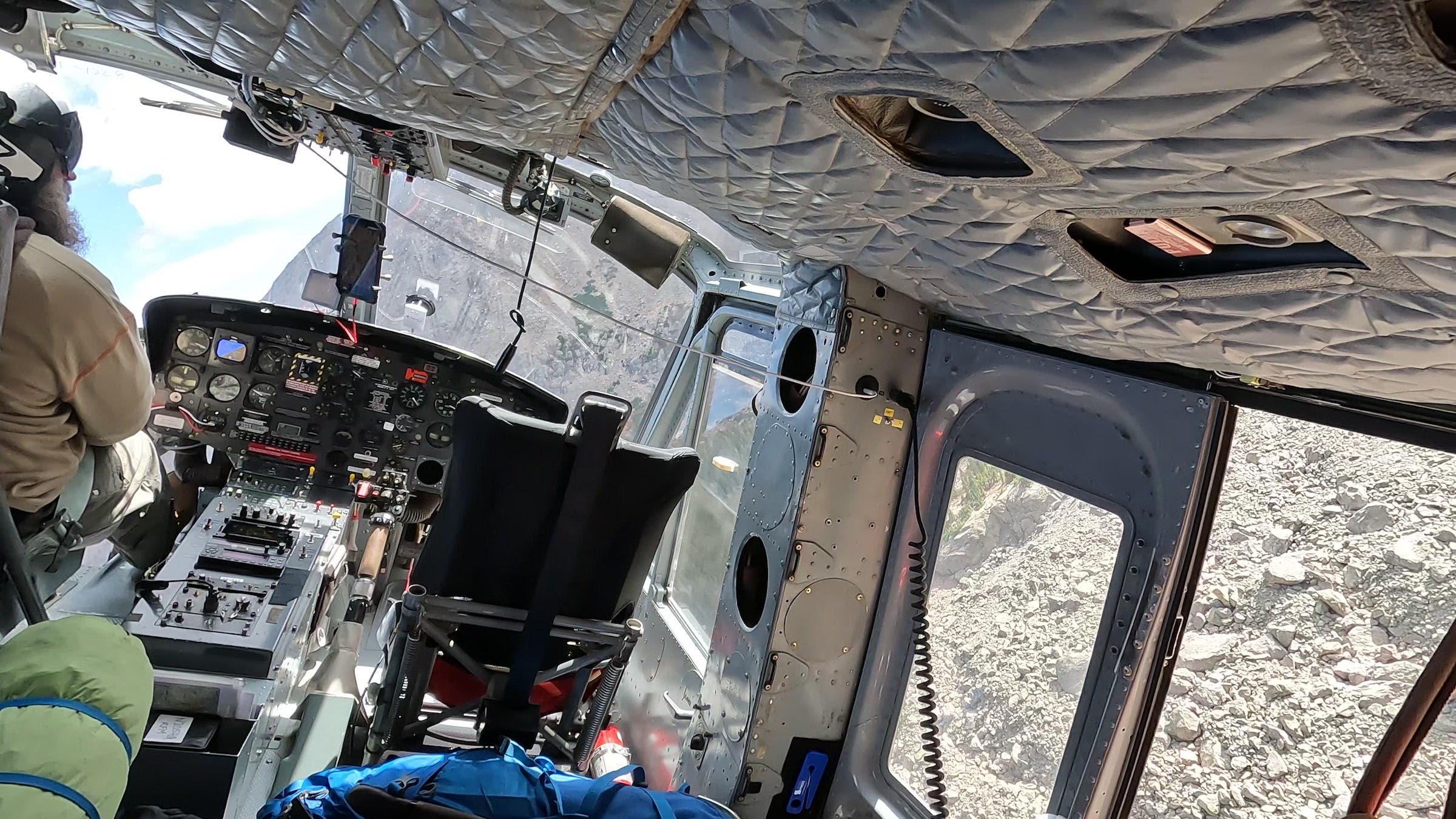
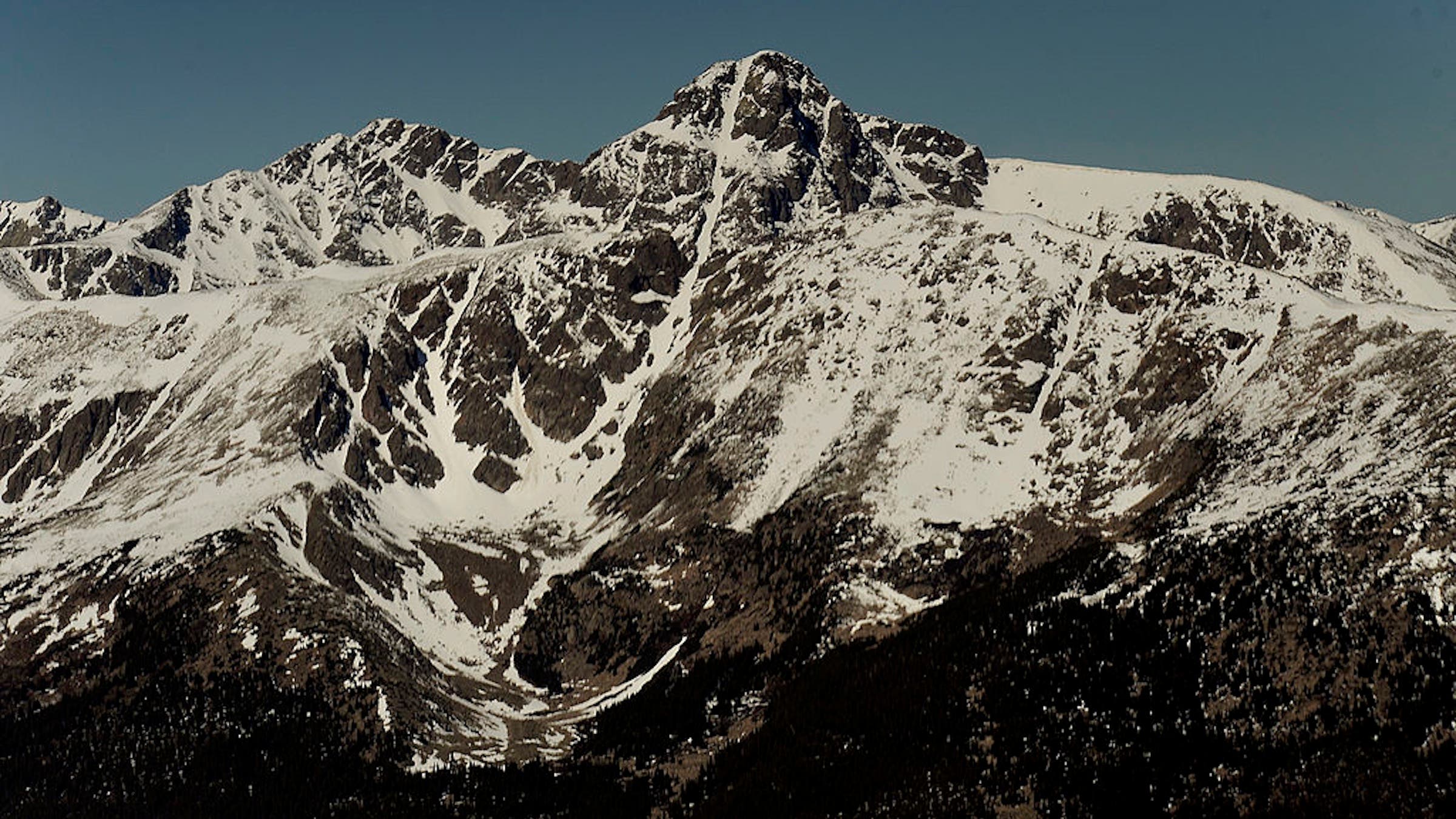
On my right elbow, Zachary Smith, another Helitack firefighter, leans out the helicopter’s wide-open sliding door as he assesses the lunar gray, boulder-strewn landscape wheeling below us. It’s known as Angelica Couloir, a boulder field marching up the mountain’s west flank from an alpine lake fed by the Bowl of Tears, a cobalt blue oasis where religious pilgrims once gathered to worship beneath a skyscraper-tall gleaming white natural crucifix formed by bisecting snow-filled couloirs on the mountain’s east face. Zach’s talking to his crewmate through his helmet’s headset, narrating the terrain hazards he sees on our next final approach. At the time, Zach collected a paycheck from the Colorado Division of Fire Prevention and Control, but like me, he’s also a work-for-free volunteer member of Eagle County’s Vail Mountain Rescue Group (VMRG; I am currently the team’s president). With 176 callouts in 2024, VMRG is the third-busiest backcountry SAR team in the nation.
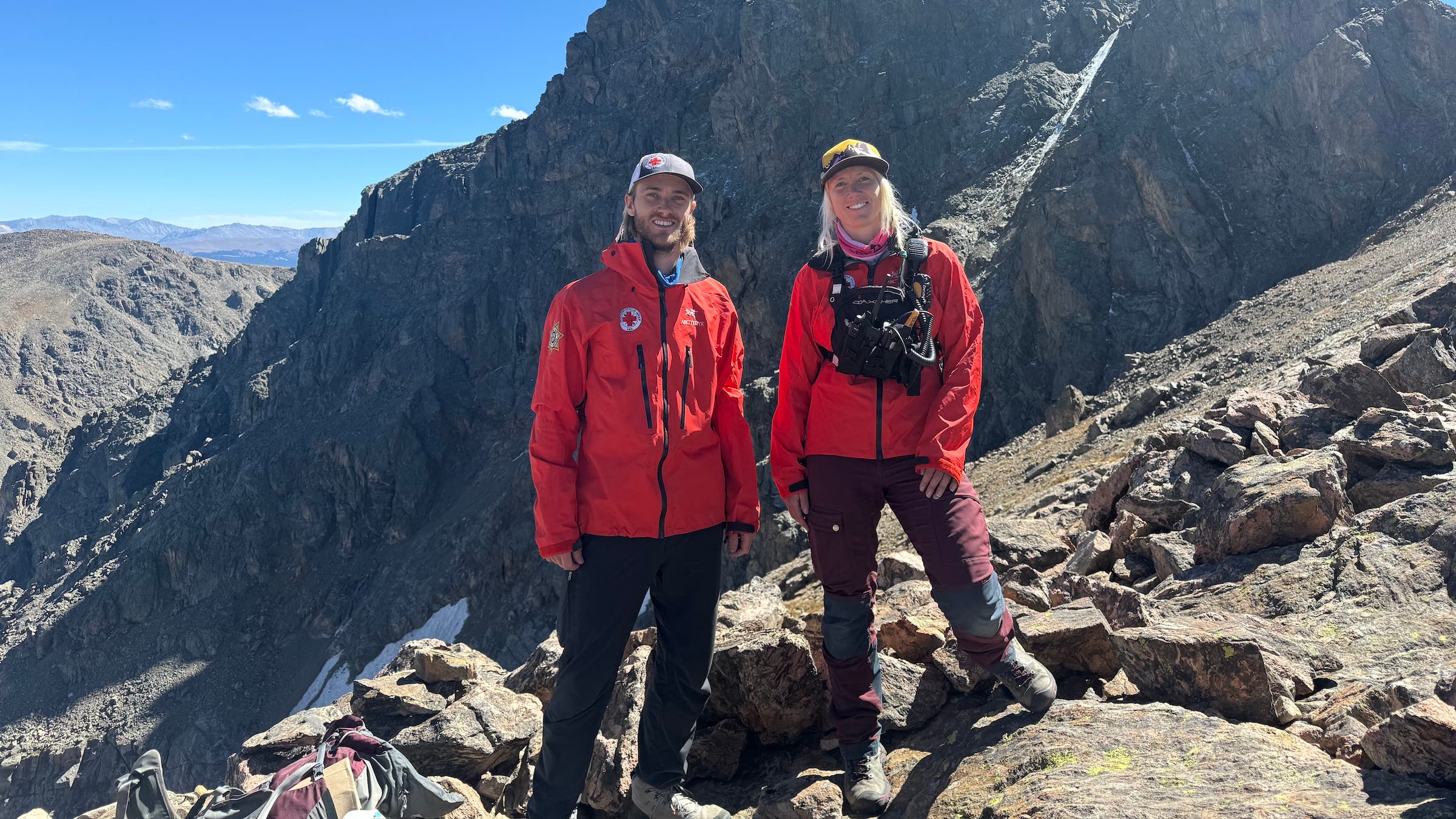
Three weeks earlier, on September 13, 2024, Zach, with VMRG’s Erika German, crept out onto a vertiginous sloped rock terrace below the North Ridge trail on Holy Cross. A half-mile from the summit, Zach spotted a scrap of red fabric. Up a rock seam they followed a trail of debris—more red fabric, shredded black spandex, a blue windbreaker with a digital camera zipped in its left pocket, bent and broken silver Scott ski poles, dirt-filled blue and white mittens—to a pika-gnawed grey and black CamelBak hydration pack at the bottom of a cliff. Inside was a cracked Nalgene bottle, a half-eaten Balance Bar and an empty packet of vanilla-flavored Gu Energy Gel, a black fleece layer and glove liners, a striped blue knit cap, and, zipped in the pack’s waist pocket, a key fob from a Toyota Sequoia SUV. They had found the final resting place of a 35-year-old mother of four from suburban Denver, Colorado, who disappeared after separating from her hiking partner near the mountain’s 14,005-foot summit in September 2005.
ADVERTISEMENT
On September 14, the Eagle County Sheriff’s Office (ECSO) issued a press release (“A Glimmer of Closure: Personal Items Found Near Mount of the Holy Cross May Belong to Michelle Vanek”). It opened with these lines: “Almost 19 years ago, Michelle Vanek embarked on a hike up Mount of the Holy Cross and vanished without a trace. Today, we are filled with hope as a recent discovery in the area may finally bring her family, friends, and the entire community the closure they have long sought.”
What the press release didn’t say was that other than personal effects, the only actual biological evidence Erika and Zach recovered at the site was a right temporal lobe skull fragment about the size of a walnut, just one of 206 bones in the human body. At a press conference the county sheriff convened outside VMRG’s Edwards headquarters three days later—as Zach, Erika and others bathed uncomfortably in the lights of TV news reporters jockeying for interviews—I stood off to the side unnoticed, watching, thinking, planning. Because once Zach and Erika had found the place where we believe Michelle Vanek had died, as the team’s cadaver dog handler, it became my responsibility to lead an expedition into the high alpine that would finally bring Michelle home to her family.
The Woman Who Was Michelle
Ben Vanek fell in love with Michelle Rae Cheeney when they met as lifeguards at the Green Mountain rec center in Lakewood, Colorado, during the summer of 1986. Ben was 18 going on 19 and had just graduated from Regis Jesuit High School. Michelle was 16, entering her junior year at Lakewood High, a fiercely competitive swimmer with a wicked sense of humor. “She was tall, slender, blonde, and just amazingly gorgeous to me,” recalls Ben, now a 58-year-old dentist with a practice across the street from the Green Mountain pool. “When I met her, I was like, ‘I’ve got to marry her at some point.’”
ADVERTISEMENT
Growing up in the same neighborhood, Ben and Michelle had much in common, so much that he asked her out. They liked each other from the very first date.
After Ben went off to college at Colorado State, they remained close, even after he returned to Lakewood two summers later, when Michelle, now a high school graduate, told him she was going to have a baby, and the child wasn’t his.
“We were best friends,” Ben explains. “Hanging out and going to the movies and doing a lot of the things teenagers do with the exception of the fact that she was pregnant.”
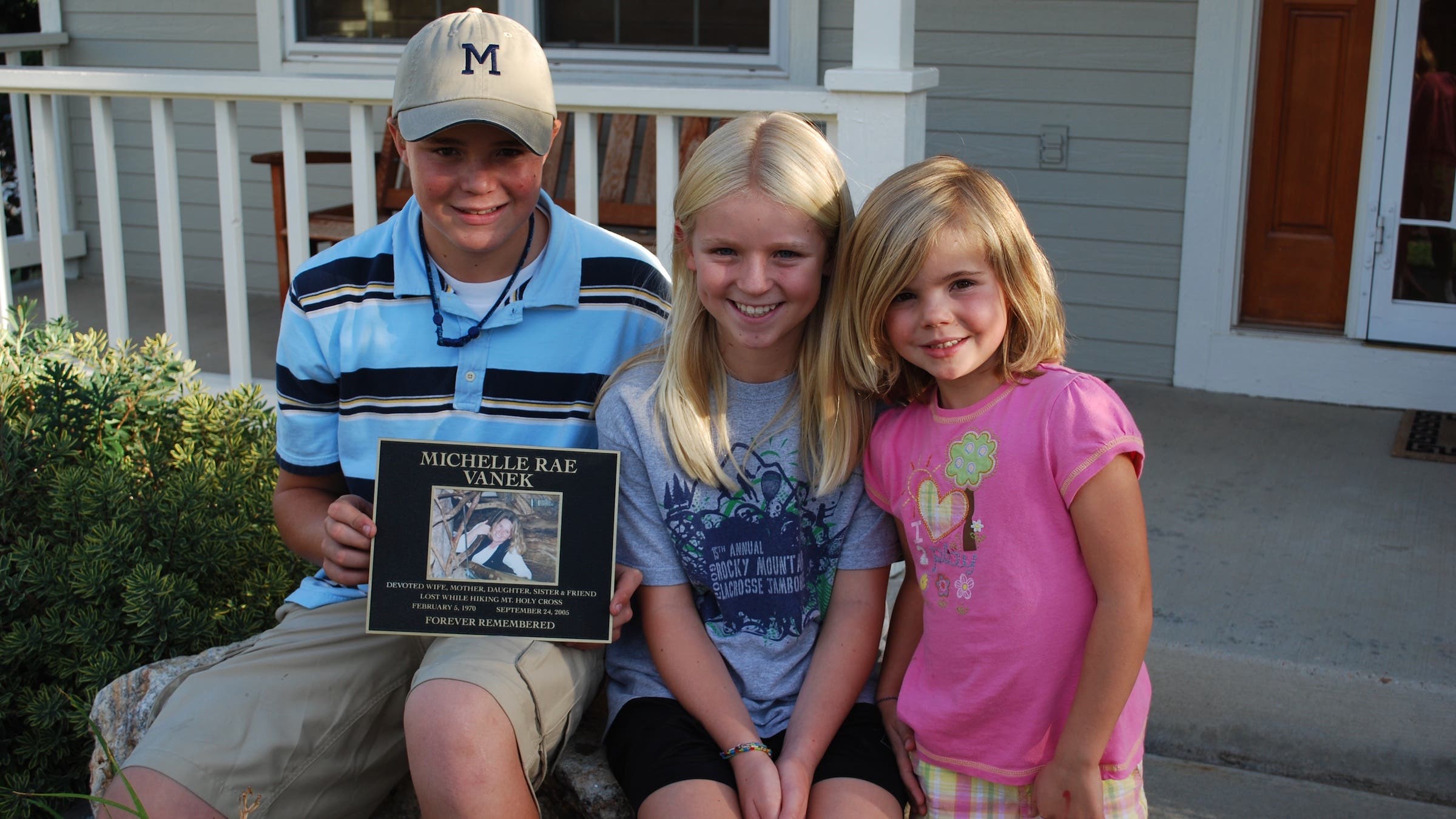
In October 1988, Michelle gave birth to a son, Michael Ryan. Ben adopted Michael as his own after the couple married in 1992, when he was in dental school and she was working on an accounting degree while swimming for Regis University.
ADVERTISEMENT
“Family was all-important to her; she wanted children,” recalls Michelle’s father, Ray Cheeney, a retired corporate accountant and entrepreneur now in his eighties. “Michelle said she didn’t know if Ben married her because of her or because of Michael.”
After graduating from Regis, her father’s alma mater, Michelle briefly followed in his footsteps and worked at a Big Six accounting firm in Denver. After another son, Grant, was born in 1995 and three years later, a daughter, Ali, arrived, they bought the home where Ben still lives today. Michelle quit her accounting job so she could mother their kids full-time while Ben augmented their income with a second job as dental director at Jefferson County’s jail. To get out of the house, Michelle volunteered as a swim coach at Lakewood and Columbine High.
In the joyfully chaotic Vanek household, Michelle made the trains run on time, orchestrating the weekly routine, which revolved around schoolwork, athletics, family time and church.
ADVERTISEMENT
“I remember just always being at sports with my mom,” recalls Michael, now 36. “Ever since I was little, she was pretty much at every game. She was always helping out, running on the field, doing whatever, always very active. It’s kind of what you want a mom to be. One of the best things ever was to have your mom always around.”
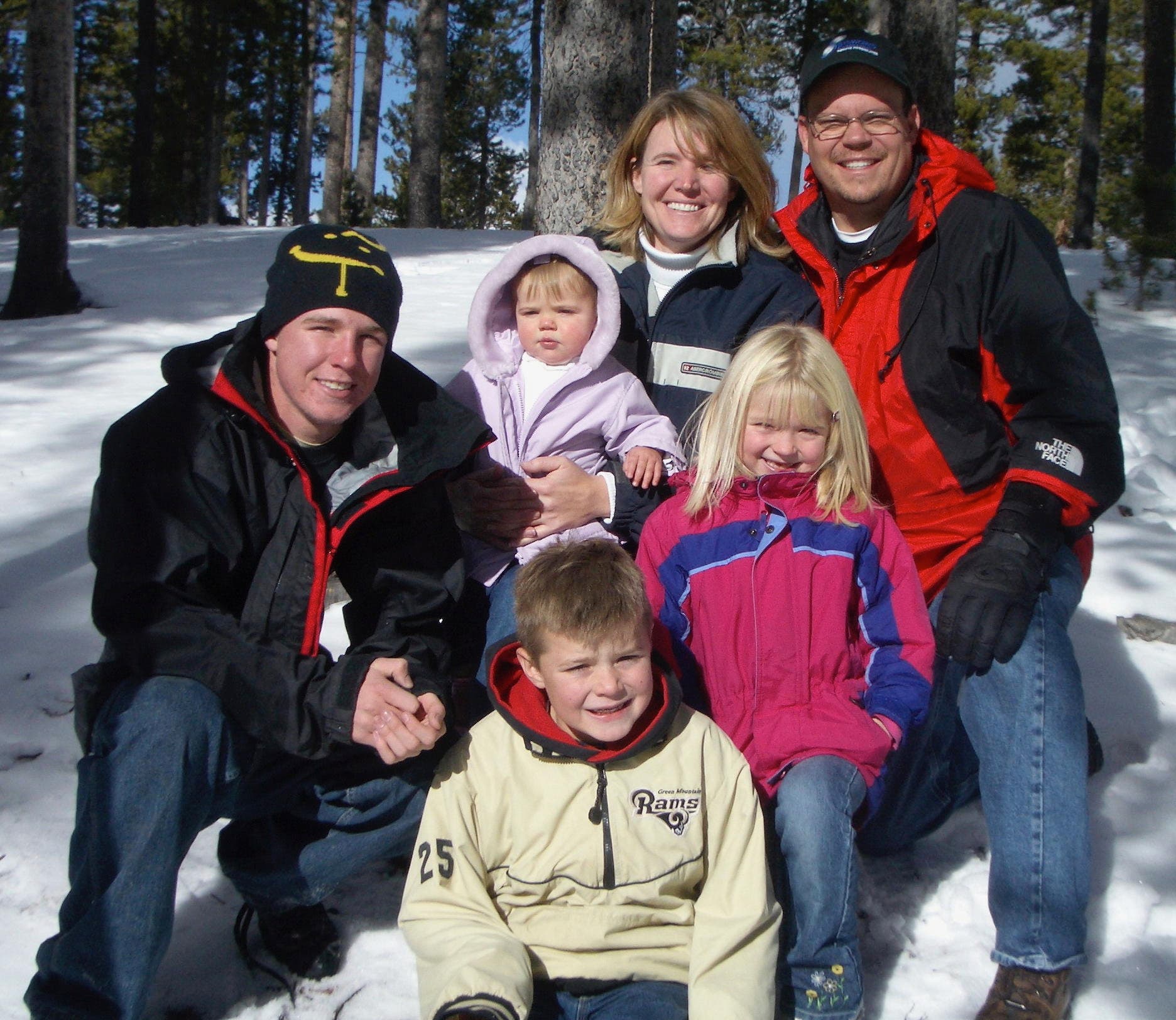
After another daughter, Haley, was born in 2003, Michelle started training for and competing in triathlons to stay fit. Life was good. In February 2005, as a second honeymoon, the couple splurged on a romantic dive trip to Saint Lucia in the Caribbean, where Ben bought his wife a beaded lavender coral necklace from a vendor on the beach. She rarely took it off, as a reminder of that magical time together. On summer weekends, Michelle and Ben spent the long days rollicking with their kids while playing through the 18-hole championship course at the Lakewood Country Club. In the evenings, whenever they could manage a sitter, they dined at local restaurants to share conversation and kinship with family members and a circle of interesting and active adult friends.
One was Ryan Johnson (to respect his wishes for privacy, I’ve assigned him a pseudonym).
ADVERTISEMENT
In 2005 Ryan was 37 summits into completing The List: hiking all 58 of the state’s 14ers, peaks taller than 14,000 feet, a Coloradan badge of honor. Mount of the Holy Cross would be his 38th 14er, and he invited Michelle along to bag her first. He would take care of the planning and details; all Michelle needed to bring was gumption and the requisite gear. “I said go ahead and go,” Ben recalls. “I’ll take care of the kids.”
Gumption Michelle already had, but what she needed was sturdy boots for the anticipated rugged terrain. So Ben drove his wife, and their youngest daughter in her car seat, to Gart and bought her a pair of beefy waterproof leather Sorel Asystec hiking boots.
At a Rockies game three days before the summit attempt, Ben asked Ryan if he thought Michelle was ready for such an undertaking. While Michelle was athletic, she was no alpinist. She had never hiked a 14er before. “He said it was going to be a challenge but it wasn’t going to be so difficult that she couldn’t make it,” Ben recalls. “He was saying, ‘Listen. Here’s the deal: it’s going to be really safe because no matter what happens, we never separate.’”
ADVERTISEMENT
Ryan arrived at the Vanek residence at around 3:45 A.M. on Saturday, September 24, 2005. Careful not to wake the children, Michelle shouldered her pack and tiptoed out the front door. Fifteen minutes later, with Ryan in the passenger seat, she backed her silver Toyota Sequoia down the driveway. And was gone.
“When she said it was time to go, I was fortunate enough to give her a kiss goodbye, tell her I love her and have fun,” Ben says.
Ray recalls that he first learned of his daughter’s plans to summit Holy Cross later that morning, when he met Ben at a soccer tournament in Lakewood. Seeing his son-in-law and Grant on the sidelines cheering on Ali without Michelle while chasing after Haley, a rambunctious 21-month-old toddler, Ray asked Ben where his daughter was.
“Oh, she’s climbing a mountain,” Ben responded nonchalantly.
“What do you mean she’s climbing a mountain?” Ray pressed.
ADVERTISEMENT
Ben explained about Ryan and Holy Cross and that Michelle seemed like she needed a break, so he was watching the kids while she went off and did something fun for a day. Ray didn’t think much about it until around 5 P.M., when Ben called to say Michelle was missing. She and Ryan had separated somewhere on the mountain, and the ECSO had just activated the local search and rescue team to go and look for her.
“At that point,” Ben recalls, “It became a pretty real scenario for me.”
Eight Unbearable Days
Ray, Ben, Michael, Michelle’s brother, and Ben’s dad drove up I-70 to Vail, checking into a hotel just after dark as the first hasty teams from VMRG were heading up the mountain. At dawn on Sunday morning, they drove through the town of Minturn. From there, they went up Tigiwon Road, a dusty and heavily rutted gravel track that switchbacks for eight miles and ends at Halfmoon Campground, a base camp for Holy Cross hikers on the boundary of the 193-square-mile Holy Cross Wilderness. Michelle’s silver Sequoia was still parked at the trailhead. After 18 searchers departed up the two main trails leading to the mountain’s summit that morning, Ray and the Vanek men stood vigil with SAR command staff posted at the trailhead, eavesdropping on radio calls while a National Guard helicopter and a fixed-wing spotting plane orbited overhead.
ADVERTISEMENT
Ray describes that first day as “one of those wait days, with phone calls and radio calls coming back and forth.”
But none bearing good news.
“It’s probably the most gut-wrenching thing I’ve ever felt in my life. Just complete and utter devastation and loss.”
Over the next week, Ray and Ben would keep the same routine: wake before dawn after a sleepless night, arrive at Vail Mountain Rescue Group’s Edwards headquarters/base of operations, which members refer to as “the cache,” for a morning briefing, wish searchers luck after they received their assignments, wait with Lakewood friends and family for exhausted rescuers to return to the cache for an evening debriefing, exchanging hugs and shaking hands as they filed inside.
One regular local volunteer, Nate Goldberg, then the director of Beaver Creek ski resort’s hiking center, developed a rapport with Ray, who began referring to Nate as Jerry because he resembled comedian Jerry Seinfeld.
ADVERTISEMENT
“[As we were leaving] I would say, ‘Hey, Ray, I think today’s the day, I really think we’re going to find something,” recalls Nate, a distant friend of the family. “He would say, ‘Thanks, Jerry. I appreciate that.’”
After the Day 3 debriefing, when 53 searchers returned from the field with no results, a frustrated Ray approached Tim Cochrane, a Vietnam veteran who led Vail Mountain Rescue Group and oversaw the Vanek search.
“I went to the commander and I said, ‘What can I do? I’m not doing anything. I need to do something,” Ray recalls. “And he said, ‘If you’ve got any connections for air transport to get these people up on the mountain we certainly could use that.’”
ADVERTISEMENT
Opening his Rolodex and his checkbook (ultimately spending around $30,000), Ray made some calls. By the next morning, 126 volunteers had joined the search. A fleet of civilian, state government and military helicopters—including one equipped with forward-looking infrared imaging technology and a Sikorsky Jolly Green Giant capable of airlifting a contingent of more than two dozen rescuers—were flying in and out of a makeshift landing zone (LZ) staffed by six SAR volunteers. The airspace above Colorado Mountain College in Edwards seemed as crowded as Dulles International, with Dan Smith, another VMRG combat veteran who earned two Purple Hearts in Vietnam, orchestrating takeoffs and landings as air traffic controller.
“There was no bird that was safe to fly here because there were helicopters coming and going out all the time,” recalls Brooks Keith, rector of Vail’s Episcopal Church of the Transfiguration who was assigned to offer pastoral care to the Vanek family. “It was very dramatic. And it was very intense. I was with the Vanek family almost every day.”
On the afternoon of Day 4, Tuesday, the arrival of a weather front grounded air operations and forced some searchers to hike out on foot in winter-like conditions with winds gusting up to 60 miles per hour. The next morning, Day 5, the skies cleared and the 112 searchers combing the mountain that day postholed through as much as 18 inches of fresh powder. When Wednesday came and went with still no progress, Ben recalls phoning his home in Lakewood, where family members were taking care of Ali, Grant, and Haley, and telling them “it was starting to get to the point where it wasn’t looking good.”
Every day, fresh complements of searchers arrived from SAR teams across the state, joining professional guides, ski patrollers, and locals with experience in the alpine. Raft companies and shuttle services ferried searchers overland to and from the trailhead, and area chefs and restaurants donated breakfast, lunch, and dinner to feed an all-volunteer civilian army. On Friday, Day 7, 52 searchers, including four dog teams sniffing around the area where Michelle was last seen, were on the mountain, when someone spotted what appeared to be blood in the snow. A technical rope rescue team rappelled 900 feet to investigate, but found nothing.
VMRG’s Tim Cochrane decided that the Vanek family—Ray, Ben, and Michael, who was a month shy of 17 at the time—should see the terrain for themselves, from above. Cochrane flew two sorties, one with Ben and Michael, another with Ray and Ben’s father.
ADVERTISEMENT
“This was designed to allow them to see the magnitude of the area being searched,” Cochrane wrote in his after action report. “This seemed to allow some closure as each was able to see firsthand the rugged terrain and the enormous effort being put forth. It also allowed me to have a better idea of where we would put searchers on the Saturday effort.”
Brooks Keith was waiting at the LZ when they returned.
“I remember when they went up and I remember when they came down,” says Keith. “They were sobered because they did not understand the wild alpine wilderness character of the search area. They came back from seeing that boulder field and it was very quiet that afternoon. They understood.”
Saturday’s final campaign was so massive that staging was transferred from VMRG’s cache to the campus of Minturn Middle School.
“It was a crowd in Minturn, just cars everywhere, backpacks everywhere, dogs in the corner, equipment on the ground, food being served,” recalls Keith, who looked around and saw evidence that something positive was emerging from this tragedy. “We were maturing as a community from a ski resort—ski, rest, smoke weed, drink—to something more.”
ADVERTISEMENT
That day, 318 volunteers spent a combined 4,327 hours searching the mountain. At 4 P.M., after eight days of fruitless efforts, Cochrane and the Vanek family formally suspended one of the largest search and rescue operations in Colorado history, concluding “We have done everything possible to find Michelle.”
As the process of demobilization began, Ben and Ray now had to grapple with the fact that they too would be leaving, returning to the Front Range without Michelle.
“It’s probably the most gut-wrenching thing I’ve ever felt in my life,” Ben says. “Just complete and utter devastation and loss, that you lost the person that you loved the most and how are you going to go on? How am I going to take care of the kids without her? What good am I if I couldn’t protect her, if I couldn’t save her?”
Ray lost a beloved daughter that day. And with her, his spiritual anchor.
“My faith has drifted substantially,” he says. “And to this day I cannot understand a forgiving God taking a mother. I don’t understand it. I cannot put that together.”
ADVERTISEMENT
Brooks Keith can, and often does, for the bereaved. This is what he would tell Ray: God didn’t engineer this multigenerational tragedy. God created the earth and its heavenly places for our enjoyment. It’s on us to either follow or disregard the outdoor playground’s rules. And reap the rewards, or suffer the consequences.
“This is a cautionary tale about personal responsibility and understanding that when you go out into the Rocky Mountains of Colorado, you’d better damn well know what you’re doing,” he stresses. “You better have enough water and clothing for a wide variety of circumstances. And you’d better not separate. Ever.”
To underscore this point, Father Brooks cites a teaching from Ecclesiastes, that two strands of a corded rope can bear a much heavier load than either could endure alone.
“There’s a lot of wisdom in our tradition of doing things together,” he adds, urging summit seekers to consider one additional important thing. “When you make the decision to step out into the great outdoors, you carry the future of your family.”
ADVERTISEMENT
Timeline of a Tragedy
That week, authorities from the Eagle County Sheriff’s Office twice questioned Ryan Johnson. During the final interview, on September 28, 2005, an ECSO detective asked Ryan if he had any involvement with the disappearance of Michelle and if he had harmed her in any way. Ryan said he did not and declined to answer further questions without an attorney present. (Ryan also declined to comment for this story.) In early November, 2005, the detective completed ECSO’s investigation concluding, “At this time, I don’t have any indication that a crime has been committed.” The 32-page incident report offers a concise, but detailed, synopsis of what transpired after Ryan Johnson and Michelle Vanek left Lakewood at 4 A.M. on September 24, 2005.
ADVERTISEMENT
Ryan and Michelle arrived at the Halfmoon Pass trailhead at around 6:30 A.M., 20 minutes before sunrise, an atypically late start for a Holy Cross summit attempt—the standard North Ridge route, as Gerry Roach describes in his definitive Colorado’s Fourteeners, is a 10.8-mile there-and-back with 5,625 feet of elevation gain and is “a tough one-day climb … Get in shape for this one!” Stepping out of the cocoon-like warmth of the Sequoia into the pre-dawn chill, Michelle shivered in black Nike spandex pants and a red T-shirt layered over a spandex top. As Ryan gathered his things, Michelle zipped up her blue windbreaker, pulled a matching wool knit cap with a pale stripe over her strawberry blonde hair, locked the car, and zipped the key fob into the hip pocket of her CamelBak. In addition to a hydration bladder, her pack contained an extra quart of water, a fleece layer and glove liners, a camera, and a few Balance Bars. She shoved her hands into a pair of matching blue mittens. Prone to migraines, in the thin air at the 10,320-foot trailhead—they had gained nearly 5,000 feet in elevation since leaving Lakewood and planned to ascend to 14,005 feet by mid-day—already Michelle wasn’t feeling well. She told Ryan she had a headache, and he offered her some Advil.
Without a USGS topographic map, compass, or GPS, Ryan would rely on a map he had photocopied from a Colorado 14ers guidebook for wayfinding. In his haste to get moving up the trail, as he was gearing up, Ryan left his lunch and water filter in Michelle’s car, then wandered around the parking lot looking for the trailhead. Because the Forest Service was doing construction work around the trailhead parking area, a mound of dirt obscured the sign to the Halfmoon trail. Halfmoon was the start of the standard route, and is named for Halfmoon Pass, a 970-foot camel’s hump of rock that must be ascended and descended before tackling the primary North Ridge trail to the summit, then must be ascended and descended again on return to the trailhead. Because of this, the total elevation gained on Holy Cross eclipses the standard Keyhole Route on 14,259-foot Longs Peak that, as Roach notes, “many people consider to be a very arduous climb.”
ADVERTISEMENT
Instead, at 7 A.M., Michelle threaded her mittened hands through the wrist loops of a pair of silver Scott ski poles and clack-clack-clacked after Ryan as they headed up the Fall Creek trail, a popular route most day hikers take to a promontory on Notch Mountain, a 13er with a magnificent view of Holy Cross’s iconic crucifix-shaped couloir. After hiking more than two miles in 90 minutes, they arrived at the Notch Mountain cutoff. Ryan asked Michelle to pull the photocopied map out of his pack then realized his mistake: they were on the wrong trail.
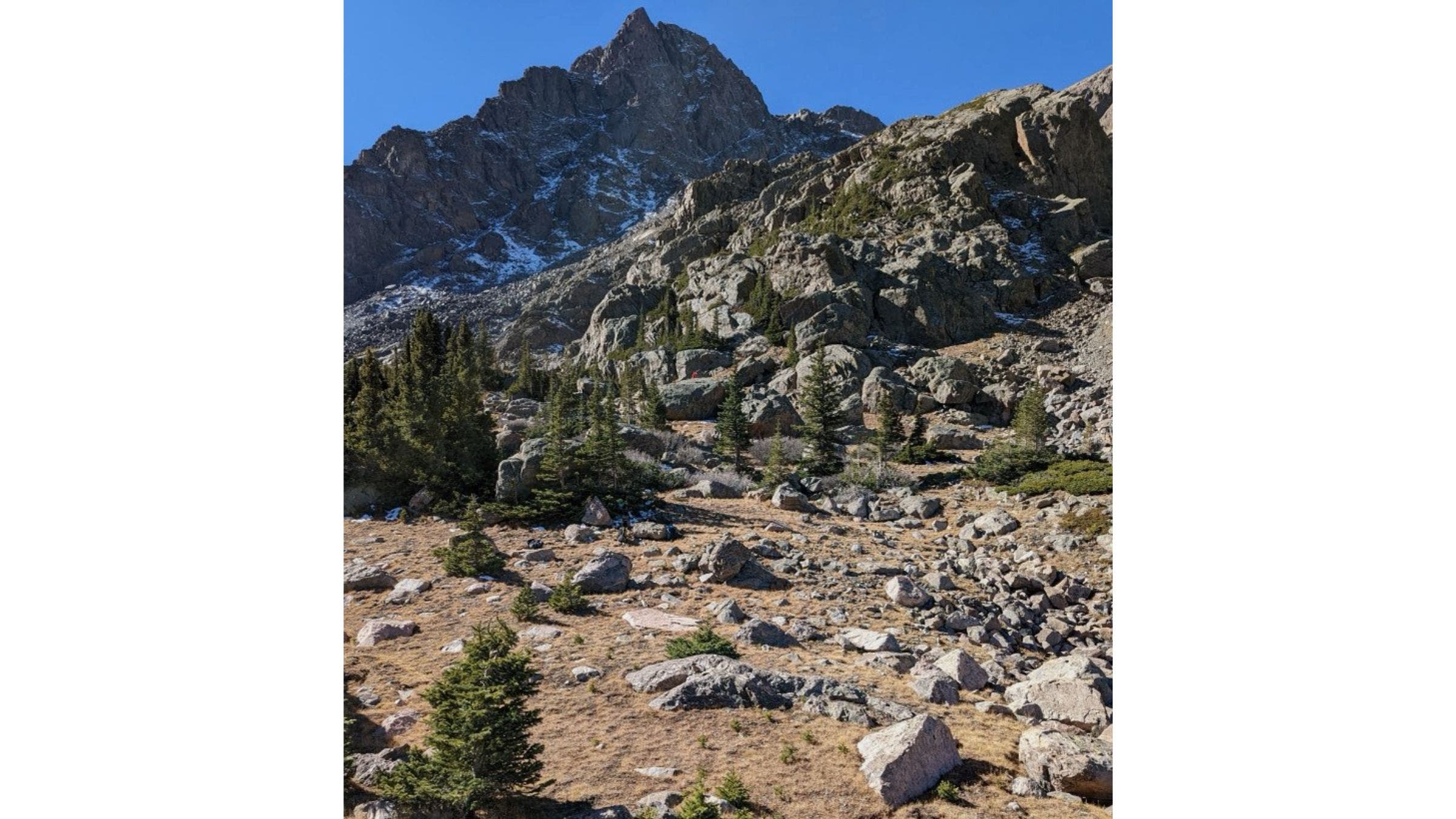
From the map, Ryan saw that if they ascended the Notch Mountain trail they could still summit via Halo Ridge, a 13,000-foot knife-edge trail that wraps around the Bowl of Tears Basin, a horseshoe-shaped rock amphitheater with 1,000-foot-tall walls girding its namesake alpine lake. What the map did not show was that few hikers attempt this route due to its exposure and the extra time, water, and stamina required of a lengthy and strenuous Class II scramble up and down a trio of ever-taller unnamed 13,000-foot mountains of loose talus and unsteady granite blocks.
ADVERTISEMENT
After switchbacking more than two-dozen times up the Notch Mountain trail—gaining another 1,920 vertical feet over nearly three miles—they topped out at the overlook where William Henry Jackson snapped his famous photograph of the Cross Couloir in 1873. Having already hiked more than five miles, had they taken the standard route, at this point they would have been at or near the summit.
To get out of the cold wind, they ducked inside a 1930s-era stone hut built as a refuge for pilgrims who once came here to worship before the crucifix couloirs. They stayed for just 15 minutes, then began their traverse of Halo Ridge. Summiting the first unnamed 13er—Point 13,248, a mountain of talus as tall as a 20-story building—was taxing but thrilling. On a saddle between the first and second 13er, Michelle gamely smiled when Ryan snapped the last photo that was ever taken of her, hiking along the ridge backdropped by the mountain’s famous east face with the Bowl of Tears shimmering far below. At one point during their traverse, they looked across the basin and saw a pair of hikers approaching the summit on the North Ridge trail. Ryan told Michelle that should have been them.
The more arduous route began exacting its toll.
ADVERTISEMENT
To traverse Halo Ridge at the pace Ryan reported, they would have been moving fast. To a novice like Michelle, what Ryan was doing would have looked more like parkour than hiking—pulling his body up and over off-kilter blocks of stacked granite, leaping over voids—which is what a Class II scramble with haste really is. She started falling behind. First by 30 feet, then double that, with Ryan circling back to do whatever he could to keep her moving up the trail so they wouldn’t fall any further behind schedule.
At around 1:15 P.M., not long after ascending and descending Point 13,831 (one of Colorado’s 100 tallest ranked peaks, where Halo Ridge transitions to Holy Cross Ridge, a 13,500-foot saddle leading to the pinnacle of Holy Cross), Michelle ran out of water. Perhaps because Holy Cross is deemed an “easy 14er,” she was provisioned as if on a day hike. It is anything but. Summiting a Colorado 14er is the hiking equivalent of running a marathon, and when the route also involves a prolonged talus scramble like Halo Ridge, it can feel more like an ultramarathon.
ADVERTISEMENT
(Coincidentally, the morning I wrote this paragraph, as I stepped in line to buy pastry at a bakery in Avon, queued in front of me was legendary high altitude mountaineer Ellen Miller, one of the dozens of mountain-savvy locals who helped VMRG search for Michelle in 2005. Miller, the first American woman to summit Everest from both north and south approaches, was planning her annual summit hike via Halo Ridge that weekend. Even an accomplished alpinist like Miller says summiting Holy Cross via the Halo route “is definitely no joke.”)
At 1:25 P.M., they arrived at the endpoint of Holy Cross Ridge, the last push, within 400 vertical feet of their goal. Michelle told Ryan she was tired and could not go any higher. She was out of gas. Ryan offered to carry her pack. “No,” she said, “You go on.” Ryan pointed across the talus field to a patch of snow a bit more than a quarter mile away but on the same contour, the start of the North Ridge trail. He told her to head there and start on down the trail and he would catch up with her. Before he left, he gave her a packet of vanilla-flavored Gu Energy Gel, which she tore open and sucked down.
Then they separated.
ADVERTISEMENT
At 1:42 P.M., according to the incident report, Ryan called his wife from the summit to say he had made it, but was running late because they had taken the wrong trail. A hiker named Julia Taylor, who had arrived via the standard route with her husband a few minutes earlier, asked Ryan if he wouldn’t mind taking their photo. Ryan told Taylor he was in a hurry because he had left a friend on the trail below. After photographing the Taylors, spending only five minutes on the summit, Ryan descended to the North Ridge trail. But Michelle wasn’t there. Figuring she must have gotten ahead of him, Ryan continued down the trail, where he encountered two couples heading up, and asked if they had seen his hiking partner. They hadn’t. Ryan dropped his pack and ran back uphill, calling out her name.
On the ridge, he encountered the Taylors. He said he was out of water and asked if they had seen his friend, Michelle. They told him they hadn’t, offered him some water, and said they’d look for Michelle on their way down to the trailhead, leaving more water at Ryan’s pack stashed at treeline. At 3:30 P.M. he called his wife and told her Michelle was missing and to call the sheriff’s office. He then dialed Ben to explain what had happened. Ryan continued searching for Michelle until 7:50 P.M. when he returned to the trailhead, where the silver Sequoia was still parked and locked exactly as Michelle had left it that morning. At 8:01 P.M. Ann-Marie Cooper, a K9 handler from Vail Mountain Rescue Group, arrived at the Halfmoon campground with her black Lab, Mallie, and Steve Zuckerman, another VMRG member known for his prowess in the alpine. After Zuckerman interviewed Ryan and Cooper scented Mallie on the driver’s side door seam of Michelle’s SUV, they headed up the Halfmoon trail to the summit. Another VMRG K9 team (Lee Bendel and K9 Rusty, a red English Lab) headed up the Fall Creek Trail to Halo Ridge. When interviewed at the ECSO substation in Edwards on September 27, 2005, Ryan told Deputy Mark Linn that earlier, after getting a late start and realizing he had left his lunch and water filter in the car, he had a bad feeling about the day, that it “was a recipe for disaster.”
The One Rule That Matters Most
I know from experience as a VMRG mission coordinator that a decision to separate on the trail in the backcountry is one of the most common reasons rescuers get paged out to search for lost or missing hikers.
Separating in the alpine is even more fraught with risk.
“Perhaps the most dangerous situation is when parties split up,” Mark Scott-Nash writes in Colorado 14er Disasters, a compendium of 14er climbs and hikes gone wrong that, over 44 pages, chronicles the previously-unsolved case of Michelle Vanek. “A party of two may split up for whatever reason, including ambition (one climber wants to push on and the other wants to turn back) … This is the worst possible condition because the weaker climber then finds himself in the situation of a solo climber, except that it is unplanned and the climber is likely not prepared for such a situation.”
Which neatly describes the situation Michelle found herself in at 1:25 P.M. on September 24, 2005.
ADVERTISEMENT
To my knowledge, Michelle is the only hiker who has ever died while attempting to summit Mount of the Holy Cross. So just how dangerous, really, is the decision to separate?
Bottom line: hikers who separate from a group statistically are four times more likely to die than group hikers who become lost and never separate.
I ask the one guy on this planet who should know: Robert J. Koester, a mission coordinator at the Virginia Department of Emergency Management who created the International Search and Rescue Incident Database (ISRID), a trove of information drawing on more than 145,000 SAR incidents reported worldwide since 2014. Koester’s Lost Person Behavior, a book and a companion smartphone app, uses ISRID data to predict how subjects in 42 categories—climbers, hikers, skiers, people with dementia, etc.—will behave when they go lost or missing in the wilderness or urban environments. Koester says that by adopting the principles and guidelines in his book (first published in 2008) and using his app, SAR managers have cut the time it takes to resolve a search mission in half.
I Zoom with Koester and ask if he has data to back the notion that separating on the trail is one of the most dangerous things a hiker can do in the alpine. He searches the ISRID database and finds 4,939 SAR incidents related to lost or missing hikers. Parsing that, 3,374 instances involve solo hikers or hikers who had separated from a group of two more; 1,565 were hikers in groups of two or more who became lost and never separated from the group.
He drills down further into that data and looks at outcomes: Of those 3,374 people who had been hiking solo or had separated from a group, 3,079 (91.3 percent) were found alive, and 295 (8.7 percent) were found deceased. And for the 1,565 group hikers who never separated? 1,532 (97.9 percent) were found alive, while 33 (2.1 percent) were found deceased. Bottom line: hikers who separate from a group statistically are four times more likely to die than group hikers who become lost and never separate.
Koester estimates that each year more than 10,000 people go lost or missing in wilderness, urban and rural areas in the United States. He says journalists writing stories about backcountry safety often ask him if there’s one major thing people can do to minimize their chances of having an emergency in the outdoors. “No, but there are a whole bunch of things you need to be doing because nature is nature,” he says. “If you don’t respect it, it’s another part of that Swiss cheese model that will click into place.”
Koester is curious about where and how VMRG found Michelle’s belongings after so many years. On July 5, 2021, Rob Worrell, a Ski and Snowboard Club Vail coach, was climbing around the Angelica Couloir boulder field with his son Cody when Cody found a woman’s Sorel Asystec hiking boot. After reading about the case in Colorado 14er Disasters that December, Worrell realized the boot Cody had found looked similar to what Michelle had been wearing in the photo Ryan took on Halo Ridge in 2005, and called authorities. That clue galvanized a new generation of VMRG volunteers to resume the search. Myself included: During the summer of 2023, I led two unsuccessful ground team and helicopter missions in the alpine around and above Lake Patricia that were so physically taxing (and emotionally vexing) I vowed not to return unless additional evidence was found. After the winter snow on Holy Cross melted a year later, VMRG’s Erika German combed through paper maps and field reports archived from the original search, checked this information with veteran rescuers who had searched for Michelle, and built a digital SARTopo map layered with data from all eight operational periods in 2005 and subsequent search efforts. Recruiting other women (and a few men) on the team to join the effort and urging them to think like a mother desperate to return home to her family, Erika then led targeted forays around the basin, using the process of elimination until only one plausible search area remained, and made the find.
Since he’s been a volunteer member of Blue Ridge Mountain Rescue Group for 44 years, I ask Koester if he’s come to any conclusions as a SAR responder about successful search and recovery operations versus “no trace” searches, when a body is never found.
ADVERTISEMENT
“I’ve always maintained that if you’re doing a recovery, you’re not saving the life of the person you’re pulling out of the woods, but you are saving the life of the family,” he tells me. “If the search remains a ‘no trace’ search, so many of them aren’t able to go on living and move forward and go through the grieving process. Their life essentially gets put on hold.”
19 Years in Purgatory
Michelle Vanek’s funeral at Littleton’s St. Frances Cabrini Catholic Church was filled to capacity, including Brooks Keith wearing a white clerical collar, searchers from Vail Mountain Rescue Group in their red Gore-Tex team jackets, and scores of family and friends. Because there was no body, there was no casket, only flowers and photos. Michael Vanek eulogized his mother, but does not remember what he said.
“Michelle would say it would take somebody special to really fill this church,” says Ben Vanek. “With her funeral, it was standing room only and people outside. So she did that. Michael got up and spoke. I didn’t speak. I was still in shock and holding on to my youngest. I was holding on to Haley the whole time.”
A week after the funeral, Ray Cheeney dialed the number of the cellphone Ryan had used on Holy Cross to report that Michelle was missing.
ADVERTISEMENT
“I called him and said, ‘[Ryan], I’d like to buy you coffee,” Ray says. “I’d like to talk about Michelle’s last day with you.”
At an Arvada coffee shop, Ray listened as Ryan, struggling to maintain composure, recounted everything he remembered, from the moment they left Lakewood together in Michelle’s Sequoia to when he returned to the trailhead alone. The meeting lasted nearly an hour.
“I don’t think he maliciously did anything,” Ray concludes. “I think there were circumstances he didn’t control that he should have controlled because he was the guy that had climbed many mountains so he knew the vulnerability of the human being in that kind of an environment.”
Ben Vanek never talked to Ryan again. But he did see him, from a distance, one day at Denver International Airport.
ADVERTISEMENT
Three years after the tragedy, Ben was leaving Denver with his boys and other family members on a guys-only fishing trip to Canada. As Ben was loading his things into a scanner bin at a security checkpoint, with 12-year-old Grant in front of him and 19-year-old Michael behind, Ben looked across the X-ray machine and saw Ryan standing on the other side of the conveyor.
“His stuff had just gone through, he was in front of the line,” Ben says. “He must have seen us first, but then I did make eye contact with him because he was putting his stuff back into his bag. And he was doing it fairly rapidly.”
Seeing his father’s face flush and his hands start shaking, Grant asked what was wrong and Ben turned to look at Michael.
“I said, ‘You gotta get in front of me because if you don’t, I am going to rush this and get into so much trouble. Because I will cross the TSA to get to him.’”
Ben says Michael did just that, and he watched Ryan disappear into the crowd. He never saw Ryan again. I ask Ben what he would have done if Michael hadn’t impeded him.
ADVERTISEMENT
“It’s probably not worth saying because it’s not pleasant,” he says. “I mean, you can just let your imagination go. And it’s probably worse than what you’re thinking.”
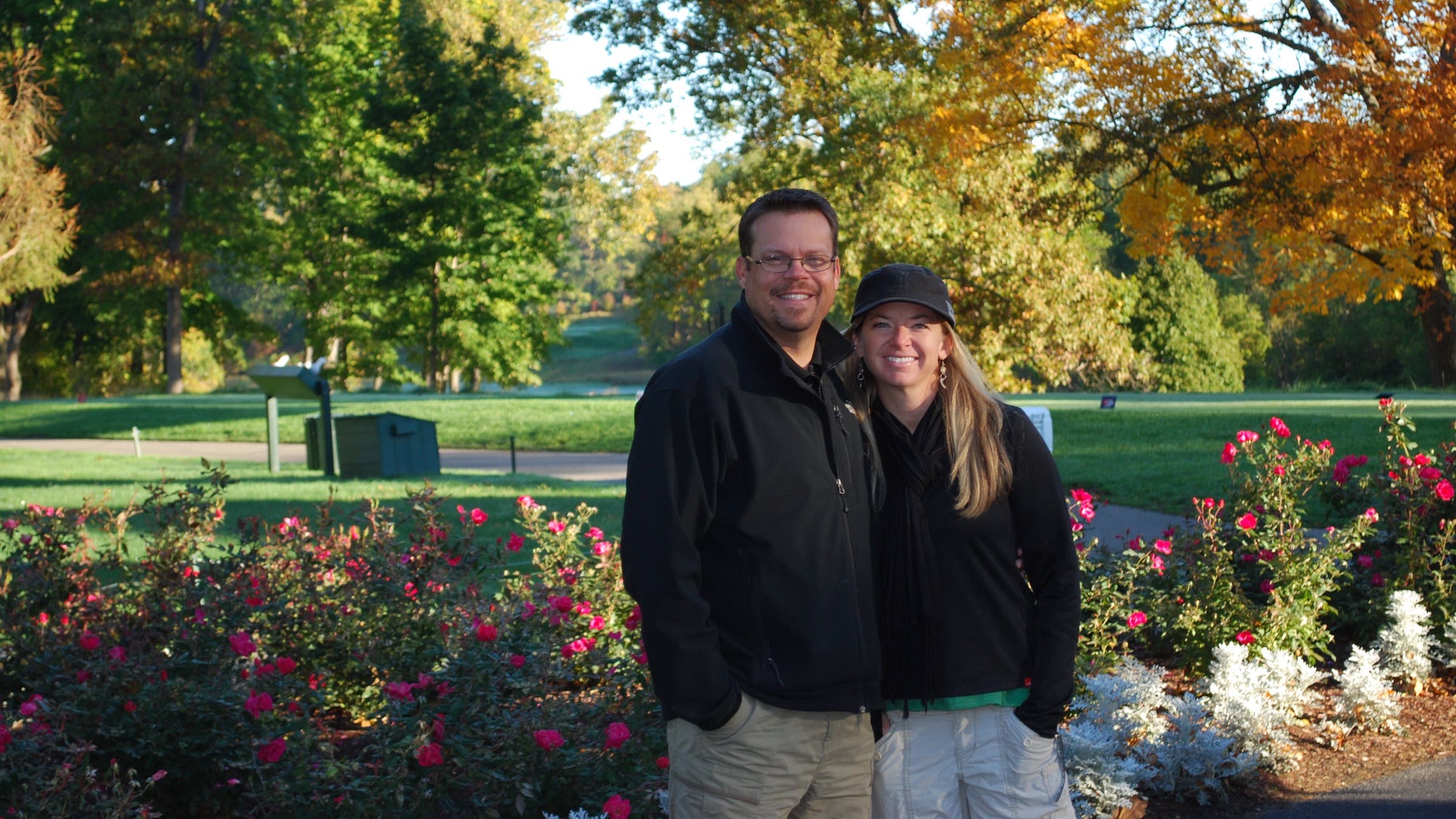
In 2009, friends set Ben up on a blind date with Amanda Kelley, a 36-year-old chiropractor and mother with a four-year-old daughter and six-year-old son who was going through a divorce. They started dating and as it was with Michelle, Ben and Amanda’s courtship lasted for years, marrying in 2021. Amanda, a self-described spiritual person who says “Jesus is my man,” never could grasp why her first marriage ended the way it did. Until she met Ben and his children. Then she had an epiphany: this is the family she was meant to be with.
“I wouldn’t wish this situation on anybody, it’s just, it’s hard,” she says. “But it was not hard being a mom to Ben’s kids which is why a million times over I would not change a thing.”
ADVERTISEMENT
If he could, for Amanda’s sake, one thing Ben would change is to offload the anger and guilt he carries about not being able to save Michelle. So one day he sits down and writes Ryan a letter, absolving his former friend “to a degree.”
But he has yet to mail it.
“I can understand why people end up asking for forgiveness or forgiving people on their deathbed,” says Ben. “But at this point for me where I’m at in my life and where I’m at with my children and where I’m at with Amanda, I don’t feel the need to forgive him face to face. It’s not gonna change my life at this point. And it’s also not going to bring back Michelle.”
Bringing back Michelle was my job.
ADVERTISEMENT
Finding Her Way Home
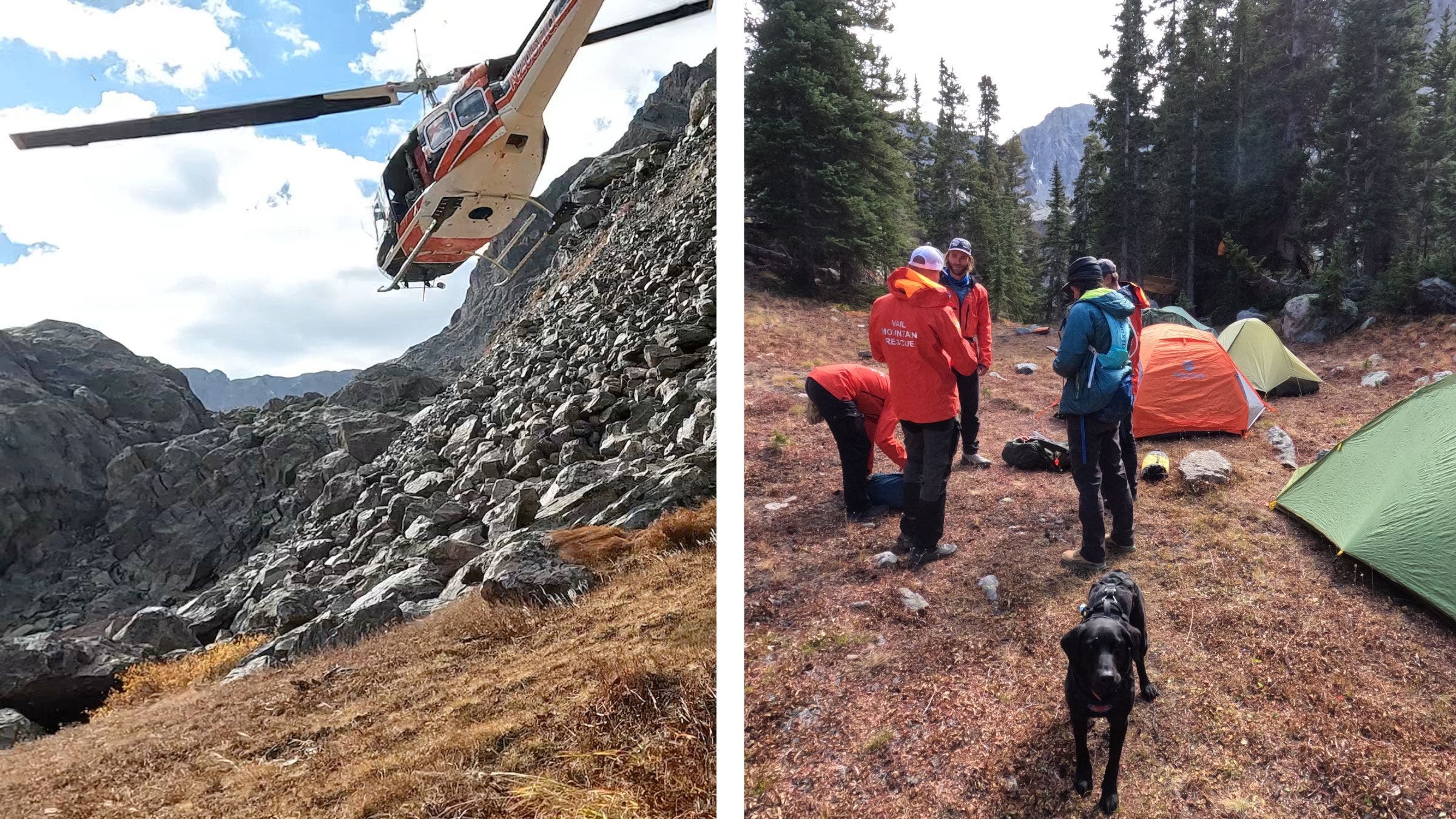
Randy Oates never is able to land on the rockpile and instead sets me, Anya, Zach and Stryker down in marshland on the banks of Lake Patricia, near where Cody Worrell had found Michelle’s crumbling boot in 2021. Then he flies off and 15 minutes later returns with the rest of my search and recovery team: Jeff Ashby, a retired NASA astronaut; Heather Parker, a veteran Army paratrooper, now a tower crane operator at a local construction company; and David Weisman, an endurance athlete who works as an executive at a global consulting firm. Sheltered in a grove of conifers singing in the wind, we establish a base camp at the bottom of Angelica Couloir, a granite cathedral with no roof and towering walls and a vast nave of boulders marching ever upward to the summit with its melted out crucifix.

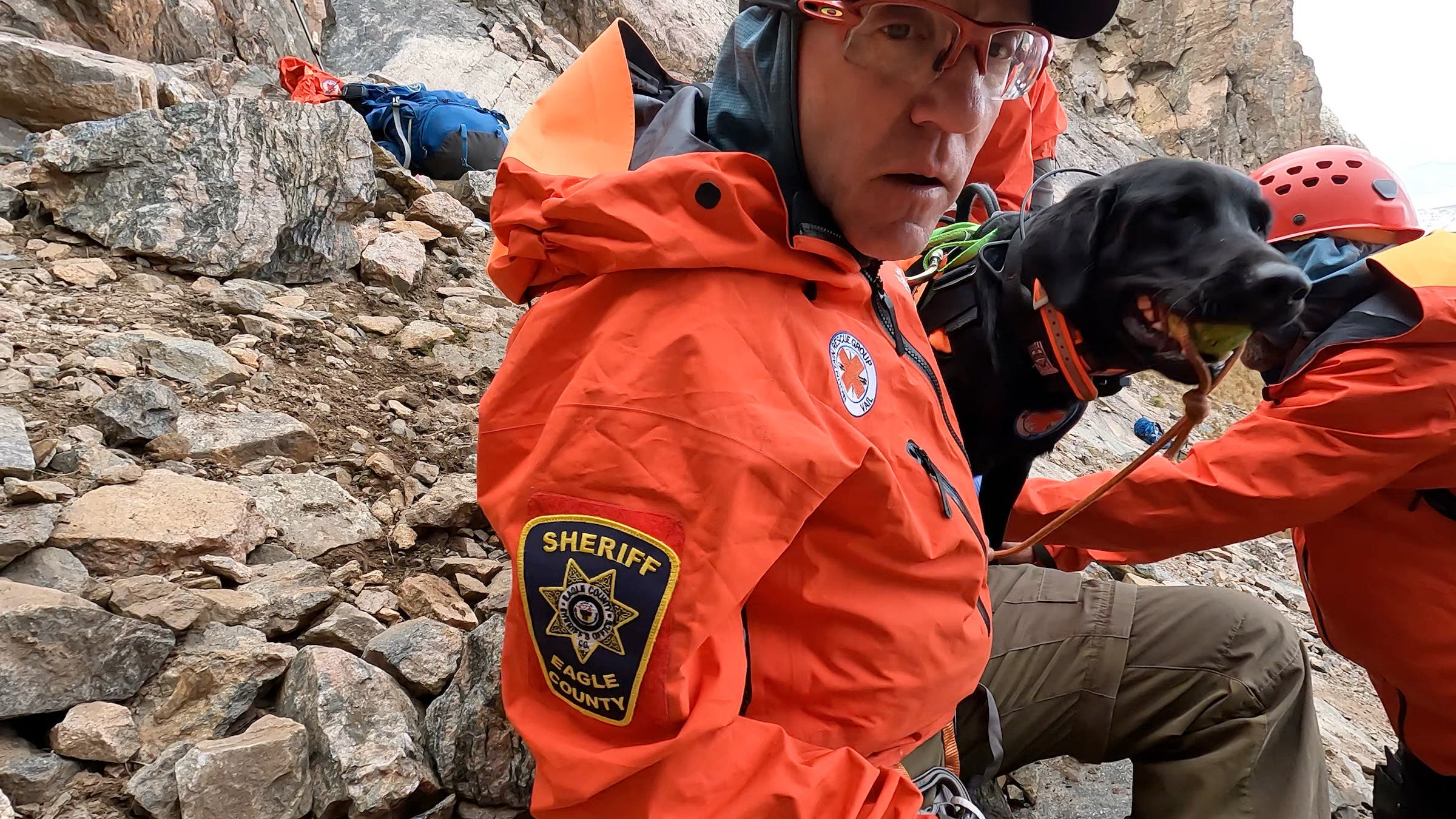
That October night, the aurora borealis dances along the north ridge of Holy Cross, a shimmering violet then green curtain of light blowing in the solar wind. We interpret it as an omen: Michelle telling us she is finally ready to go home. Late the next morning, after three hours of scrambling up the boulder field, my dog leaping from rock to unsteady rock, sometimes hoisted like a suitcase by his harness over yawning bottomless holes, I put Stryker to work at the bottom of a steep rock drainage 600 feet below the primary site where hydrological mapping data loaded into my Garmin shows the downhill path that runoff—and potentially evidence—follows as the snowpack melts away each spring and summer. Immediately he starts sniffing the sediment, a natural catch basin at the chute’s outfall. Stryker’s tail starts helicoptering, a signal to me that he knows he’s about to earn his paycheck: the precious tetherball tucked in my thigh pocket. My Lab leaps up onto a grass bench and attempts to climb higher but can’t. So there he sits, rigid and focusing a stare uphill: his trained final response (TFR) to cadaver odor.
Holy shit.
“Stryker just gave me a TFR,” I announce into my radio. Zach free climbs up the drainage while I scramble around it with my dog. At the top, I join Jeff Ashby, who’s standing at the edge of a cliff assessing the primary search site. A few minutes later, Zach’s voice crackles over the radio.
“I think I found a spine.”
“Say again, break. You found what?”
“A spine. I think I found a spine.”
On the radio I ask Anya Minetz, who’s exploring nearby caves with Dave Weisman, to vector over to Zach and inspect the find, and verify that it’s not from a bighorn sheep like so many other bones we’ve found scattered around the basin.
A moment later a whoop of joy echoes from below.
“I’ll take that as an A-firm,” I say.
ADVERTISEMENT
When Anya answers, I can tell she’s smiling: “Yes, it’s definitely human.”
It’s an intact desiccated segment of cervical and thoracic spine—vertebrae C1 through T5, a robust source for DNA for forensic identification—that over time had migrated down the drainage and into a cave-like rocky alcove. Sheltered from ultraviolet rays and weather, there it remained preserved for nearly two decades, as if waiting to be discovered.
I reprise her howl. Jeff claps me on the back, shakes my hand, then tells me we have more work to do.
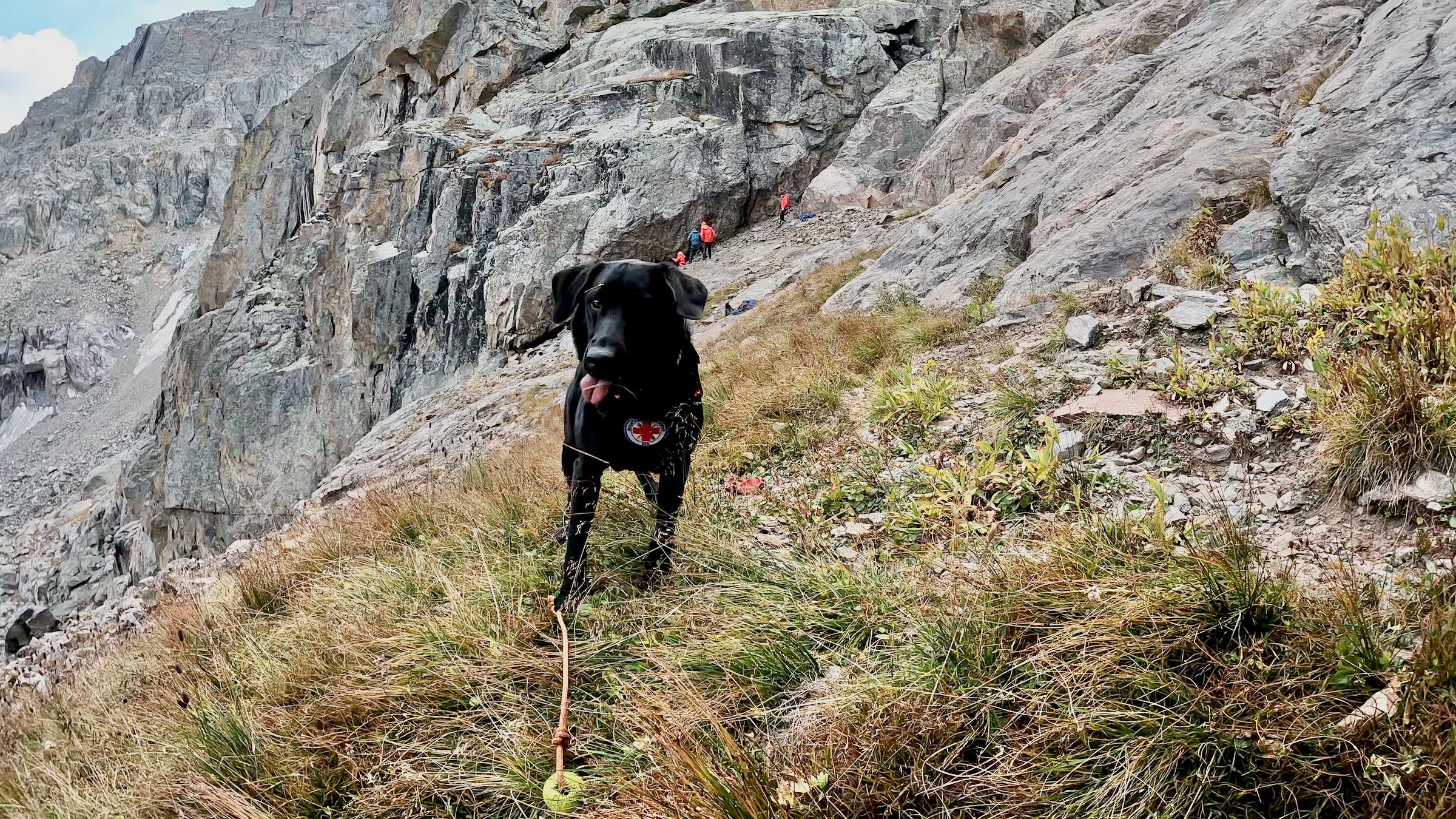
At the primary site, I wiggle my hips into a climbing harness and attempt to put Stryker on rope to check the 30-degree rock seam where Zach and Erika found Michelle’s things. But Stryker refuses, something I’ve never seen him do before on a mission. After that harrowing hike up the boulder field, the nerve-wracking exposure of our search site has pushed even this steadfast high-drive purebred over threshold. Stryker’s done for the day. Honestly, if this good boy never finds another lost human thing in his life, I won’t care. I explain the situation to my crew, and a group decision is made to excavate the seam, betting that Michelle has been interred here over time by rockfall.
ADVERTISEMENT
I sit with Stryker on a sloped grassy shelf safely off to the side as the rest of my team goes to work.
“She showed us the lights last night,” says Dave. “This is going to be an amazing story to tell the family!”
Once a sizable section has been cleared of rockfall, Zach, on hands and knees, begins working his way up the seam, troweling the wet sediment, unearthing bits of rib bone, a partial right scapula, a fully intact right humerus, strands of blond hair, and another fragment of temporal bone, this one from the left side of the skull. After each piece of evidence is documented with a photograph, before it is packaged, I bring the find over to Stryker to sniff and verify with a sit. When he does, Heather rewards him with a raucous game of a tetherball tug. His rapturous barks bounce from wall to wall around the granite basin.
Then all is quiet.
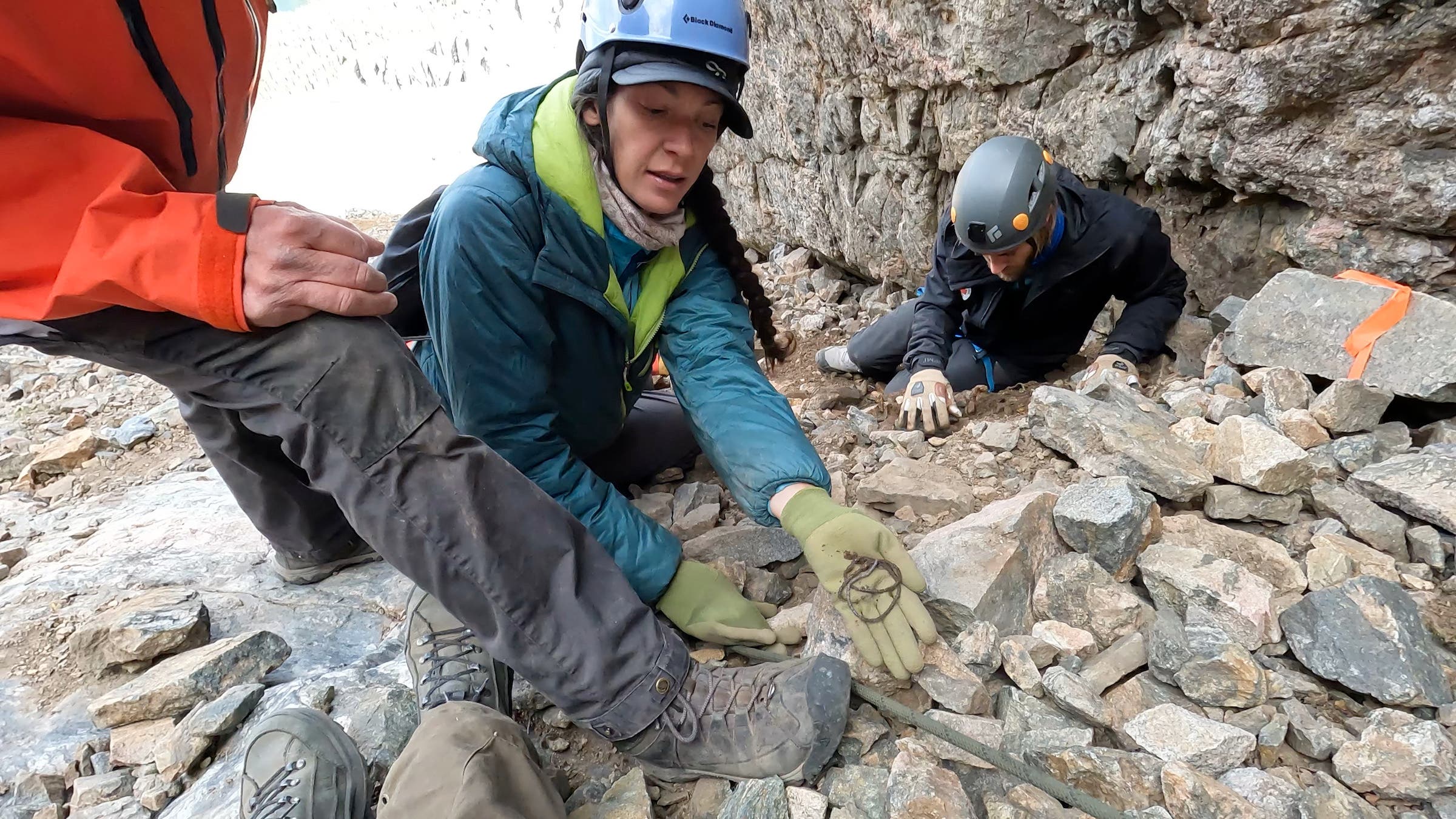
Near the top of the seam, Zach digs around with his trowel and finds what at first he thinks is a bit of string.
ADVERTISEMENT
“What is it?” I ask.
Jeff, Dave, and Heather huddle around for a closer look.
“It’s a part of a necklace or bracelet or something,” says Jeff.
Anya, prusiked onto a safety line at Zach’s side, snaps a photo with her cellphone.
Zach carefully coaxes the precious thing from the damp soil and drops it into Anya’s open hand.
“Wow-ow!” gasps Heather as everyone leans in.
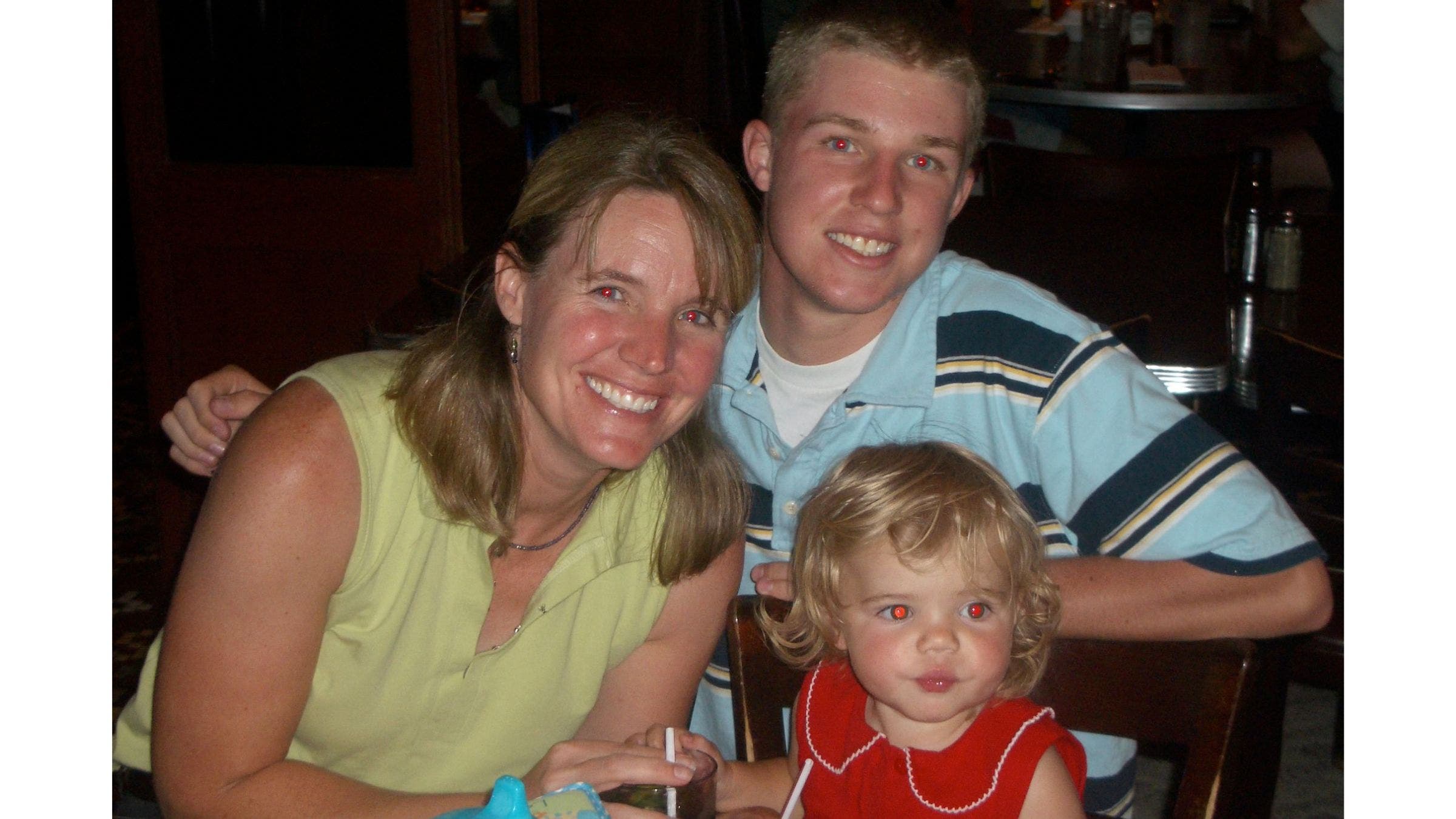
Ben, who’s been monitoring our progress from a hospital bed in Denver while awaiting kidney stone surgery, texts a photo he took at a restaurant during a family vacation to California in June 2005. In it, Michelle poses with her oldest and youngest children; a grinning 16-year-old Michael, and a quizzical Haley, a babe-turned-toddler with a sippy cup. It’s one of the last family photos she appears in before leaving to hike Holy Cross.
ADVERTISEMENT
Michelle’s happily leaning into her kids, beaming at her husband. And she’s wearing that coral beaded necklace Ben bought on the beach in Saint Lucia. It’s the same necklace we’re now all staring at with wonder and awe that’s in the palm of Anya’s gloved hand.
The next day Ray, his wife Judy (Michelle’s mom), Michael and his partner (now wife) Stephanie are waiting for us outside the Holy Cross ranger station in Minturn when we return from the field, dirty, exhausted, and triumphant. As Anya arranges the evidence we’ve recovered on the open tailgate of a 4×4 rescue truck, Michelle’s oldest son and both her parents gather around. Wearing nitrile gloves, hair tied back with a neckerchief and a long braid dangling over the shoulder of a tank top, Anya presents every find for Ray, Judy, Michael, and Stephanie to inspect, narrating the story that each bone tells. In other words, these bones we brought down from the mountain become pieces of a puzzle that even when partially assembled, begin to reveal a picture of what likely happened on September 24, 2005. And once a DNA match is made, they will finally, definitively put Michelle to rest.
ADVERTISEMENT
After the show and tell has ended, we stand around in awkward silence. As an antidote, I let Stryker out of the truck and he bounds over to his new friends, barking, tail spinning, and begging for pets. Ray, grateful for the distraction, rubs my Lab behind his ears and tells me how much Michelle loved dogs. Stryker grunts, wanting this to never end.
When we Zoom later, I ask Ray when it was that he finally accepted that his daughter was never coming home. Surely, I assumed, it must have been when Tim Cochrane suspended the search nearly 20 years ago, or maybe after her funeral. Ray ponders the question. I briefly wonder why he’s not answering, then I see that he can’t. Through the ether he’s looking me dead in the eye, and he’s weeping. It seems like forever before Ray speaks, but when he summons words he says:
“I guess the day I met you.”
ADVERTISEMENT
Ray composes himself, the grief rapidly draining to wherever it lives. He tells me that seeing everything my team had found laid out on the tailgate of VMRG’s pickup truck, all that was left of the vibrant human being who was his daughter, the mother of his grandchildren, was almost too sad to bear. But, he says, “we also knew that this was a very important moment for us.”
I ask him to elaborate.
“I call it a period on the end of a sentence,” he says. “From that point on we could move forward to total acceptance of what transpired. Do we know what happened with her, as to why she got to where she was? No. We’ll never know that.”
ADVERTISEMENT
But there are clues. The bones we collected are sent to the Human Identification Laboratory of Colorado in Fort Collins, then to the Colorado Bureau of Investigation in Denver. A positive DNA match is made. In March, Ben and Haley Vanek meet with Sergeant Jeff Waltz at the Eagle County Sheriff’s Office. He ushers the father and daughter into a room where almost everything Zach, Erika, and my team collected off the mountain (minus the bones) has been prepared for them to inspect. Haley was only interested in one thing: the necklace. She just wanted to see it, to hold it in her own hand.
“[I thought], ‘Wow this was truly what my mom was wearing when it happened,’” recalls Haley, now 21, a senior at Lakewood’s Colorado Christian University, who says she has no conscious memories of her mother. “It definitely flooded me with emotion. I could feel the weight of it and I was just trying to comprehend it all.”
ADVERTISEMENT
Ben and Haley take home the necklace and a thumb drive loaded with digital images Sergeant Waltz was able to extract from the SD card in Michelle’s camera. Before they leave, Sheriff James Van Beek, who cuts a classic Western sheriff profile in blue jeans, cowboy boots, and tops out at six-ten when he’s wearing his Stetson, escorts Ben and Haley into his office. From a wall, the sheriff removes an arms-outstretched-sized topographic map of Mount of the Holy Cross, the master search map Tim Cochrane used to track personnel in the field in September and October 2005. His predecessor, Joe Hoy, had it framed, and hung it facing his desk, as a daily reminder that the search for Michelle, though suspended, was not over. When Van Beek was elected to the office in 2014, he left it in place. When he gives that framed map to Ben, it’s a symbolic gesture that says, after 19 years, ECSO case number 2005-001969 is finally closed.
“It wasn’t a burden,” says Van Beek. “But it was something that was always there to sit there and say, ‘Here’s a task that needs to be done. Here’s something that has to be accomplished.’”
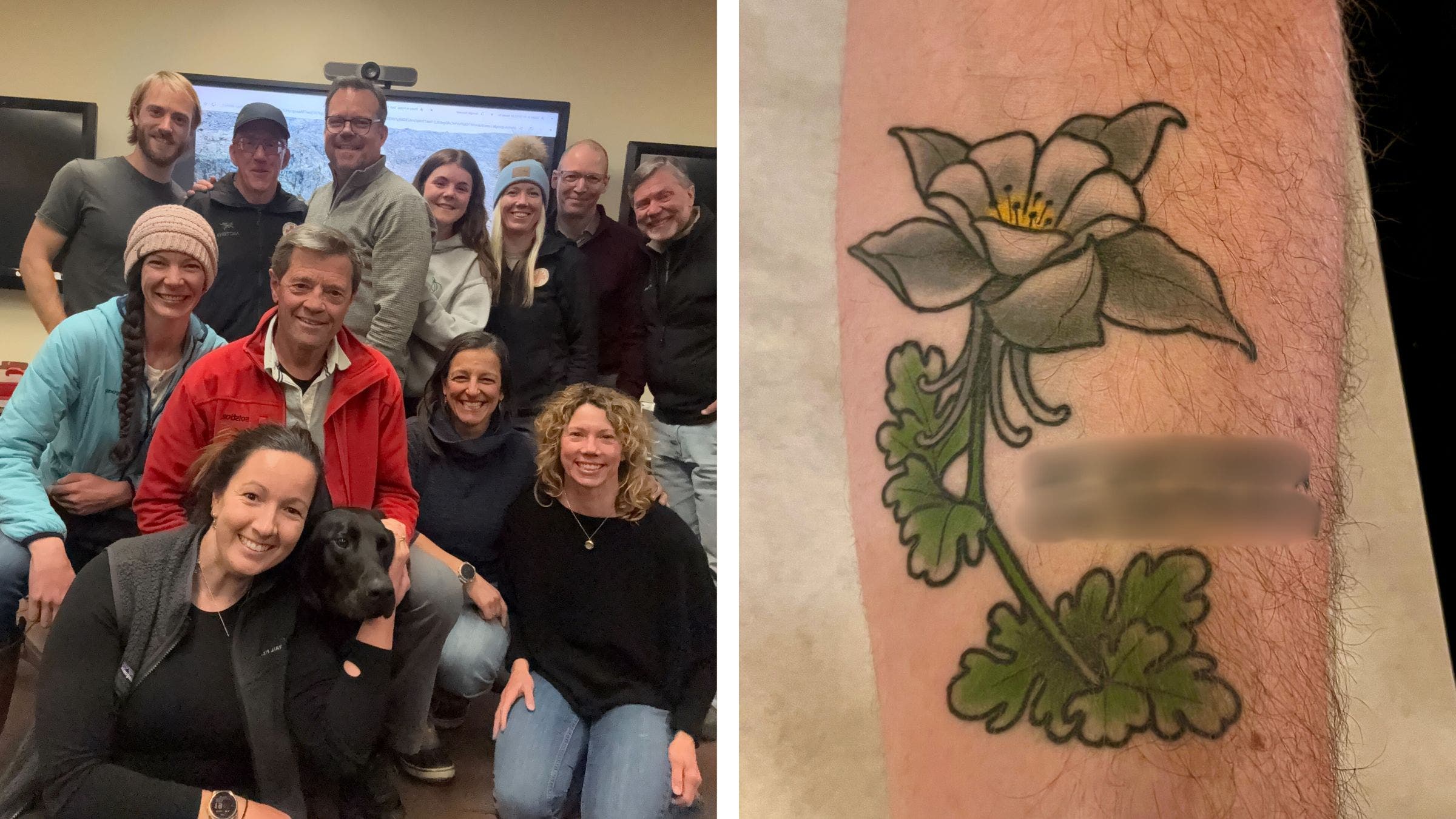
The map now hangs in a condo the family keeps in the mountains. The coral necklace, which Ben plans to have restored and made into necklaces for each of his daughters, is locked in a safe in Ben’s office. And Michelle’s ashes from the bones we recovered? They’ll be scattered somewhere on Mount of the Holy Cross. But Grant, now 30, also has mixed some into ink, and has a Columbine, Michelle’s favorite flower, tattooed on his left forearm with the coordinates of her final resting place on Holy Cross. All of the Vanek men have crosses tattooed on their left inner ankles (Ben had his done on their anniversary following Michelle’s death and more recently, with ash-mixed ink, added a backdrop of the Holy Cross summit to his left ankle and the lat/long of the Holy Cross recovery site to his other.) When Michael turned 18, a year after his mother’s death, he had her—and his—initials inked on a shoulder; Ali (now 27) and Haley have “Love” wrist tattoos in their mother’s handwriting, from a letter Michelle wrote to their father, signed, “Love Always.”
ADVERTISEMENT
In Ben’s safe there’s also the thumb drive with images from the digital camera Michelle had zipped in a jacket pocket on the day she died. The final four include one portrait of Ryan, smiling with an open pack of Gu in his gloved hands near the top of the Notch Mountain switchbacks, and three scenic shots, including a panorama of the snow-dusted Holy Cross summit Michelle took on the North Ridge trail. In the lower right corner of the frame, there’s a cornice. Though he is not certain, Ben wonders if Michelle may have done exactly as Ryan instructed and contoured around the summit to their meetup point, stepped onto the cornice to look over the edge, broke through and fell to her death.
Although many questions remain, the few answers the Vaneks have, however tenuous, serve as an antidote to the anguish of never knowing.
“What most people call closure I call peace,” Ben says. “Now we know that’s the place where she died, and that’s where she was resting.”
ADVERTISEMENT
On to Halo Ridge
On August 4, after weeks of e-mails and voicemails went unanswered, I press the bell on the door cam at Ryan Johnson’s home in a final attempt to give him a chance to verify or offer his version of this story. A moment later, the inner door opens. I explain my business to Ryan, who tells me from the other side of a glass pane, voice breaking, eyes haunted: “This is tragic, and all it does is stir up a lot of bad memories. I really can’t talk about it. It’s just a tragic thing.”
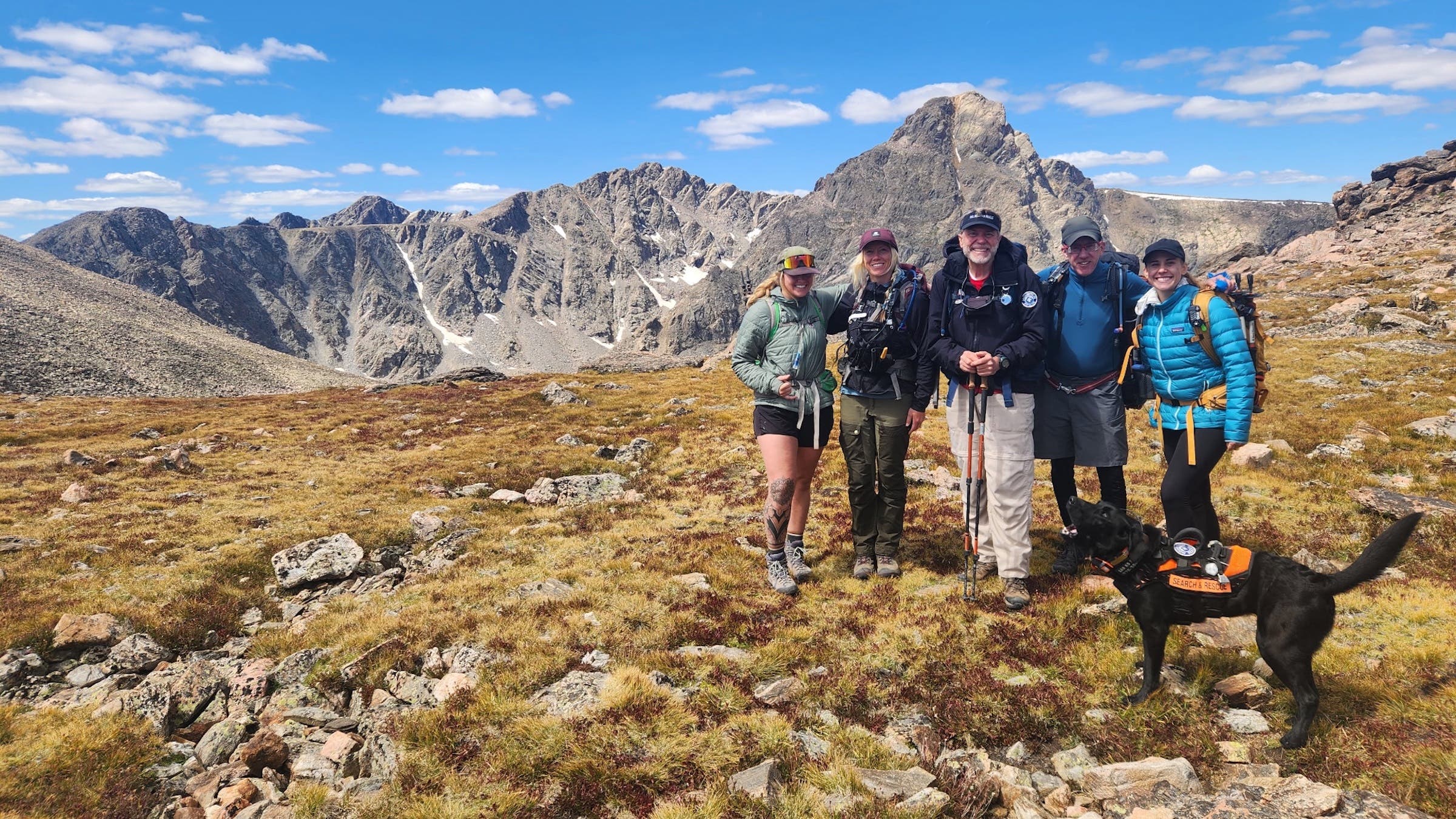
Seeking to find more answers for Ben and his family, a week later I assemble one last team and make plans to hike the Halo Route exactly as Ryan and Michelle did. A stickler for detail, I’ve even decided to hike in out-of-the box boots, only mine are Salomons instead of Sorels. In addition to me and Stryker, my crew includes four others. There’s Erika German, a 36-year-old, 13-year VMRG veteran and rafting guide and ski shop manager, who received the team’s 2024 Mountain Goat Award for the five above-treeline excursions she made on Holy Cross last summer in her quest to find Michelle. There’s also Scott Beebe, a 66-year-old, 14-year VMRG rescue-level member who has summited Holy Cross 15 times and leads summertime pilgrimages to the Notch Mountain overlook as pastor of Vail’s Mount of the Holy Cross Lutheran Church. To challenge our pace on the trail, Erika also invited a friend, Shea Small, a 28-year-old snowmobiling and rafting guide who summited Holy Cross via the standard route for the first time the previous weekend and was hungry for more vert. And I invited my 24-year-old daughter, Lucah, a Fulbright Germany English language teaching assistant who has summited two 14ers—Grays and Torreys—and who is training for the Chicago Marathon.
ADVERTISEMENT
On the morning of August 11, we park at the Halfmoon Campground just as Michelle and Ryan did, arriving at 6:30 A.M., taking the last two parking spots. Almost everybody who has planned to summit today already is on the trail, most heading up the standard route up and over Halfmoon Pass. With time-stamped images from Michelle’s camera Ben texted me on my phone, a timeline of Ryan and Michelle’s hike photocopied from Colorado 14er Disasters, and GPS waypoints loaded in my Garmin, I lead my group up the Fall Creek trail, departing, as Ryan and Michelle did, at 7 A.M. Together we walk in Ryan and Michelle’s bootsteps, following their route up Notch Mountain then scrambling up and over three ever-taller talus mountains from Halo Ridge to Holy Cross Ridge, ground truthing their journey to better understand what we think happened to Michelle on September 24, 2005.
I had no idea how perfectly I would manage to re-create the tortured physical condition and state of mind that Michelle must have found herself in on that day. When we finally stand at the end of Holy Cross Ridge, at the place just below the mountain’s summit where Michelle separated from Ryan at 1:25 P.M. two decades ago, I am feeling my age. I want nothing more than to just be done with this death march. Like Michelle, I have been moving without a break while struggling to catch up with faster and more agile hiking partners. Because I also have my dog, I have burned through the six liters of water I have carried this far, yet I am still beyond thirsty because the merciless high-altitude sun has been sucking moisture from my pores. I am so tired I could fall asleep on the trail-hammered balls of my feet that hurt much more than they should because they’ve been breaking in stiff boots. On this mission I will walk 48,000 steps, burn 3,600 calories, and shed nearly five pounds (according to his GPS collar, Stryker also logged nearly 7,000 vertical feet of elevation gain and loss over 15.3 miles on the trail, doubling back to check on my whereabouts). As I was suffering on Halo Ridge—as encouragement—my daughter told me the route seemed more physically demanding than running a sub-four-hour marathon.
ADVERTISEMENT
Yes, the summit beckons. It’s calling me over my right shoulder. But I literally cannot go there. Getting to 14,005 feet would require moving another 405 vertical feet. Off in the distance, maybe a quarter-mile away, I can just see the pillowy white cornice where the North Ridge trail begins. It’s along the same contour, at 13,600 feet, where I’m standing. Going up? Not an option. Turning back? No. Fucking. Way. But putting one boot in front of the other to get to that cornice? That. Now that I think I can do. Pastor Beebe, who is eight years my senior, looks as gassed as me. Like Ryan and Michelle, we agree to split our group. The women will proceed to the summit, snap a selfie and stay for five minutes like Ryan did, while Scott and I, like Michelle, will hike across the talused slope. Then we’ll meet up on the North Ridge trail.
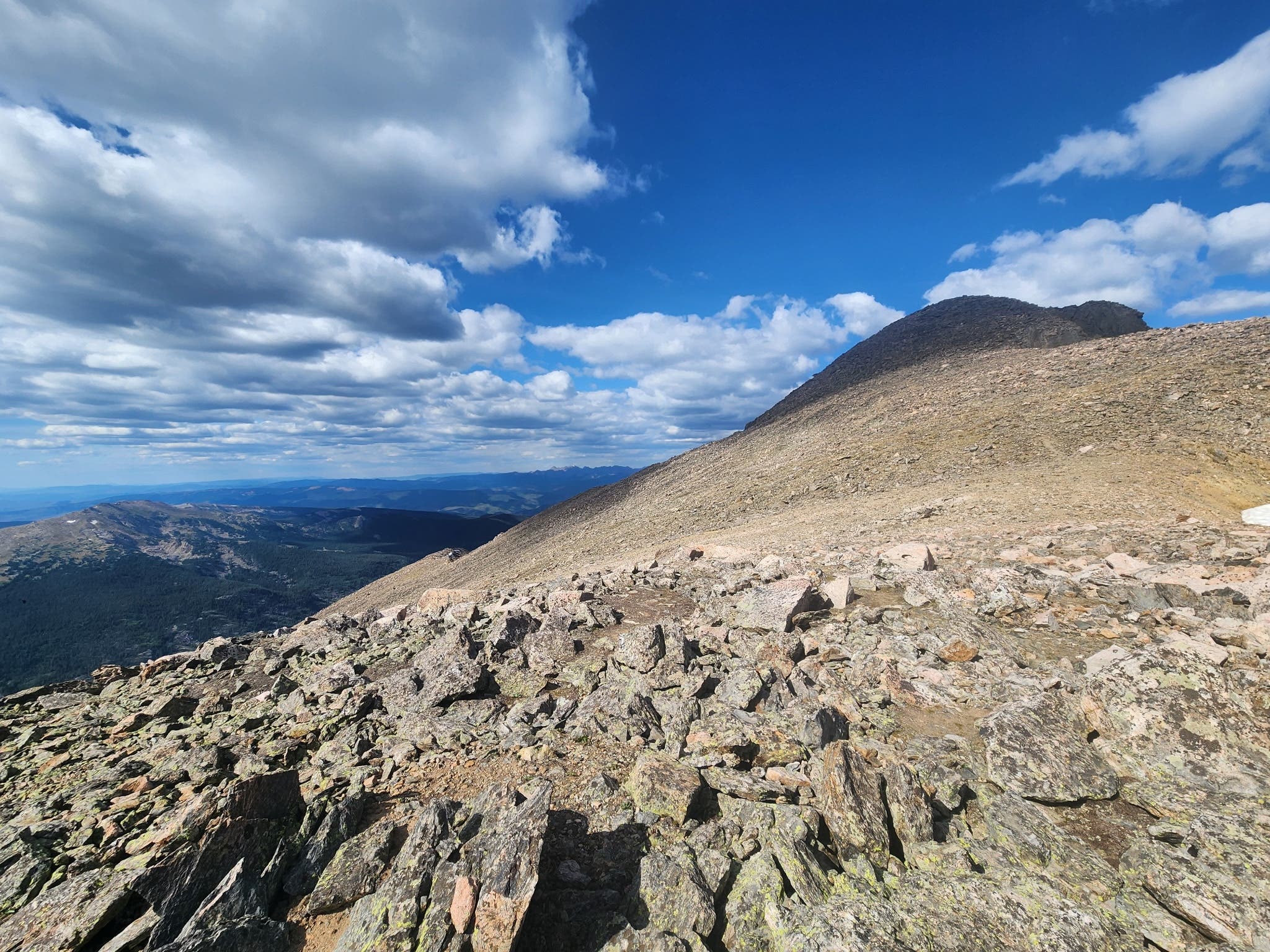
Contouring—side hilling over 30-degree loose rock—takes us 25 minutes. The women descend from the summit to the start of the North Ridge trail cornice 20 minutes later. We do the math. On September 24, 2005, Michelle would have arrived here at around 1:50 P.M. On my phone, I open the digital image of the summit from Michelle’s camera. It’s time stamped “2:53 A.M. 09/24/05.” One thing we’ve learned from this ground truthing exercise: the clock on Michelle’s camera appears to have been off by 13 hours. If we’re correct, Michelle would have snapped that photo at 1:53 P.M. Erika walks down the trail and stops at a uniquely shaped boulder that appears off to the side in the picture Michelle took. She pivots to face the summit and takes a photo with her cellphone’s camera. It exactly matches Michelle’s photo on my phone. So now we know Michelle Vanek was standing at this very spot at 1:53 P.M. on September 24, 2005, six minutes after Ryan began his descent from the summit, according to the established timeline. I drop a waypoint on my GPS.
ADVERTISEMENT
We follow Erika further down the trail to a natural cut in the cornice, an otherwise almost continuous band of snow clinging to the North Ridge. From the waypoint where I’m standing, according to my GPS, far below us is another waypoint, the place where Erika and Zach found Michelle’s hydration pack. Rather than fall through the cornice, it seems more likely that Michelle walked right through it. After contouring around the summit to the North Ridge trail just as Ryan told her to do (Head towards that location then just start on down the trail and I’ll catch up with you…), Michelle had 20 minutes to kill. So after standing around, shivering sweat-soaked in the cold late-September wind, still following Ryan’s instructions, Michelle continued down the trail and stopped when she saw this break in the cornice. Here—and we will never know why she did this—Michelle turned east toward Angelica Couloir, left the trail and walked downhill past the cornice and through another gate-like opening in the rocks further below. Lower and lower she continued until eventually she became cliffed out, a perilous condition in high consequence terrain where a hiker suddenly discovers that it is impossible to move either up or down. At an impasse, she took one last photo on the afternoon of September 24, 2005, at 2:13 P.M. It’s looking up a vertical rock seam. We know exactly where this is because the seam is clearly visible in video and drone footage VMRG rescuers captured on September 19, 2024, during an evidence search of the cliffs above the Vanek recovery site.
Michelle probably called out for help. But at 2:13 P.M. Ryan likely had already passed the gap in the cornice and was further down the North Ridge trail, hoping he would catch up with her.
“She wouldn’t hear anybody,” Erika says. “And nobody would hear her.”
“It’s just so odd,” says Pastor Beebe, standing beside Erika at the break in the cornice.
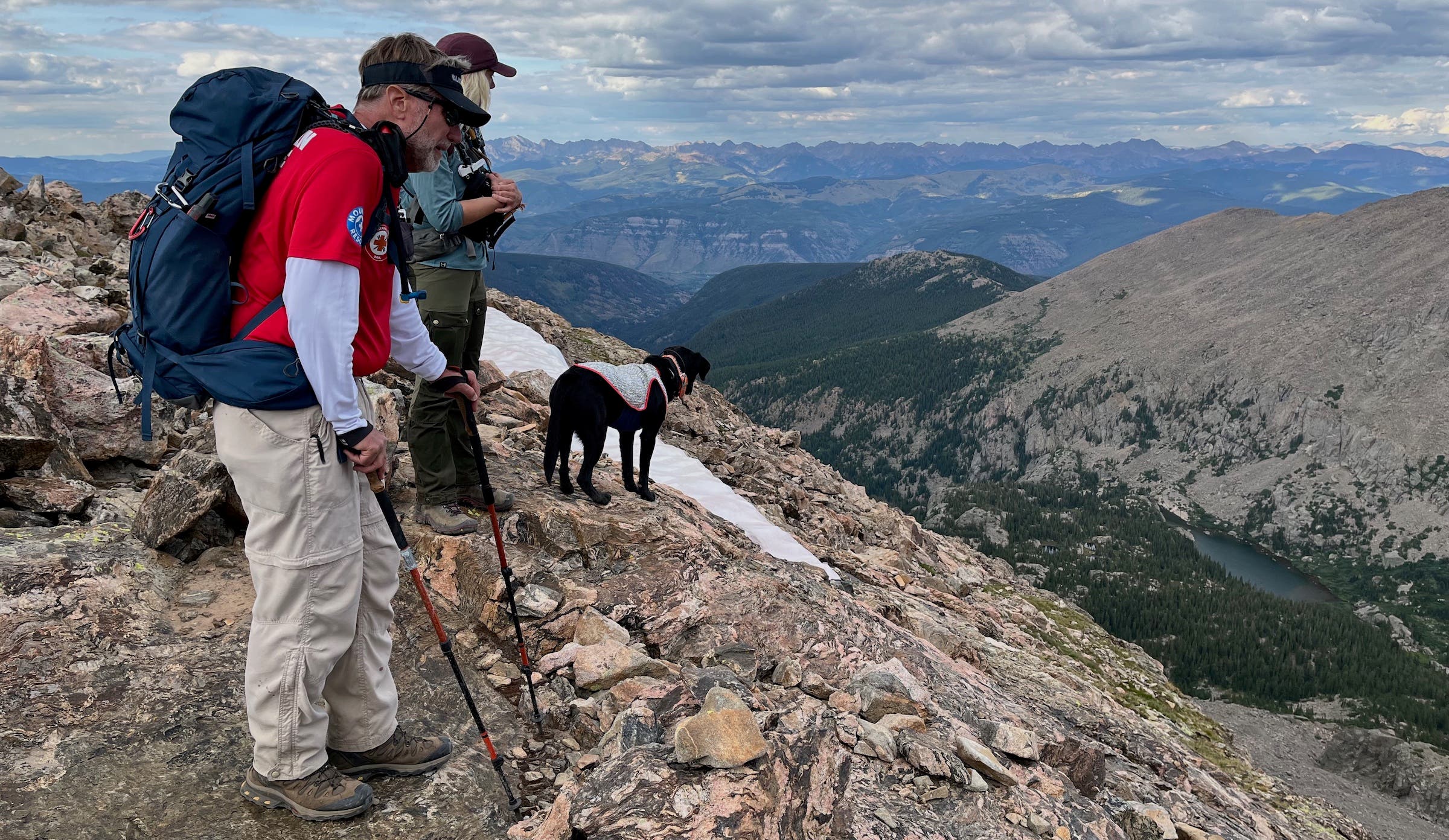
He gazes down Angelica Couloir at Lake Patricia where Stryker and I camped with VMRG’s search and recovery team last October and wonders, did the promise of that oasis compel Michelle, in the dehydrated delirium of acute mountain sickness, to leave the safety of the established trail and seek water?
“Everything else had gone just fine, it was scripted. Obviously they were strong hikers,” he says.
ADVERTISEMENT
After snapping that last photo, trapped down below, Michelle zipped the camera into her jacket pocket and made a desperate final move. She likely tried to traverse, and fell to her death.
From our interpretation of the camera’s time stamps, and the time it took my team to follow Michelle’s bootsteps, this is what we conclude: after separating, Ryan and Michelle probably missed each other on the North Ridge trail by mere minutes.
But that’s all it takes.
