Published February 7, 2026 03:00AM
They Put in Near Canada and Didn’t Stop Until the Gulf. Inside This Couple’s 2,300-Mile Canoe Trip.
Inspired by their shared love for the Mark Twain novel “Huckleberry Finn” and the desire for a great American adventure, a couple just finished their five-month canoe journey. It took them thousands of miles from Montana to Louisiana.
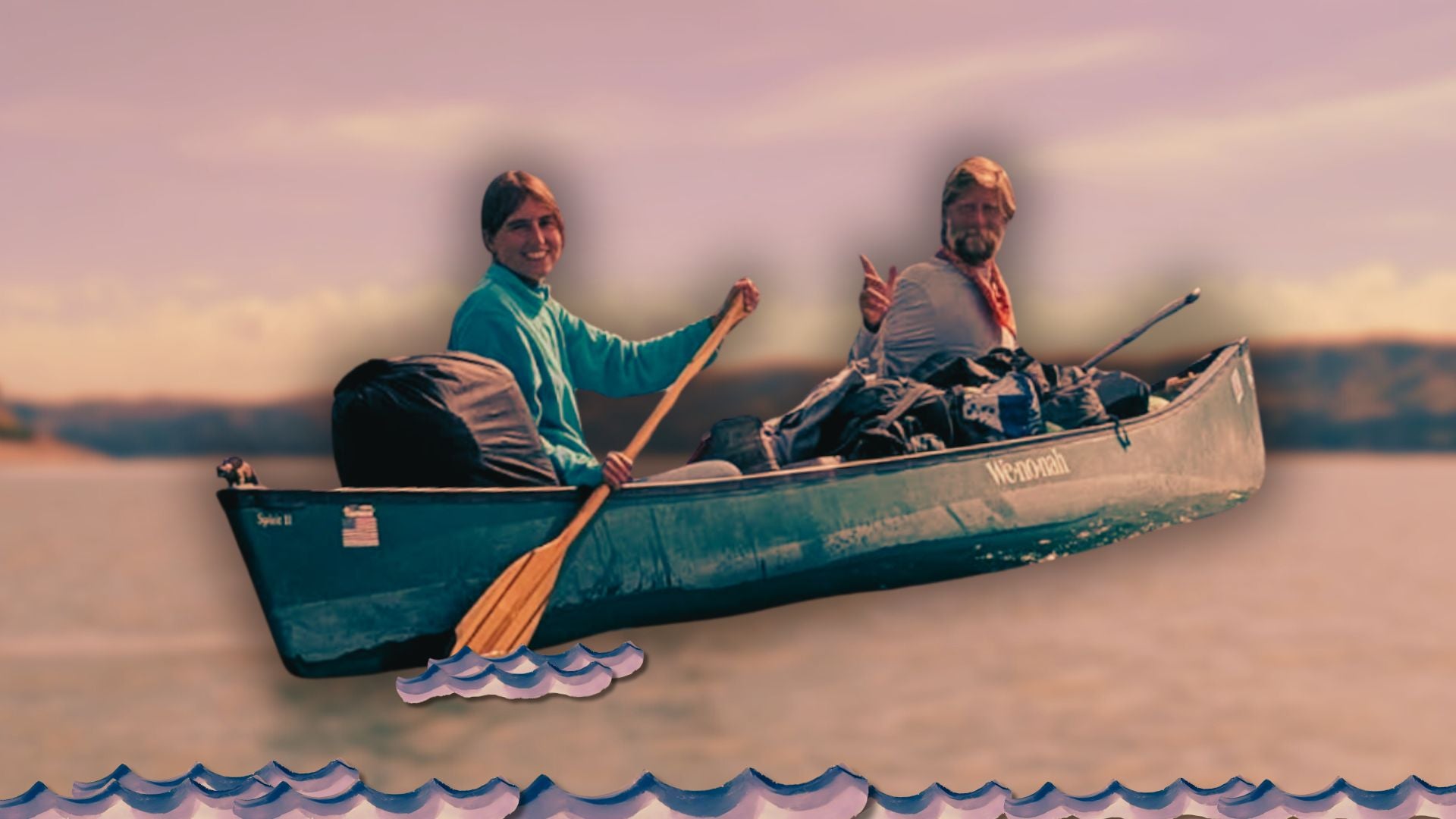
Nat Odgers and Mikey Lear, a couple from Brighton, England, canoed more than 2,300 miles through America’s heartland. (Photo: Natalia Odgers)
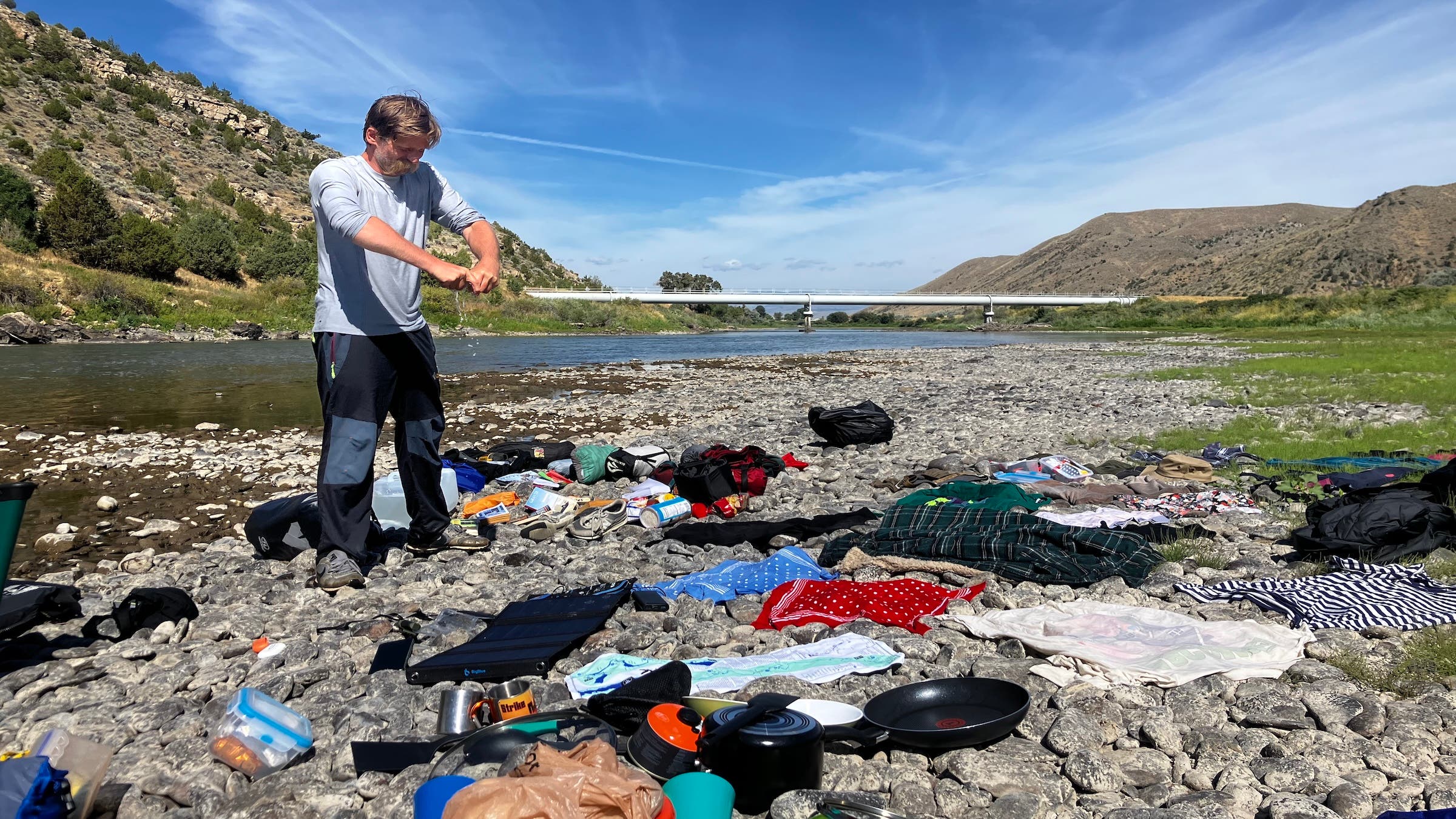
It was their second day on the river, and everything was soaked. Nat Odgers and Mikey Lear, a couple from Brighton, England, had just shoved off from the banks of the Missouri River in southwestern Montana on August 5, 2025. A short time later, their 17-foot-long canoe hit a rock and capsized.
And they still had five months remaining in their journey down the river.
“We capsized because of hubris,” Odgers, 27, told Outside. “We were so chilled out that we didn’t tie anything down. Almost instantly, we hit a rock, capsized, and all of our stuff started floating down the river.”
Inspired by their shared love for the Mark Twain novel Huckleberry Finn and the desire for a great American adventure, Odgers and Lear were planning to paddle thousands of miles from Montana to the Gulf of Mexico.
When they capsized, the river was shallow, and the couple didn’t feel they were in danger. But the boat weighed 500 pounds at its heaviest, and the duo spent most of the rest of the day drying things out. It was an important lesson in rigging to flip—in more ways than one.
ADVERTISEMENT
“We just saw one flip-flop charging off into the distance. I said to myself, ‘It must go on its own adventure now,'” laughed Odgers.
I spoke to the couple by phone in mid-January, just after they arrived on the outskirts of New Orleans. By then, their many books had gone moldy. But the two had nearly completed a dream that took them more than 2,300 miles through America’s heartland.
Led by Determination and a Dream
Neither person had traveled by canoe before this trip.
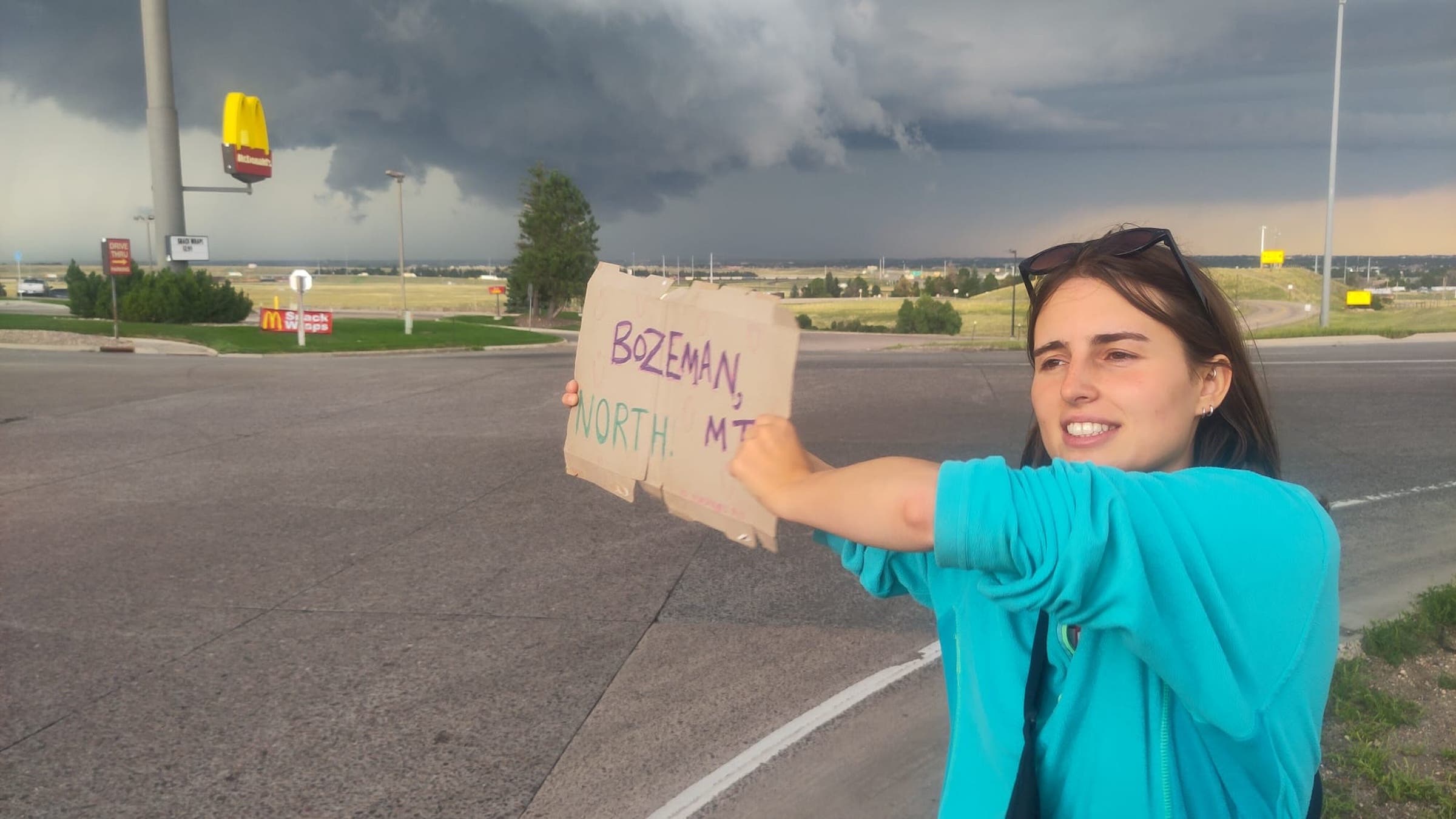
Odgers and Lear are middle- and high-school teachers who took the academic year off to embark on their adventure. They flew to Denver on July 29 and, over four days, hitchhiked to Bozeman, Montana, where they bought the canoe. The person who sold the vessel gave them an introduction into how to do paddle strokes
“He obviously thought we were going to die,” said Odgers. “We just thought the trip was something that we should do. The difficult things, you get better at, and you learn.”
ADVERTISEMENT
After a quick lesson in paddle etiquette, the two launched on the banks of the Missouri River, the longest in North America, on August 5 in Three Forks, Montana. They paddled for three months on the Missouri before hitting its confluence with the Mississippi River. After a month on the Mississippi, they changed course to the Atchafalaya River, about 200 miles north of New Orleans, where they completed the trip on January 17.
Wind, Weather, and Long, Lonely Miles
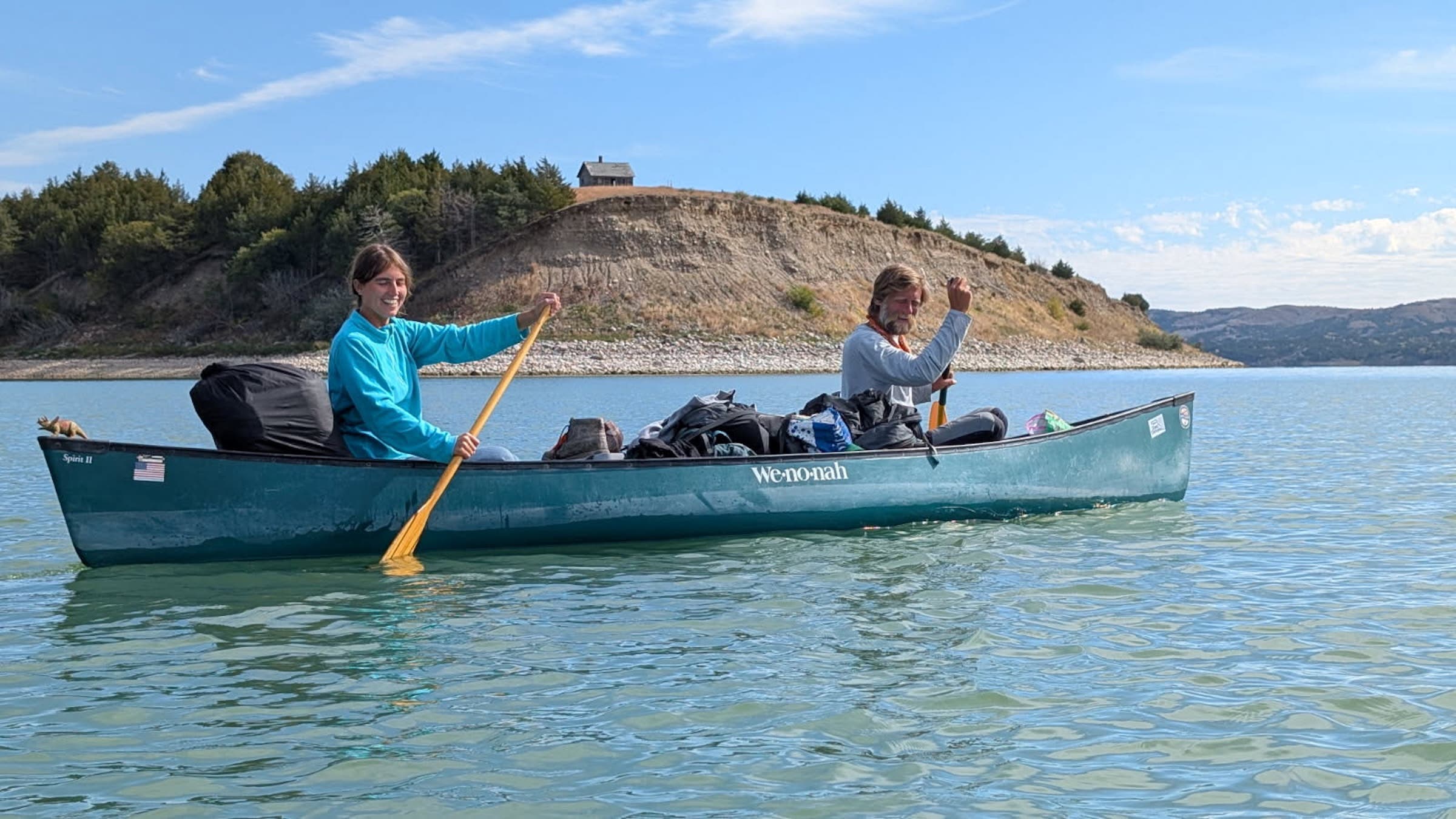
The two named their canoe Wenonah because that’s the manufacturer’s name. The boat hauled all of their equipment, including camping and food supplies, two chairs, an acquired “bougie” carpet for their tent, two bags of clothes they “never wore,” and a multi-week supply of their staple meal: canned tuna, rice, and mayonnaise.
Over their five-month adventure, Lear says the couple became grimier, gruffier, and larger on the top half of their bodies—and a tad bit scrawnier in their legs. Their biggest challenge was the weather. High winds, long waterways, and brutal conditions tested the pair’s endurance. On some of the country’s biggest lakes, often hundreds of miles wide with no current, an unfavorable wind made a waterway impassible.
ADVERTISEMENT
“We’d sometimes just have to stay inside the tent for a day, waiting for the wind to die down,” said Lear. “The weather made a huge amount of difference. We were lucky on some days, unlucky on others.”
The two often went days without seeing another person.
“There were days that were hard, the wind was upriver, you could barely paddle two miles an hour, and everything felt sketchy,” recalled Odgers. “Then you get off the boat, you’re covered in mud, you haven’t walked for most of the day—but we never had the moment where you just wish you were home. Even at the really grimmest parts.”
River Angels of the Missouri
They paddled rivers that were friendly for novice canoers, but what made the trip doable were the people they met along the way. Just like Trail Angels who help hikers on thru-hikes, the Missouri River has River Angels.
ADVERTISEMENT
“It’s baffling, but for some reason, if you choose to spend your free time paddling, there are tons of people who are prepared to be helpful with hotels, campsites, and restaurants. They will just give you things for free or host you in their own house,” said Lear.
Lear stopped our phone call mid-question to thank someone who had paid for their meal at the restaurant where they were being interviewed.
“That would never happen in England, and that’s happened to us a few times, just random strangers chatting to us for a few minutes and then they buy us a meal or do something kind to us without any expectation of repayment,” said Lear.
Lear said that the other people they met helped them during portages, when the two had to walk around a river obstruction, such as a dam. Throughout our conversation, the couple referenced the “American pioneer spirit,” and said the people they encountered were kind and curious about their story.
“The river takes you to some places that are not on the tourist route, I suppose,” said Lear.
ADVERTISEMENT
Farewell, Wenonah—For Now.
Bidding farewell to their waterlogged home was a bittersweet, sentimental moment
“Every day during the last week, we said to each other, ‘we’re just so lucky,’” said Lear. “Yet, there’s a whole load of basic comfort we just didn’t have. It will be so nice to sleep in a bed, have a shower every day, and wear clothes that aren’t stiff.”
ADVERTISEMENT
Wenonah is making her way back to Montana, where a caretaker will keep her until the next paddler steps up. It’s a donation that the two Brits hope will inspire someone else to pursue their river dreams.
“We’ve been the recipient of so much generosity; giving our boat to someone else is the least we can do,” said Lear.
And for those who need a little extra encouragement, Lear has advice.
“As we were told when we bought the canoe, grit your teeth, make it happen,” he said. “If you are held back by finances, you can have our boat.”
Odgers and Lear documented their entire five-month expedition on their blog here.
