Published August 10, 2021 09:20PM
What Makes Norway’s Ingebrigtsen Brothers Such Exceptional Runners?
Two studies analyzed 7 years of training done by Olympic gold medalist Jakob Ingebrigtsen and his two stellar siblings. Here's what the researchers found.
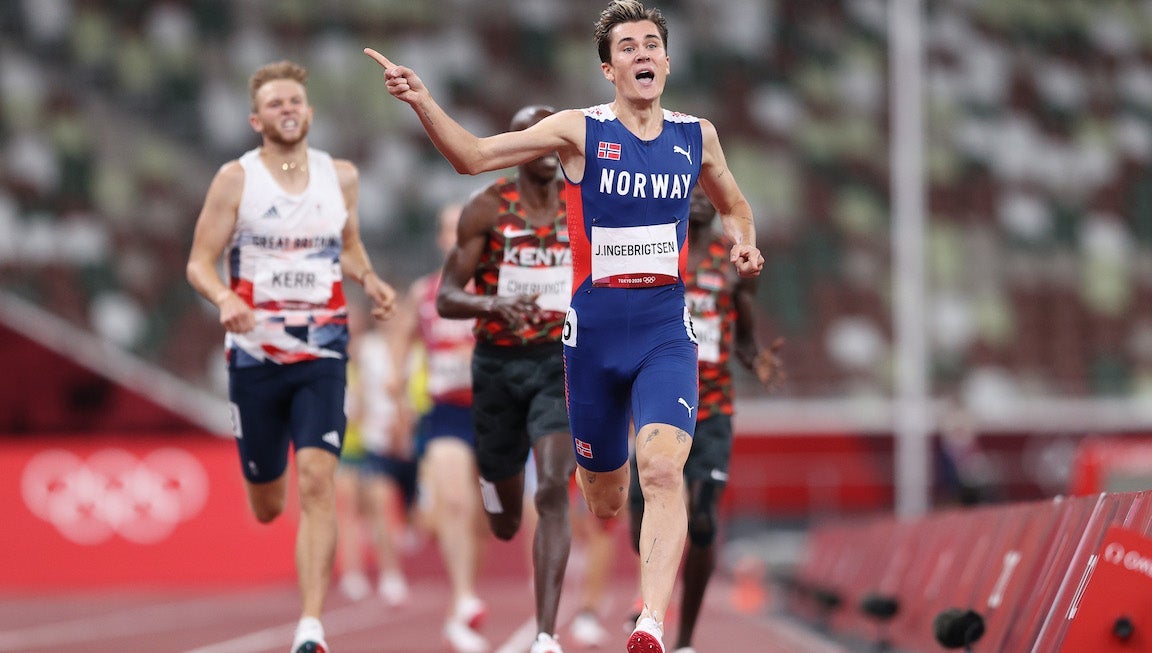
Jakob Ingebrigtsen of Team Norway reacts after winning the gold medal in the Men's 1500m Final on day fifteen of the Tokyo 2020 Olympic Games at Olympic Stadium on August 07, 2021 in Tokyo, Japan. (Photo: Patrick Smith/Getty Images)
During the Tokyo 2020 Olympic Games, 20-year-old Jakob Ingebrigtsen of Norway won gold in the men’s 1500m final on Saturday in an Olympic record-smashing time of 3:28.32 to upset world champion Timothy Cheruiyot of Kenya. Jakob comes from a family of astonishing talent; his older brothers Henrik (30) and Filip (28) are decorated distance and mid-distance runners themselves both having also competed at the Olympic Games (Henrik in London, Filip in Riop) in the 1500m. While Jakob is the only one to have won an Olympic gold medal, all three brothers have won European Championships at 1500 meters, and they have 5000-meter PRs of 13:15.38, 13:11.75, and 12:48.45 respectively.
So… why are they so good? While in-depth analytic research into successful training programs for runners is a rare commodity, fortunately for us one 2019 study published by the International Journal of Sports Science and Coaching explored the exact curious case of the mega talented Ingebrigtsen brothers. The study traced seven years of training by the trio. This research paired with another 2019 paper published in The Journal of Strength and Conditioning Research, which covered seven years of training by elite athletes, ranging from a 26:44 10K road racer to a 2:03:23 marathon runner, helps unlock a series of genetic and training characteristics that have led to the Norwegian brothers dominance.
Both reports generally support the well-known 80/20 system of training-intensity distribution. That is: Run 80% of your miles easy, and 20% hard. But they also introduce new wrinkles that are worth considering.
Two Generalists, One Specialist
The two older Ingebrigtsen brothers (Henrik and Filip) played soccer and competed in cross-country skiing as youngsters. They didn’t focus on running until about 17. At that point, they gradually increased their training to 90- to 100-miles per week, all under the watchful eye of their father, Gert. In particular, he monitored the heart rate of all training sessions, and the blood lactate accumulation of interval workouts on the track.
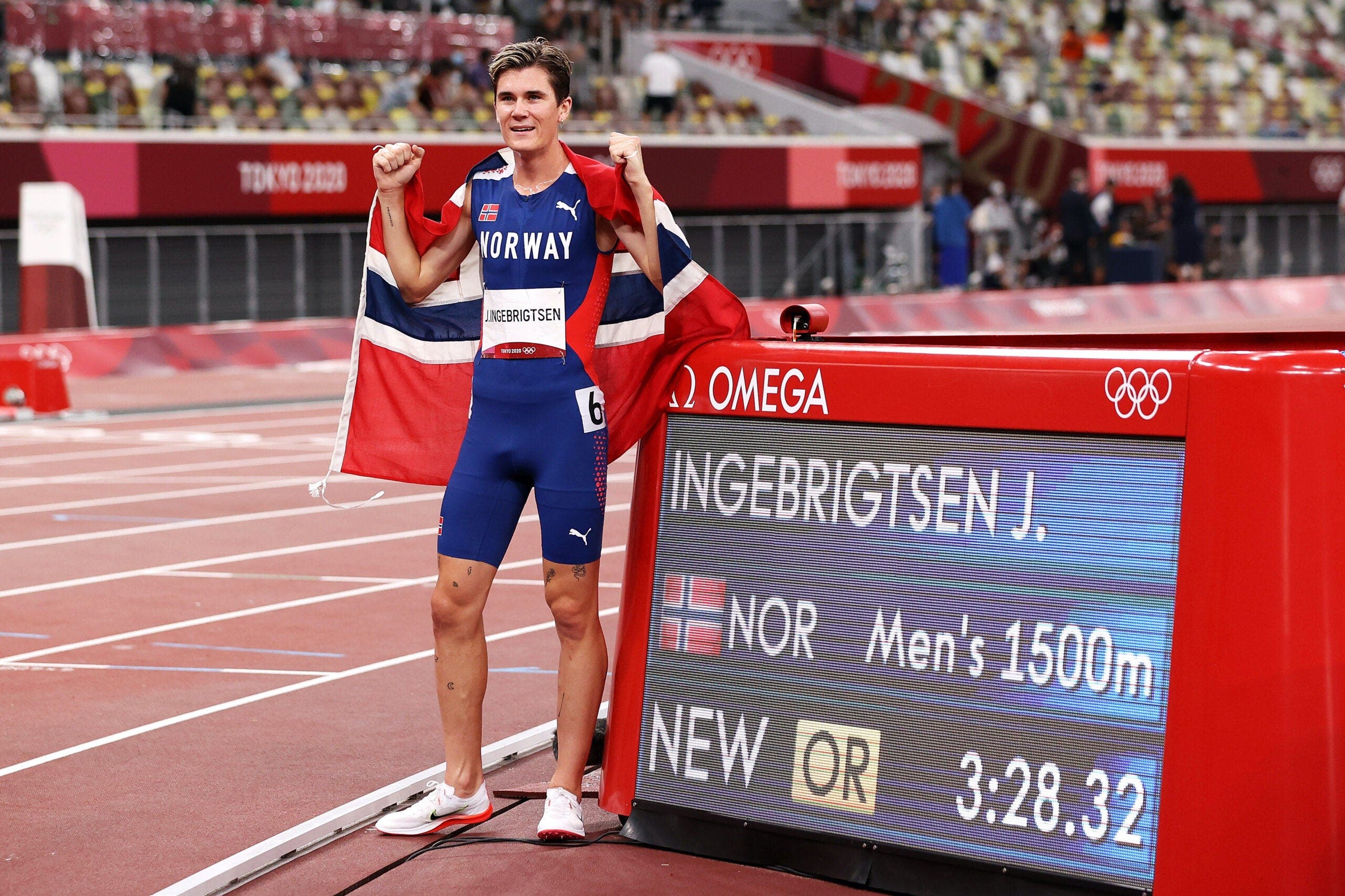
Jakob joined a track club at 7, participating in sprints, hurdles, and jumps. At 10, he ran an 8.2K cross-country course at sub-6:00/mile. He also skied competitively until he was 12, but quit the sport much earlier than his brothers. They were more sport generalists for many years, while Jakob became a specialist in his early teens. He saw his brothers success in distance running, and decided he wanted to follow in their footsteps.
ADVERTISEMENT
The debate between sampling from many sports vs specializing in one at an early age is a hot one these days, with David’s Epstein’s new book, Range, citing evidence for the former approach. Jakob Ingebritsen may be an argument for specialization. Of course, many factors enter into any athlete’s rise to the top.
Controlled Cruise Intervals
The Ingebrightsen brothers appear to do one type of training in a manner different from many other runners. They don’t do continuous tempo runs on their own. Rather, they run track intervals of 2000- to 3000-meters with their father taking lactate levels. This may prevent them from going too hard in such workouts—a trap that’s easy to fall into.
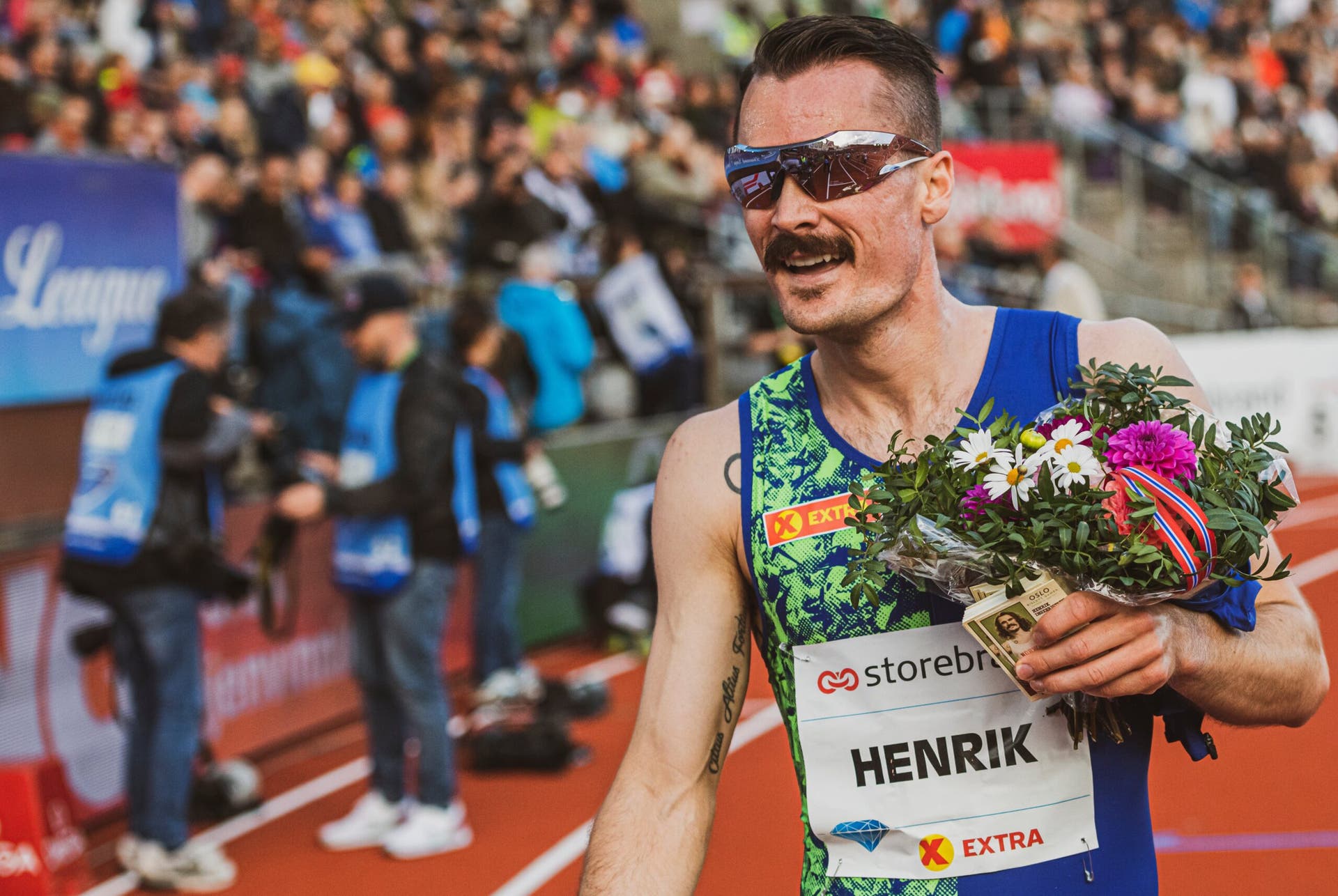
The Ingebrigtsens do a relatively high percentage of their weekly miles (23 to 25%) running these long repeats at a slowish interval pace, about 82 to 92% of their maximal heart rate. With Dad nearby and measuring everything, they don’t overcook the long intervals.
ADVERTISEMENT
Dad isn’t the only important parent. As Filip notes: “Our mother has always been an extremely important part of the family team. She always had food ready when we came home from training, and she has washed thousands of kilos of sweaty training clothes.” She is also a runner.
Well-Chosen Parents, Lots of Smart Training
The author of the Ingebrigtsen study, Leif I. Tjalta of Stavanger University, provided PodiumRunner with this list of reasons for the brothers’ success:
-
- They have been extremely lucky with their mix of genes. They seem to have been born with talent for endurance events.
- They have grown up in a family that stimulated them from an early age to be very active in sports.
- They have trained a lot from an early age.
- They have gradually increased their training volume, year by year.
- Their father, who is their coach, has tightly controlled all interval sessions with measures of heart rate and blood lactate concentration.
- During adolescence, the primary focus was aerobic conditioning. The volume of intense anaerobic training was limited.
- They have followed a training program with relative high levels of weekly intervals at and above the anaerobic threshold (20 to 25% of the weekly volume).
- They are mentally tough, love to compete, and have a very high self confidence.
- They are brothers, competitors, and training partners who learn from each other, and inspire each other.
It’s Not About the Long, Hard Workouts
The Spanish paper came out several months before the Ingebrigtsen report. Its subjects averaged roughly 3000 miles per year of training, or 55 miles per week, over a seven-year period. The runners did about 66% of their training at an easy pace, and 34% at a harder intensity.
ADVERTISEMENT
The author, Arturo Casado, was wondering if he could replicate the work of K. Anders Ericsson, who developed the “10,000 hours hypothesis” by investigating the “deliberate practice” routines of top-rank musicians. Casado figured he would look for the same among his elite runners, classifying their easy runs as non-deliberate (because they were so relaxed and nearly effortless) and their harder training efforts (tempo runs, long and short intervals, time trials and races) as deliberate. He thought only the hard days would correlate with eventual success.
His results indicated otherwise.
In fact, total volume of training had the highest correlation with top performance at .75. This was followed by easy runs (with a correlation of .68), tempo runs (.58), and short intervals (.56). Long intervals had a very low correlation with performance (.22). And time trials and races had essentially no correlation, perhaps because top runners aim to win their big races rather than shooting for fast times.
Casado concluded that, if runners hope to fulfill their potential, “There is a fundamental need for athletes to run over considerable distances.” Also: “Tempo runs contribute to performance by being both an important source of accumulated distance and specificity of training. Similarly, short-interval training seemed to be a key component of a varied training schedule, while long intervals were less important.”
—
ADVERTISEMENT
Amby Burfoot won the 1968 Boston Marathon. He offers KISS Training Programs (Keep It Simple & Smart) at RunWithAmby.com.
