Published April 13, 2019 11:10AM
Train For Your Fastest 5K
To run your fastest 5K you need to develop your endurance, muscles and race-specific speed. We'll show you how.
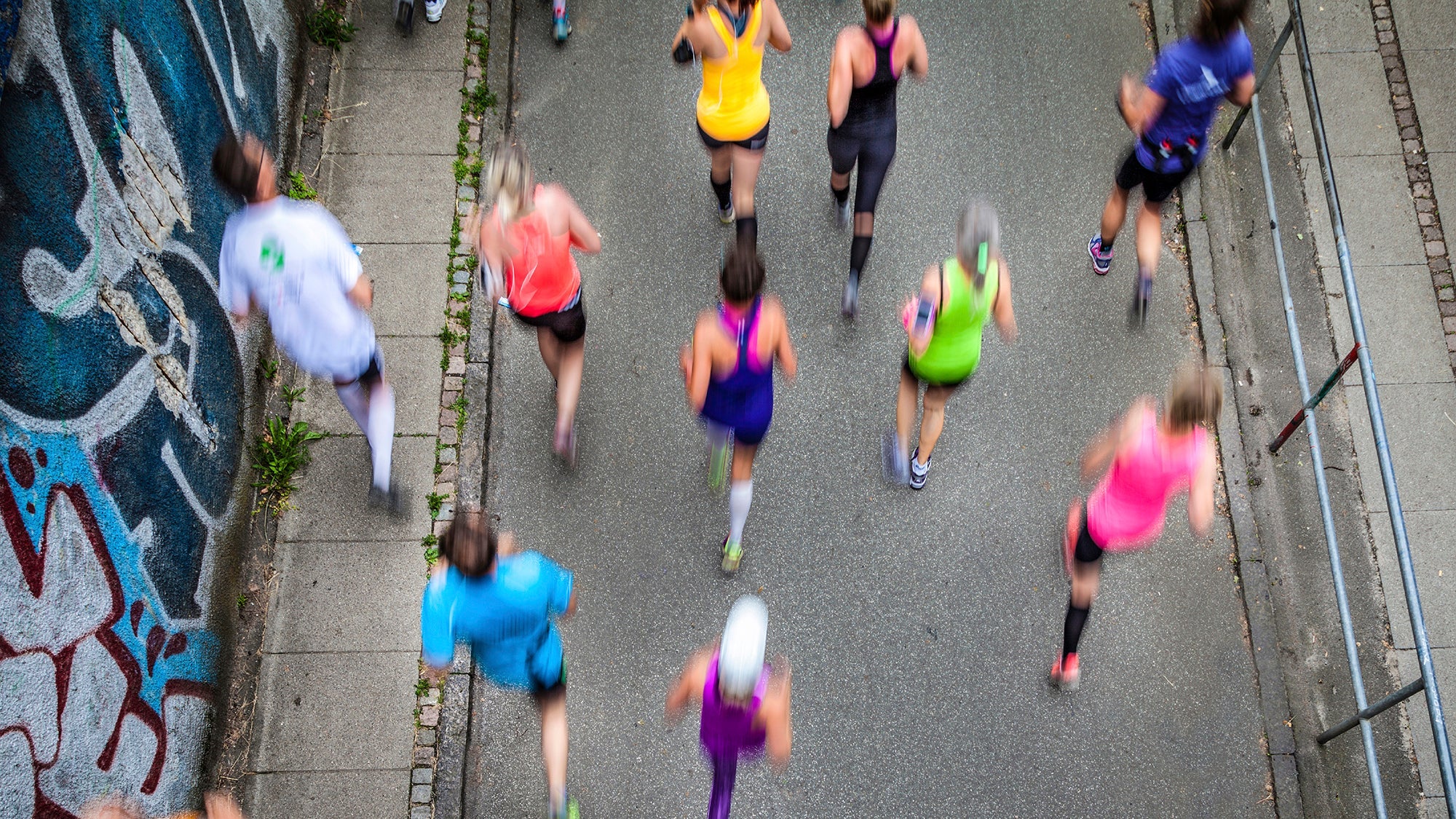
The 5K is a complex, but thrilling, race. It’s short enough to require a lot of speed, but long enough to certainly be a distance runner’s event. Ignore the speed necessary to run well and you won’t have that “higher gear” to finish strong. Skip the foundational endurance during training and you’ll crash and burn in the final mile.
So what does sound training look like for runners targeting a fast 5K? Training should include three main ingredients:
- Endurance (specifically, developing high-end endurance)
- Speed development (training at 5K pace and faster to stimulate muscular strength and the central nervous system)
- Race-specific fitness (running roughly 3 miles worth of intervals at goal 5K pace during training)
When you start planning a season, the focus should be on the ends of the speed spectrum: endurance and speed development. As you get closer to the goal race, workouts start to look more similar to the 5K itself. In other words, they get more “specific” to the demands of the race.
ADVERTISEMENT

Step 1: Build High-End Endurance
Many distance runners today are used to training for longer races like the half marathon or marathon where pure endurance is the priority. But the 5K presents new opportunities for different types of workouts. That begins with the long run; Instead of always running a certain number of miles at the same pace, runners training for the 5K can add more complexity to their long runs.
Long runs variations include:
- Design your route so the final 3-5 miles are on hilly or rolling terrain.
- Add fartlek repetitions during the second half of the long run.
- Increase the pace during the run, progressing gradually from easy to tempo effort.
The shorter the race, the less specific a “Long Slow Distance” run is to the event. So rather than focus our efforts on a workout that is unlike the race itself, we add complexity and intensity to the long run.
ADVERTISEMENT
This principle can also be applied to tempo runs. Instead of running a solid 3–5 mile tempo run, you can add short, 30-second speed burst at roughly 5K pace every 3–5 minutes. This turns a “normal” tempo run into a lactate-clearance tempo run, where the goal is to get the body accustomed to running fast while also clearing lactate from the blood stream. This skill will come in handy in the second half of a 5K when lactate levels in the blood are rising rapidly.
Step 2: Train Your Muscles
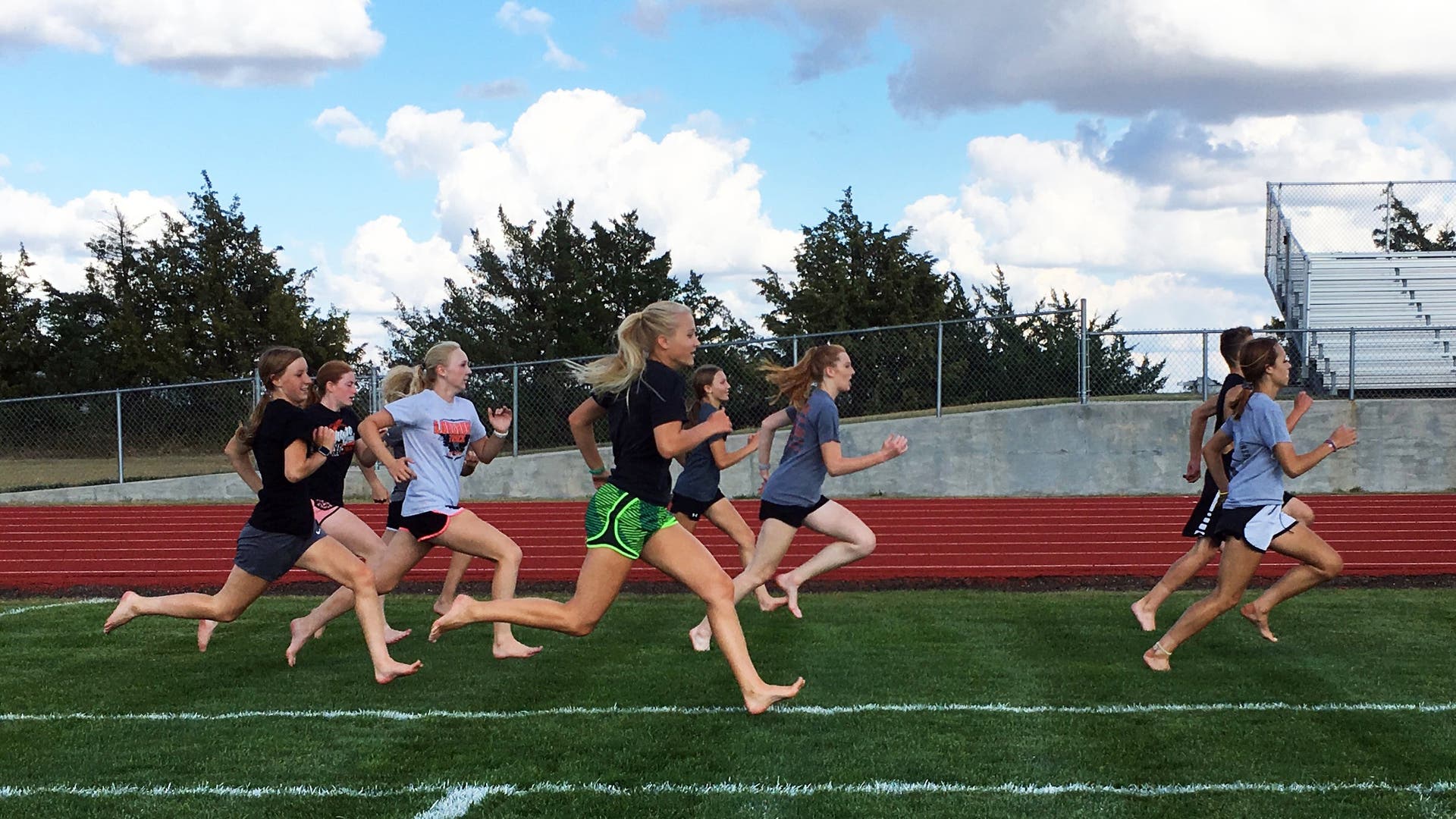
Too many runners consider themselves “lungs with legs.” Their focus is on building the aerobic system with increasing mileage, long runs and tempo workouts. But this ignores the muscles that are needed to carry you across the finish line and how well those muscles communicate with your brain.
There are two main ways to build muscular strength and establish good communication pathways between them and the brain:
- Lift heavy in the gym, teaching your brain to recruit more muscle fibers while also building strength.
- Run really fast with workouts that have you run at 1-mile race pace and faster.
Strength workouts in the gym should focus on building strength, not endurance or hypertrophy (bulking up). To do this, lift 4–6 repetitions at a very challenging weight, with full recovery. Focus on basic lifts like squats, lunges, deadlifts, bench press, pull ups and rows.
Fast workouts—or drills—can take many forms:
- Short repetitions of 100–300m at your 800m to 1-mile race pace
- Strides (100m accelerations to about 95 percent of top speed)
- Hill sprints (8–10 second bursts of 100-percent max effort sprinting up a steep hill)
To race fast, you have to train fast. These workouts prime the muscles and central nervous system to work powerfully and quickly, even when fatigued.
ADVERTISEMENT
Step #3: Get Specific
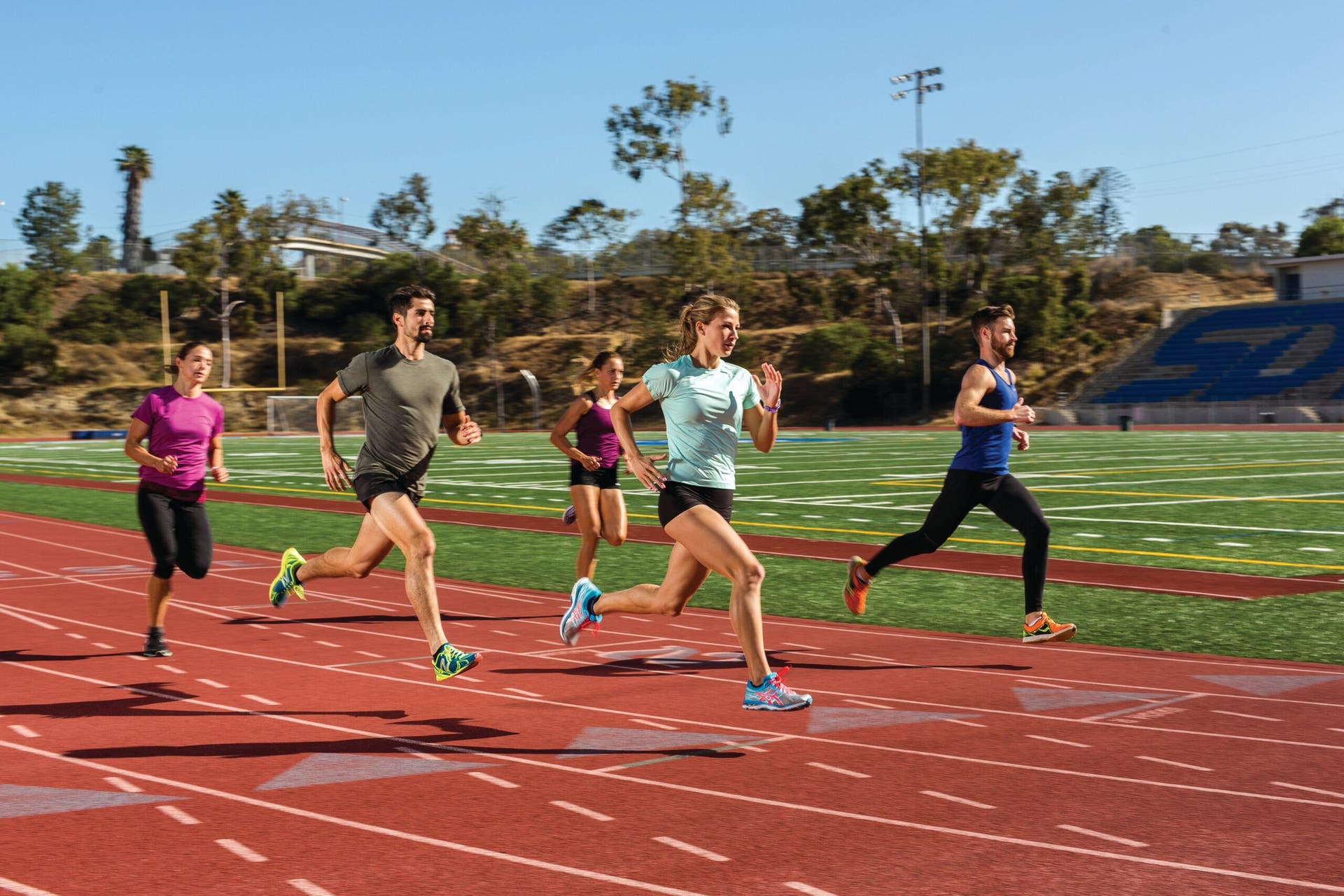
Once you’ve built high-end aerobic fitness and developed better muscular strength, it’s time for workouts to move closer to race-specific workouts. Here is a general 4-week progression of workouts that become more specific to the 5K the closer you get to your goal race:
- 4 x 1,000m at goal 5K pace with 400m jog recovery between reps
- 5 x 1,000m at goal 5K pace with 400m jog recovery between reps
- 3 x Mile at goal 5K pace with 400m jog recovery between reps
- 3 x Mile at goal 5K pace with 200m jog recovery between reps
The ultimate goal is to get your body ready to race 3.1 miles at goal 5K pace with no recovery. These workouts look increasing similar to the race itself, don’t they? Run the final workout about a week to 10 days out from your race.
ADVERTISEMENT
Once you’ve built the supporting infrastructure (high-end aerobic fitness and muscular strength) for your 5K goal race—and then have run workouts resembling the 5K itself—you’re ready to race fast. Make sure your race pace strategy is solid, you’re tapered and well-rested, and you’ll soon be crossing the finish line in a new personal best.
Updated from an article originally published December 2018
