Published June 6, 2016 12:00AM
Build a Better Treehouse Without Hurting Yourself, Your Pride, or a Tree
A master treehouse builder (yes, that's his real job title) on the numbers, physics, and philosophy of the perfect fortress
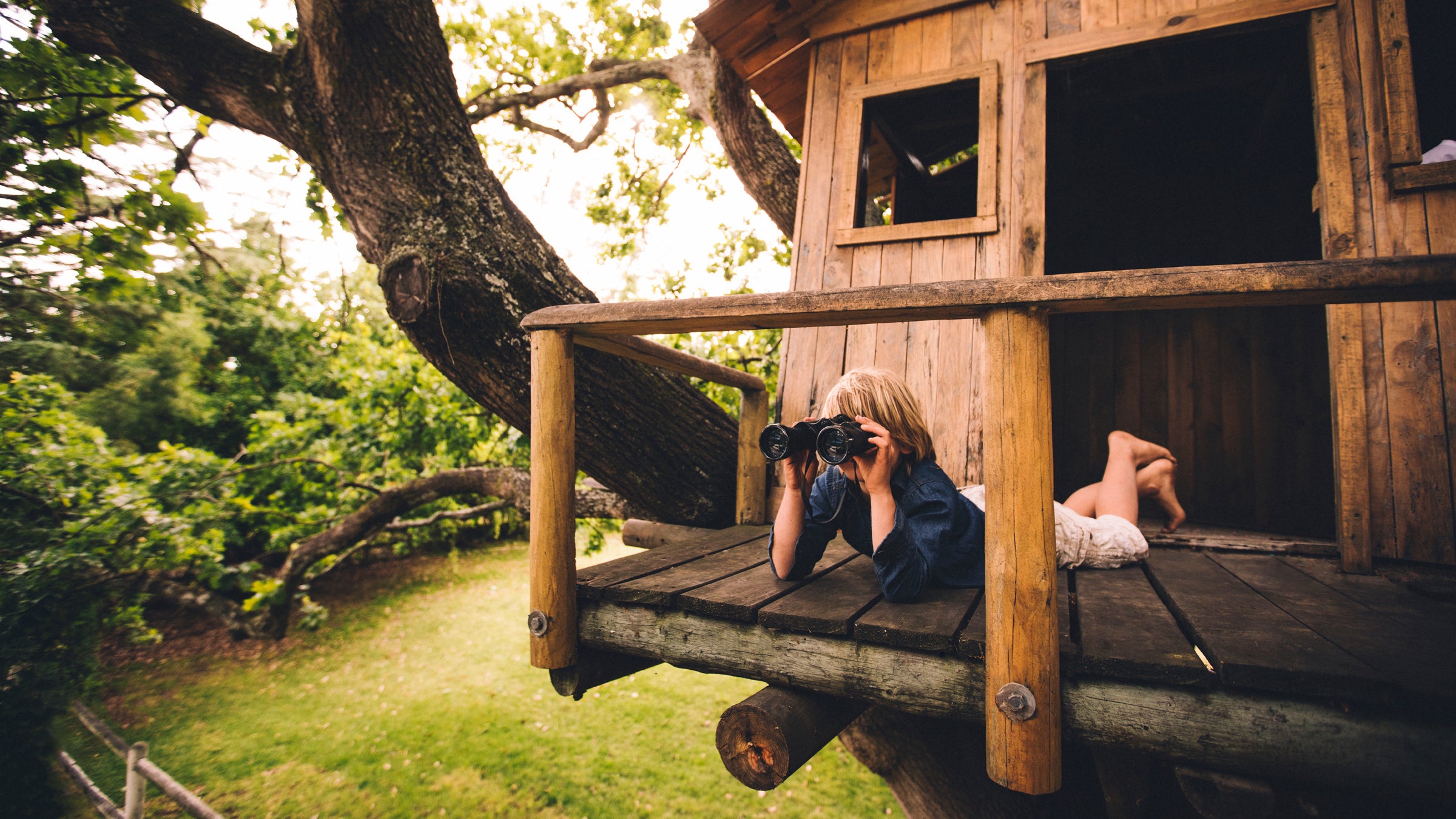
Break out the climbing gear and tree biology knowledge if you want to build a safe treehouse, safely.
Pete Nelson’s first treehouse sat in a maple tree in his childhood home's cramped Ridgewood, New Jersey, backyard. Small and no-frills, he'd built it with his father’s help, and it felt like freedom to the 5 year old. Fifty years and 350 treehouses later, Nelson never quite shook that feeling.
Nelson, now based in Fall City, Washington, is the de facto godfather of arboreal architecture. Since founding custom treehouse building company Nelson Treehouse and Supply, he’s authored a half dozen books on the subject, opened TreeHouse Point, an aerial B&B in Issaquah, Washington, and hosts Animal Planet’s hit show Treehouse Masters, which kicks off its fifth season July 1. Though he’s graduated to building multi-room structures decked out with amenities like running water and recording studios, Nelson still considers treehouses a family affair: his wife, Judy, runs TreeHouse Point, twins Charlie and Henry work as carpenters on the show, and daughter Emily heads up online retailer Be In A Tree.
We caught up with Nelson while he was in Kentucky, where he was working on a Frank Lloyd Wright-inspired lake house perched in a peach tree. Here are his tips for building your aerie.
ADVERTISEMENT
Pick a Tree That’s Going to Stick Around
Your oak trees, your maple trees, your Ponderosa pines, your Douglas firs. I like to find a tree that’s been through some weather and drought—it’s tested and strong.
Go Big
Size-wise, look for 12 to 14 inches for trunk diameter on the low end. Then the sky’s the limit.
Spread the Weight
With single trees, you get into a lot more carpentry for proper support. If you’re looking at multiple trees, 16 feet is my ideal, DIY distance for spacing.
ADVERTISEMENT
Remember That Trees Are Alive
Trees grow inversely—they get fatter—and move in the wind. You have to allow for that movement. If you’re involving multiple trees in your design and you statically connect your platform to one tree—bolt your beam right to that tree, to keep everything in place—then you’ve got to have a dynamic connection on the other, to allow everything to shift in the wind.
Avoid Vertigo
My sweet spot is somewhere between 12 and 16 feet off the ground. It’s all about a different perspective. Twelve feet might not seem high, but if you’re 12 feet off the ground and fell, it would hurt.
Skip the Ladders
Ladders are dad killers. You hear nightmares about dad cleaning the gutters or putting up Christmas lights and you know what happens… I like to build basic scaffolding with 2x4s and half-inch plywood. If you spend the time to create a nice, solid platform, then the work of building your treehouse platform is at waist level.
ADVERTISEMENT
Break Out the Climbing Gear
Helmets and static safety lines—very important. Rig up a safety line in the tree with a good, strong climbing rope, a harness, and a Prusik knot. That way if you’re on your platform and there’s no railing, you can freely march around, do your siding, all that stuff.
Make Mistakes
It’s your treehouse, and those mistakes might turn into your favorite part. I’ve heard a lot lately that in our society we’re not allowed to fail, but a treehouse is the perfect place to experiment and fail. ‘Oh yeah, I could do that a little better,’ or ‘Now that I’ve done this, I wish I had done that…’ Just make it happen. I always felt like Nike stole one of the great automatics: Just do it.
