Updated November 13, 2025 11:07AM
If you buy through our links, we may earn an affiliate commission. This supports our mission to get more people active and outside.Learn about Outside Online's affiliate link policy
The Best Running Jackets for Men (Updated January 2026)
These tested and approved weatherproof jackets keep you comfortable running in cold and wet conditions.
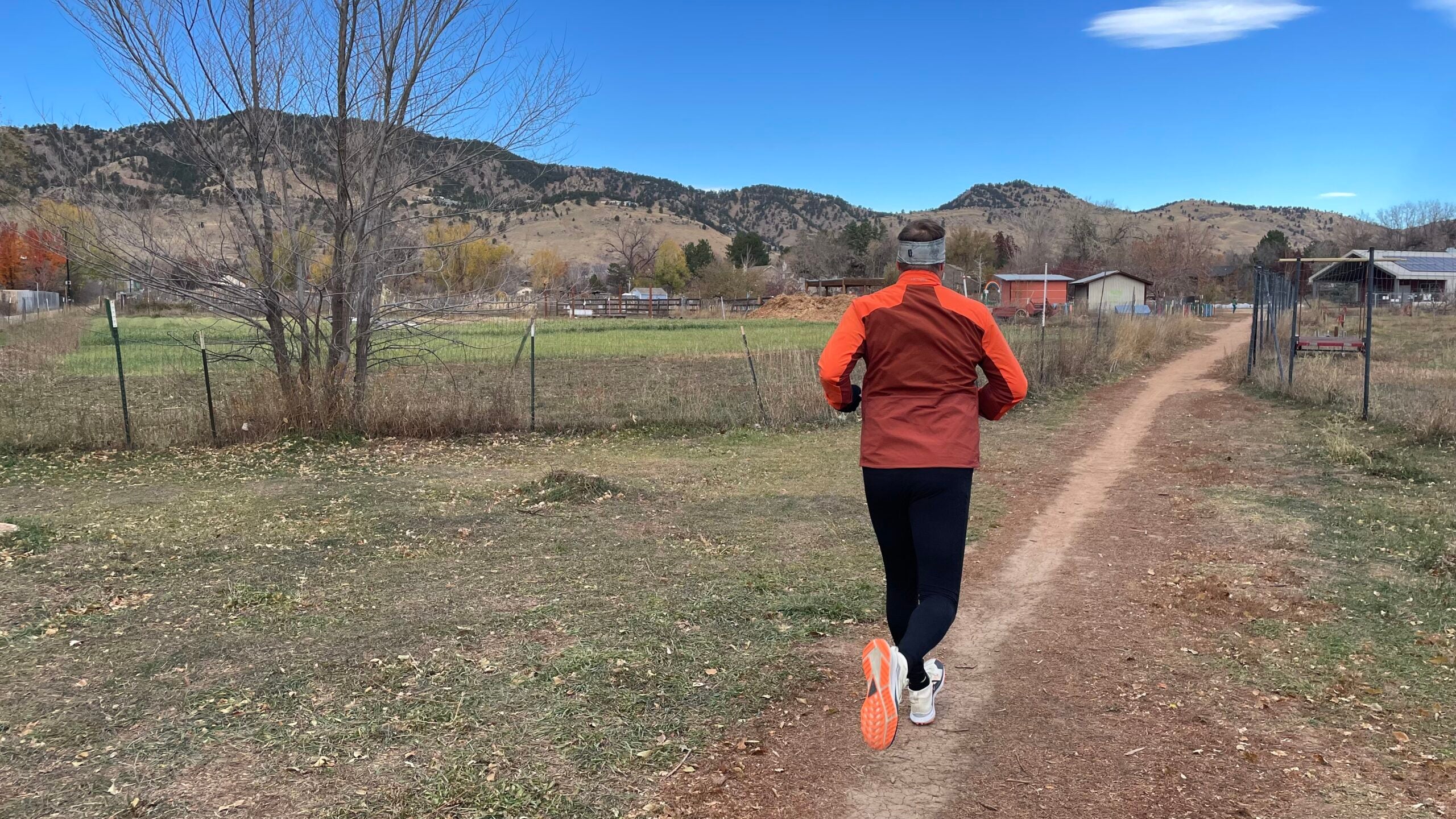
(Photo: Lisa Jhung)
Table of Contents
After months of winter testing, we believe the best men’s running jacket is the Path Projects Graves PX Shell Jacket. Testers reached for this jacket more than any other for its soft, stretchy, and breathable fabric that provided versatile comfort in a wide range of conditions. If you’re braving frigid temps, we recommend bundling up in the insulated Rabbit Warm Up and Go Jacket.
Sorry, T.S. Eliot, but April isn’t the cruelest month. Not even close. Try getting out the door for a 10-mile run on a cold and blustery February morning—then we can talk about cruelty. Still, there’s a definite sense of satisfaction to be gained when you nail the clothing selection and log those frozen miles in comfort. The best winter running jacket is often the most crucial component, determining whether you complete the effort soaked and shivering or warm and dry. These five run jackets got our testers outside, and safely and comfortably back home on even the nastiest days.
January 2026: We updated this guide to reflect current pricing and availability.
Best Winter Running Jackets for Men: At a Glance
- Best All-Around Men’s Winter Running Jacket: Path Projects Graves PX Shell Jacket ($158)
- Best for Mountain Adventures: Arc’teryx Norvan Insulated Hoody ($300)
- Best for Cold, Windy Days: Mountain Hardwear Kor Air Shell Hybrid Hooded Jacket ($190)
- Best for Frigid Temperatures: Rabbit Warm Up and Go Jacket ($160)
- Best for Cool Weather: Norrøna Senja Alpha90 ($279)
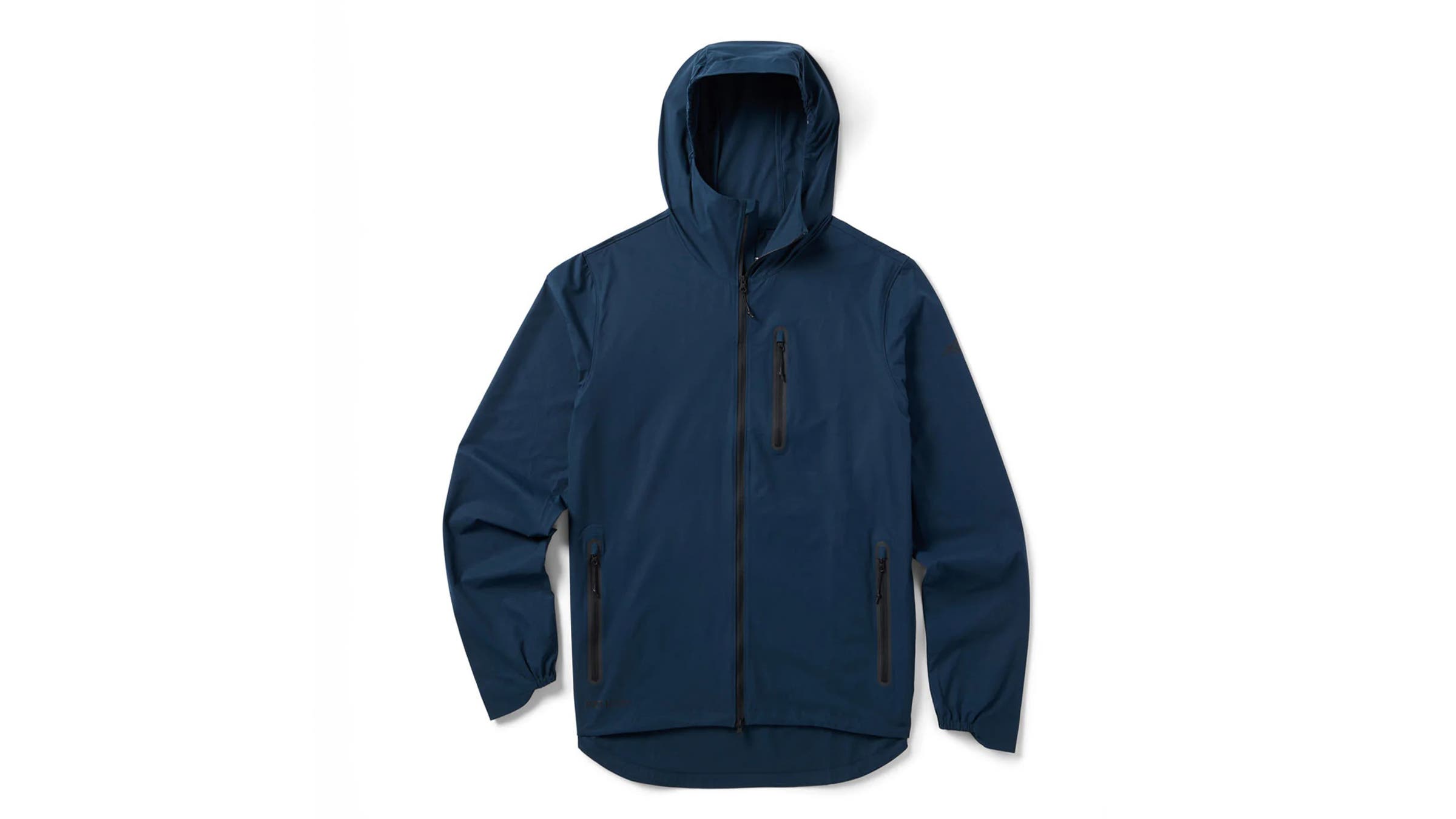
Best Winter Running Jacket for Men All-Around
Path Projects Graves PX Shell Jacket
Weatherproofing: DWR-coated Polyester Shell
Sizing: XS-XXL
Pros and Cons
+ Soft and quiet
+ Stretchy fabric
– Wets out in heavy precipitation
The best winter running jacket is the one you’ll wear again and again, and testers agreed that the Graves PX fits that standard, despite being slightly less weatherproof than some other options. “This was the piece that I reached for on most days because it could handle just about every type of weather, and it was always comfortable,” said one tester.
Highly breathable, with unmatched stretch and a soft feel against bare skin, this sleek 9.6-ounce shell provided enough warmth to pair with just a long-sleeve shirt in below-freezing temps, and it proved equally comfortable up to mid-40s Fahrenheit when layered over a T-shirt. Zippered hand and chest pockets provide solid storage, and the whole rig stuffs neatly into its own pocket. The jacket shed rain and snow on most outings, but on an hour-long mountain run with heavy snow falling, the DWR-coated polyester fabric thoroughly wetted out, leaving our tester uncomfortably damp.
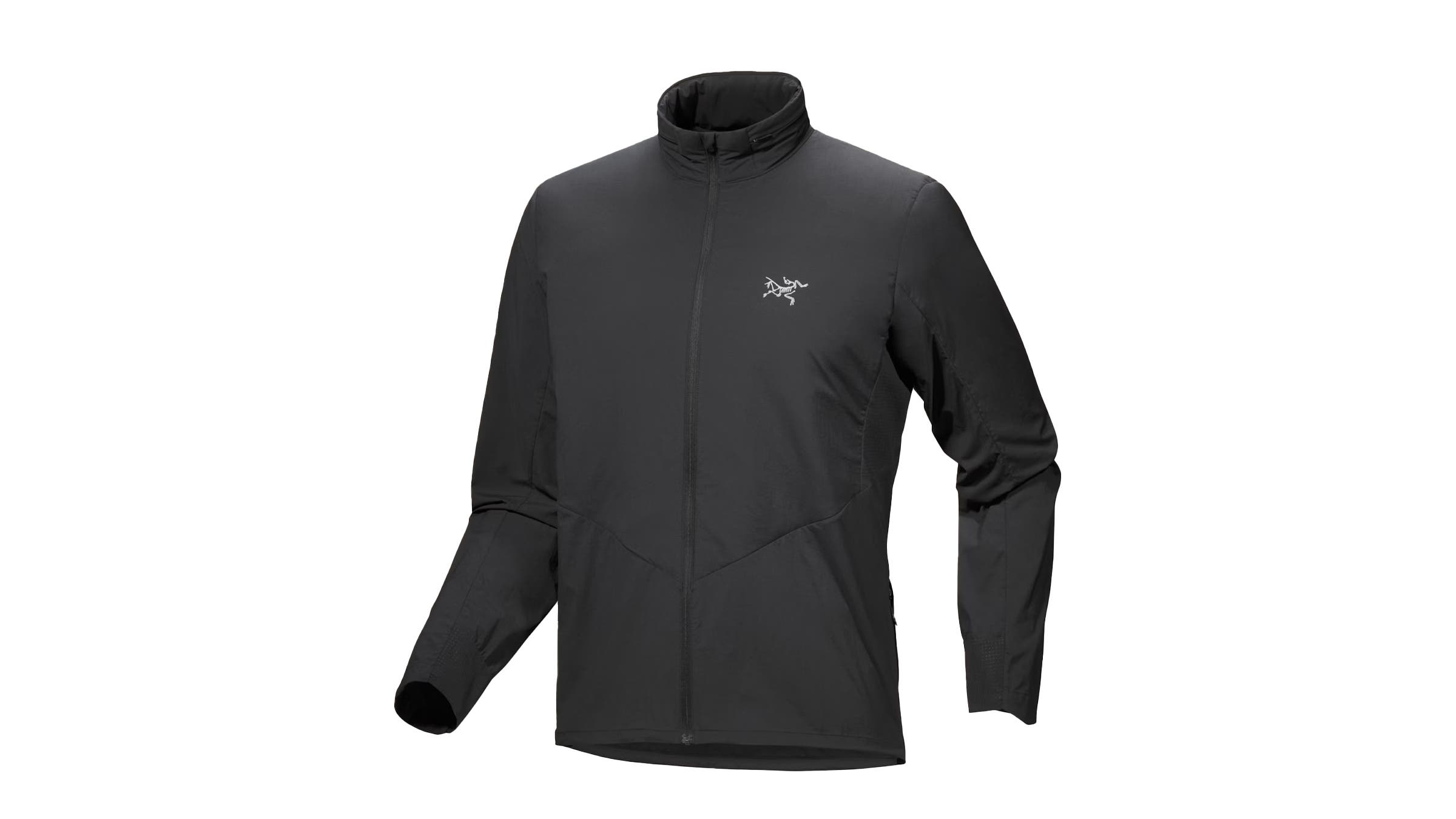
Best Running Jacket for Mountain Adventures
Arc’teryx Norvan Insulated Hoody
Weatherproofing: Nylon and non-PFAS coating; polyester fill
Sizing: S-XL
Pros and Cons
+ Well-balanced insulation
+ Athletic fit with no binding
– Minimal weatherproofing
We found the Arc’Teryx Norvan Insulated Hoody to be masterfully designed for mountain adventures, so long as the output level stayed high—this is not a winter running jacket for lounging in frigid conditions. Testers appreciated the close fit that didn’t bind, and the hint of lightweight polyester fill in the shoulders and front torso. The insulation didn’t cause us to overheat in milder temps, but when the mercury dropped toward freezing, it allowed us to keep running comfortably.
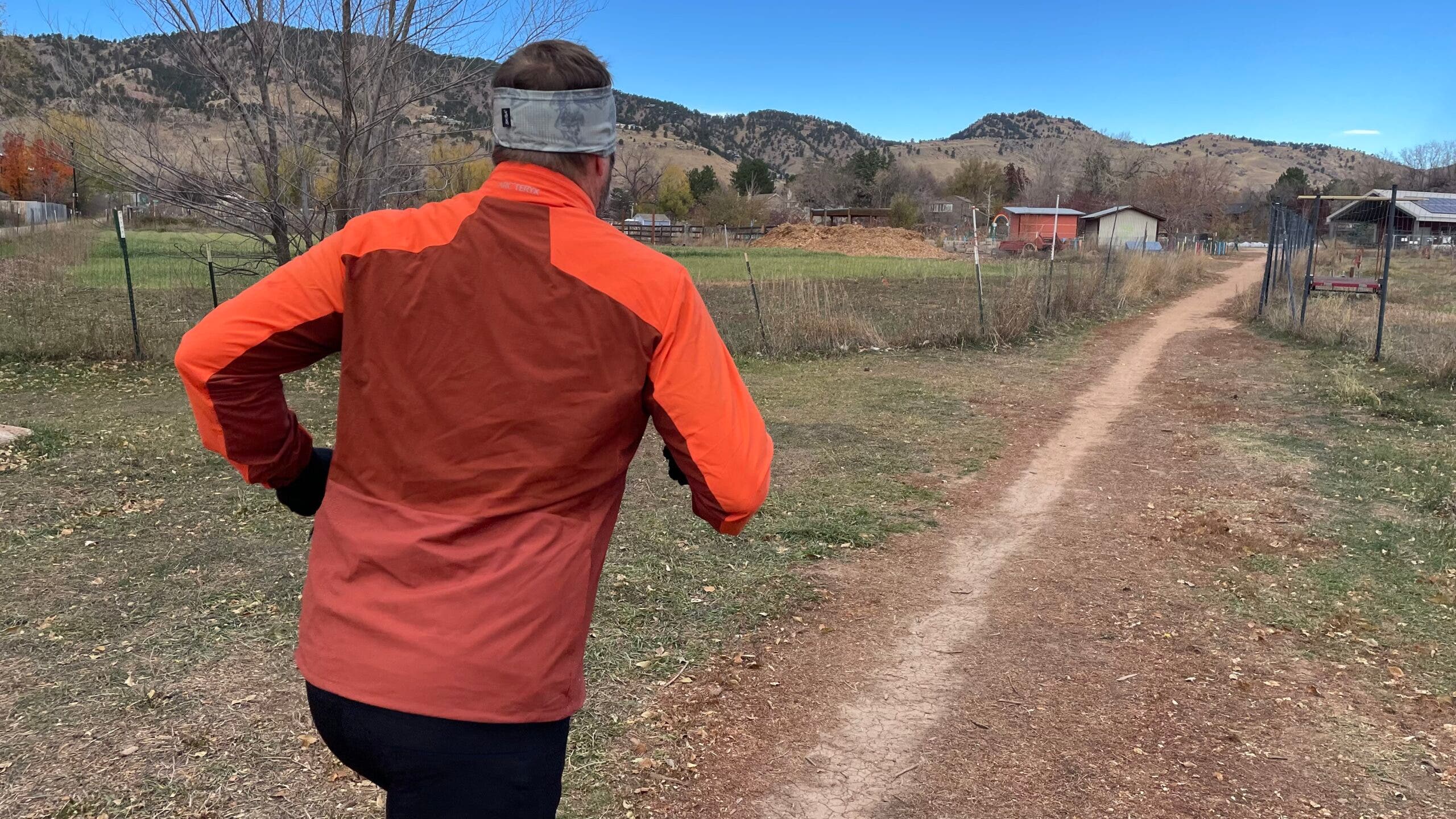
Generous vent panels on the back kept sweat from building up and let in just enough wind to prevent overheating when running hard. For really cold or wet conditions, we added a weatherproof shell on top (like the Arc’teryx Norvan Rain Jacket) and used the Hoody as an effective, sleek-fitting midlayer. One tester noted that the tiny collar zipper made it challenging to return the hood to its stowed position—a minor quibble for an otherwise outstanding jacket.
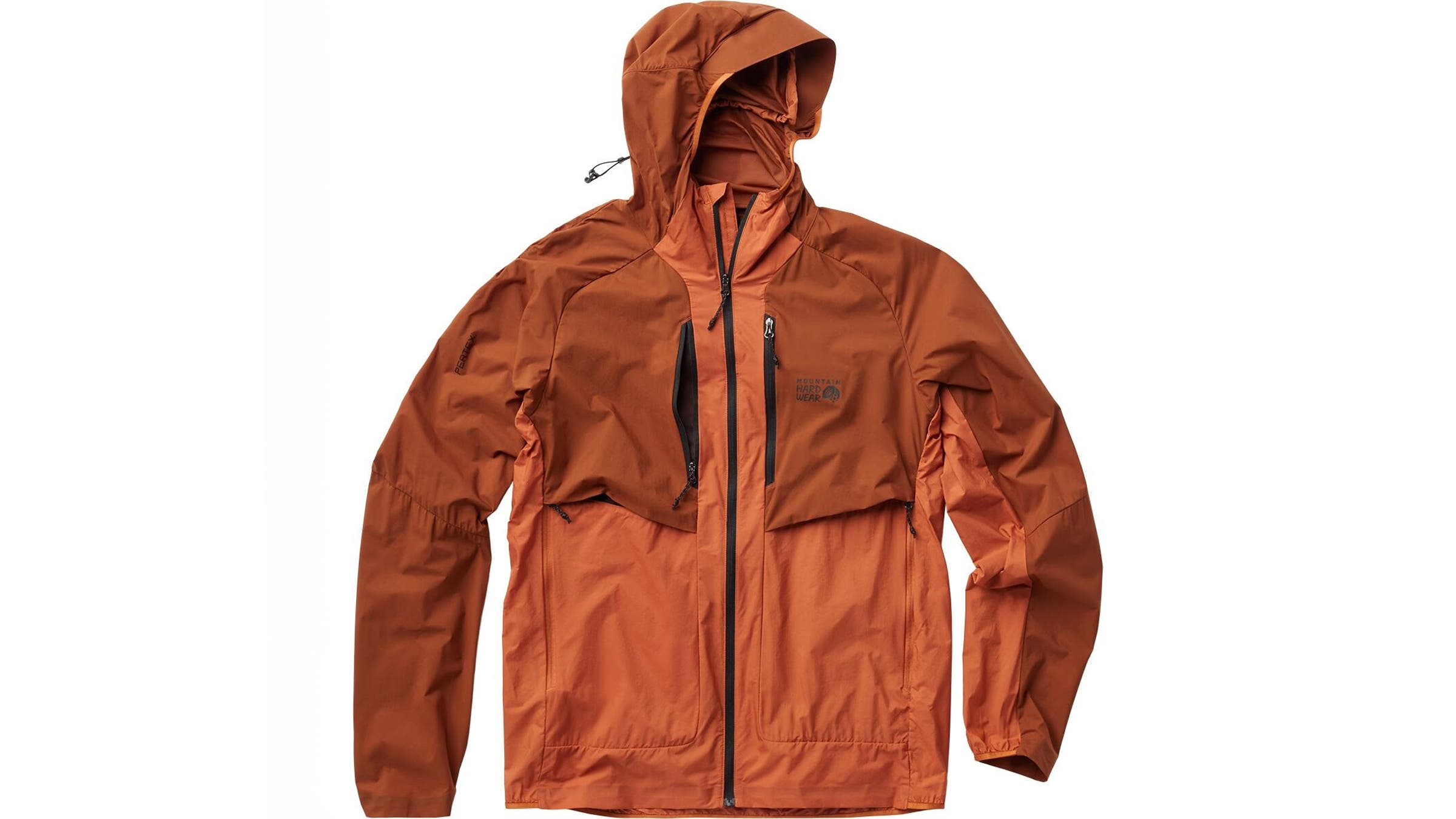
Best Winter Running Jacket for Cold, Windy Days
Mountain Hardwear Kor Air Shell Hybrid Hooded Jacket
Weatherproofing: Coated Pertex nylon
Sizing: XS-XXL
Pros and Cons
+ Buttery soft
+ Excellent venting
– Soaks through in heavy precipitation
Several of our favorite running shells in recent years have been constructed with supple, supremely soft, and surprisingly durable Pertex fabric—a lightweight nylon. The Kor Air Shell incorporates it throughout, resulting in a lightweight jacket that delivers shirt-like comfort while still blocking wind effectively and fending off cold and damp. Large mesh areas on the chest and back offer outstanding venting. When precipitation got heavy or lasted more than about 20 minutes, however, the jacket sagged and let water in.
The cut is somewhat roomy—great for layering with a light technical shirt on mild days or with heavier base layers in cold weather. The hood is a highlight, with a small but effective brim and a cord adjustment that seals in warmth, even without a cap.
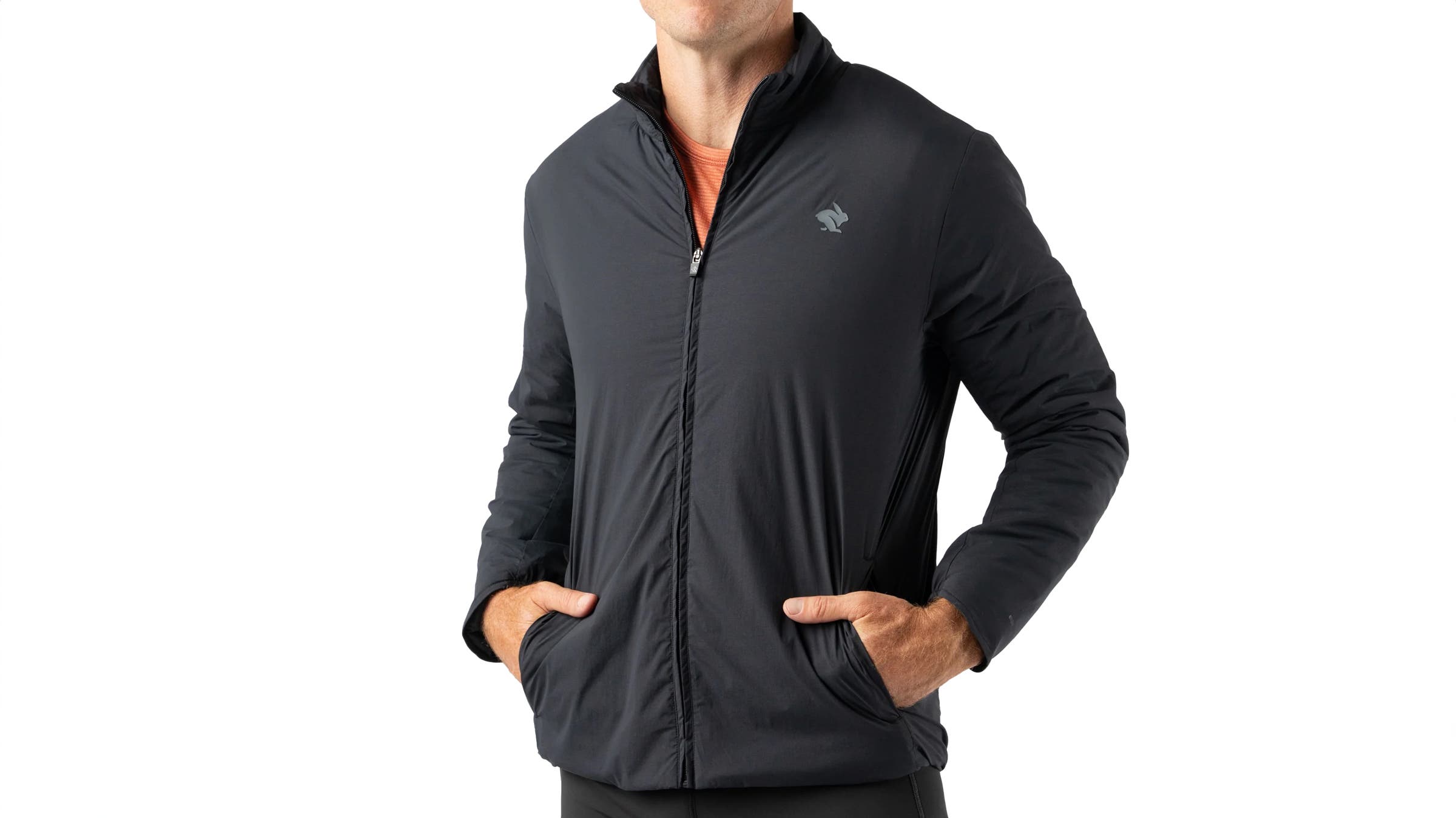
Best Winter Running Jacket for Frigid Temperatures
Rabbit Warm Up and Go Jacket
Weatherproofing: Shell 85% nylon 15% spandex, polyester insulation fill
Sizing: S-XL
Pros and Cons
+ Well insulated
+ Sharp street-worthy styling
– Boxy cut can be cumbersome
Not every high-performance item needs to scream “I’m a runner!” This Rabbit jacket looks like streetwear, but offers solid weather protection, effective insulation, and enough run-specific features to earn a place among our favorite workout gear. The smartly angled wrist cuffs and low-cut collar add to the jacket’s good looks. Says one tester: “I wore this jacket out to dinner and didn’t even get teased by my wife.”
The zippered back pocket, body-mapped design (with no insulation under the arms or lower back), and protective outer fabric combine to handle cold-weather conditions down to the single digits. Testers found that the jacket tended to sway distractingly, especially at faster paces or with anything stored in the pockets, making some wish the midriff was cut a little tighter. But most felt this would reduce its attractive styling, and the versatility was worth a little bouncing.
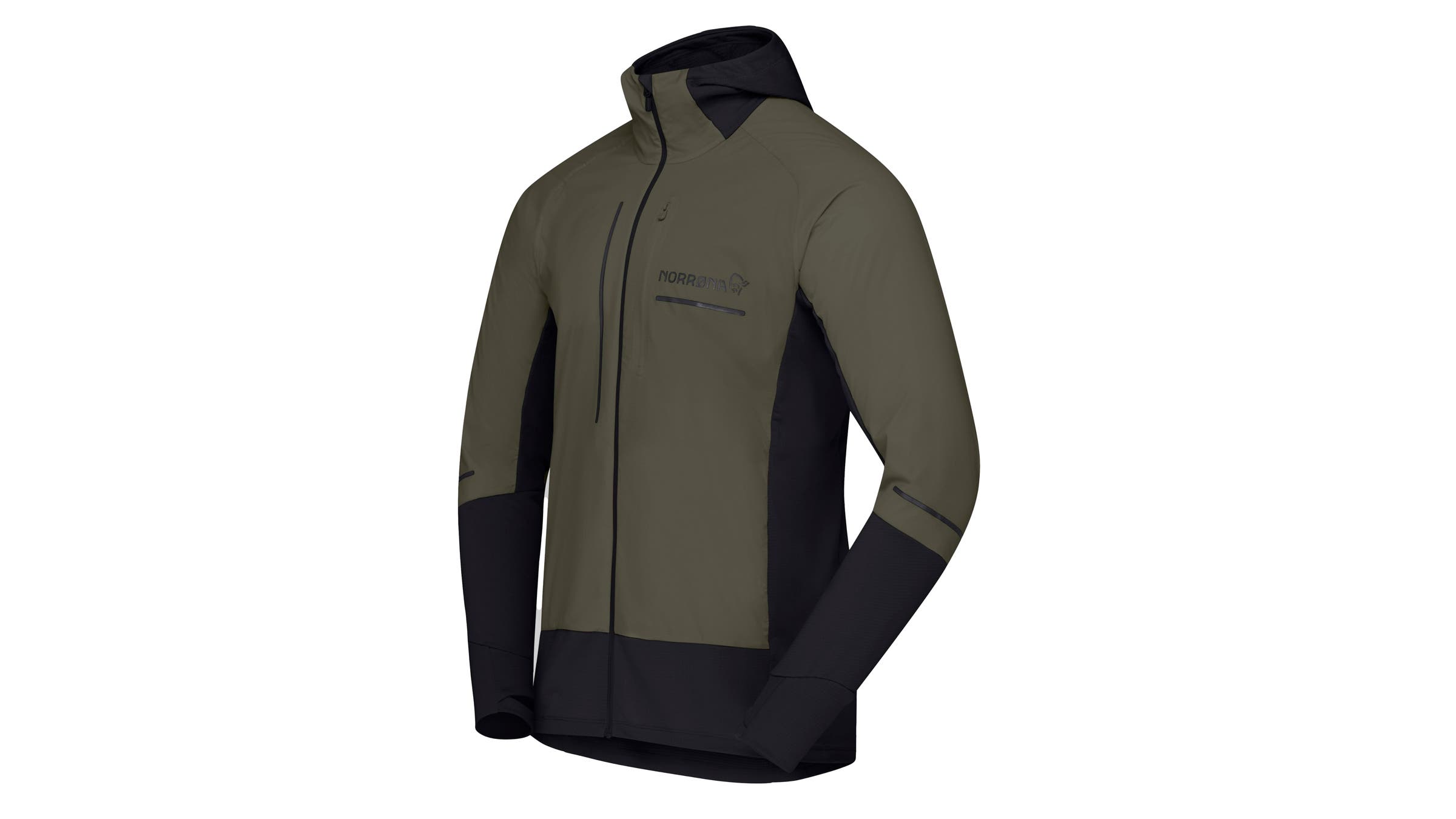
Best Winter Running Jacket for Cool Weather
Norrøna Senja Alpha90
Weatherproofing: Recycled nylon face fabric provides partial wind protection
Sizing: S-XL
Pros and Cons
+ Feature-rich
+ Lightweight
+ Breathable fabric
– Minimal insulation for frigid temps
We wore this comfortable, lightly insulated top well into the fall, and reached for it early in the spring. It proved just right worn by itself or with a light baselayer for days that started near the freezing mark and warmed into the 40s or low 50s. The stretchy, breathable Polartec grid fabric effectively carried sweat away, and when the temperature climbed, the full-length zipper allowed for quick venting.
There’s no lack of features, with thumb loops, a roomy chest pocket, and a nicely tailored stretch hood. Some testers deemed its temperature sweet spot too narrow, reducing its versatility, but for those mildly cool shoulder-season days, it was hard to beat.
How to Choose a Winter Running Jacket
Choosing the best winter running jacket is primarily about the kinds of winter conditions you face where you live, travel, and run. Consider if you need a waterproof layer, or can get by with water resistance—waterproof jackets are more costly, don’t breathe as well, and tend to be somewhat stiffer and noisier, but are worth it when you’re out in a downpour or blizzard.
ADVERTISEMENT
Then think about whether you want your running jacket to be insulated and provide warmth on its own, or work as a thin, exterior shell layer. Insulated jackets can make heading out in frigid temps less daunting, especially if you tend to run cold, but can get hot during high-intensity exercise or if the temps rise. Shell jackets allow you to layer underneath to adjust for a range of conditions. Also consider whether you want a fitted jacket that stays close to the body for streamlined mobility, or a looser fit that allows flexibility for layering underneath.
How We Test Winter Running Jackets
Mark Eller led the test crew for this review. Based in Boulder, Colorado, he pursues running, cross-country skiing, snowshoeing, and other outdoor activities that keep him away from treadmills when the snow flies. He coordinated getting dozens of winter running items to additional testers who wore the gear in this review in a variety of cold conditions for many months before making their picks and writing their comments.
Meet Our Testers
Lead reviewer Mark Eller trains through the winter on the roads and trails near his hometown of Boulder, Colorado. He’s a three-time Boston Marathon veteran, a hack Nordic skier, and a competitive racer in on-water rowing events.
Brian Metzler is a freelance writer and the founding editor of Trail Runner. A former walk-on Division I track athlete, he mostly runs on mountainous trails nowadays in Boulder and Leadville, Colorado.
Kurt Actenhagen enjoys trail running, mountain biking, and exploring mountain ranges from the High Sierra to Colorado’s most remote peaks. He’s set Fastest Known Times and achieved ultra-distance milestones, but he also enjoys a leisurely hike.Jonathan Beverly is no stranger to winter weather. He began running in high school on the Maine coast, trained for marathons for years in New York, and now can be found chasing windmills in the western Nebraska Sandhills, accompanied by his two dogs. He is the senior running gear editor for Outside.
Jonathan Beverly is no stranger to winter weather. He began running in high school on the Maine coast, trained for marathons for years in New York, and now can be found chasing windmills in the western Nebraska Sandhills, accompanied by his two dogs. He is the senior running gear editor for Outside.
