Skip to content
Outside Online
  • Home
  • Featured
  • Adventure
  • Gear
  • Travel
  • Health
  • Run
  • Culture
  • Long Reads
  • Podcasts
  • Videos
  • Winter Gear Guide
  • Public Lands
More
    Adventure Exploration & Survival

    Inside the Rotting Wreck of the Costa Concordia
    Text by
    Wes Siler
    Published:  Jan 29, 2016
    • Share to Outside Feed Create a new post with the article attached
    • Email
    • Share on X
    • Share on Facebook
    • Share on Reddit
    The 2012 Costa Concordia shipwreck is the most famous maritime disaster of the 21st century. In January of that year, the cruise ship struck a rock off the Mediterranean island of Isola del Giglio and began listing dangerously to starboard, eventually settling at a near 90-degree tilt in shallow water. Despite the calm seas and the proximity to land, 32 people were killed.

Now, the wrecked remains of the gigantic ocean liner are being scrapped in the port of Genoa, Italy. Its 50,000 tons of steel are being melted down and will be used in future construction and ship building projects. 

Last August, German photographer Jonathan Danko Kielkowski, swam out to the ship, climbed aboard and spent several hours exploring its passageways and chambers. These photos are the result, and he’s turned them into an art book. You can also see them in person at the upcoming Los Angeles Art Book Fair, which runs from February 12 to February 14. 

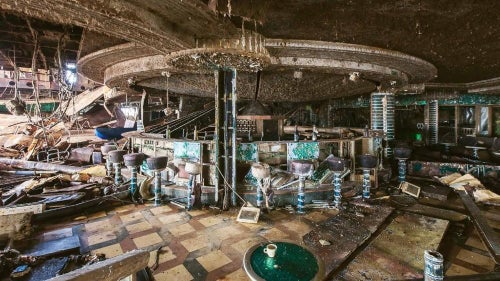
Photo: What was once a bar is now a fetid morass of collapsed ceiling and sea-bottom gunk.
    The 2012 Costa Concordia shipwreck is the most famous maritime disaster of the 21st century. In January of that year, the cruise ship struck a rock off the Mediterranean island of Isola del Giglio and began listing dangerously to starboard, eventually settling at a near 90-degree tilt in shallow water. Despite the calm seas and the proximity to land, 32 people were killed.

    Now, the wrecked remains of the gigantic ocean liner are being scrapped in the port of Genoa, Italy. Its 50,000 tons of steel are being melted down and will be used in future construction and ship building projects.

    Last August, German photographer Jonathan Danko Kielkowski, swam out to the ship, climbed aboard and spent several hours exploring its passageways and chambers. These photos are the result, and he’s turned them into an art book. You can also see them in person at the upcoming Los Angeles Art Book Fair, which runs from February 12 to February 14.

    Photo: What was once a bar is now a fetid morass of collapsed ceiling and sea-bottom gunk.

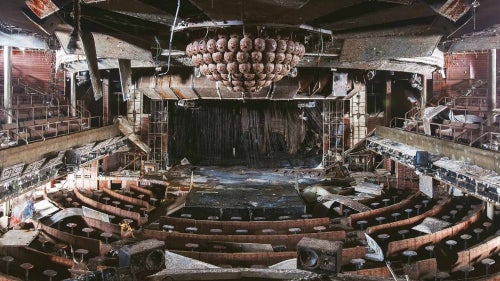
    A former theater lies destroyed and rotting.
    (photo: Jonathan Danko Kielkowski)

    A former theater lies destroyed and rotting.

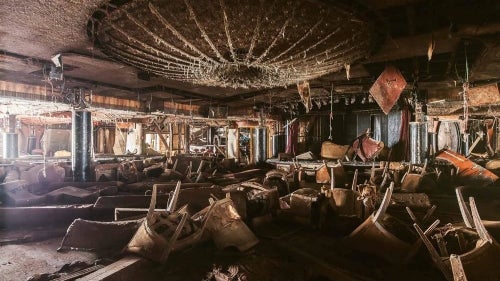
    A dining room that used to feature a fabulous chandelier now lies in muddy disarray.
    (photo: Jonathan Danko Kielkowski)

    A dining room that used to feature a fabulous chandelier now lies in muddy disarray.

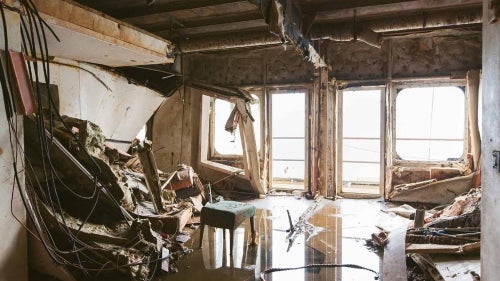
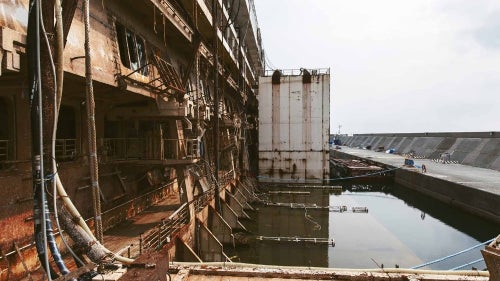
    A former state room, one of the most expensive on the ship, looks unfit for human habitation.
    (photo: Jonathan Danko Kielkowski)

    A former state room, one of the most expensive on the ship, looks unfit for human habitation.

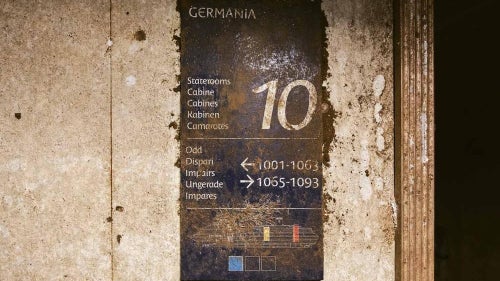
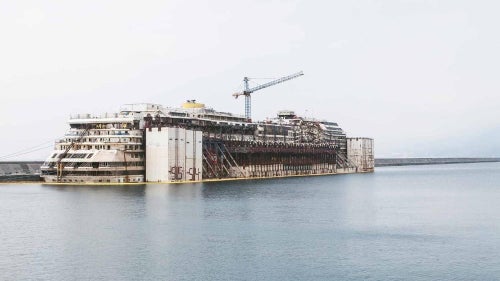
    The wreck of the Costa Concordia is now moored in a floating dock; the entire right side of the ship is ripped open.
    (photo: Jonathan Danko Kielkowski)

    The wreck of the Costa Concordia is now moored in a floating dock; the entire right side of the ship is ripped open.

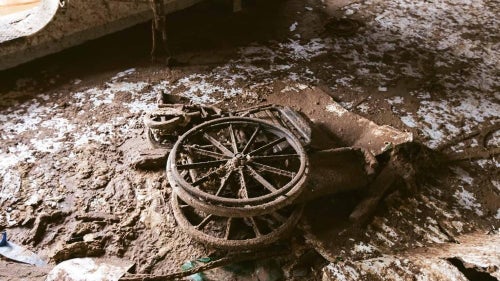
    “The cruise ship industry wants to paint this very sanitized image of what happens aboard its ships” says Jonathan, “But, the reality isn’t always fun in the sun. People get sick, fall overboard, and die in these accidents.”
    (photo: Jonathan Danko Kielkowski)

    “The cruise ship industry wants to paint this very sanitized image of what happens aboard its ships” says Jonathan, “But, the reality isn’t always fun in the sun. People get sick, fall overboard, and die in these accidents.”

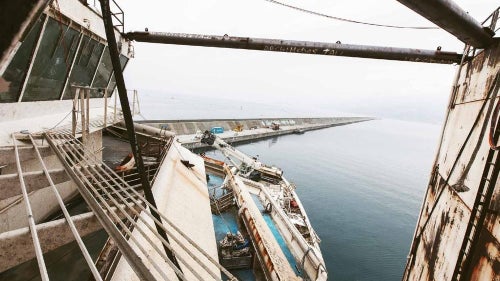
    The thing that struck Jonathan most? “The piles of personal belongings left behind by the passengers as they tried to escape.”
    (photo: Jonathan Danko Kielkowski)

    The thing that struck Jonathan most? “The piles of personal belongings left behind by the passengers as they tried to escape.”

    A view of the bridge, as it now lies moored in Genoa.
    (photo: Jonathan Danko Kielkowski)

    A view of the bridge, as it now lies moored in Genoa.

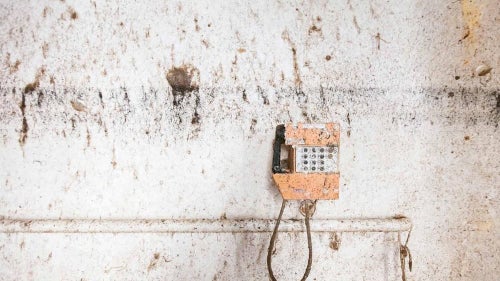
    “It smelled like rotting fish, and mold, and I don’t even know the word for it,” Jonathan says. “The workers dismantling the ship work in full hazmat suits with respirators.”
    (photo: Jonathan Danko Kielkowski)

    “It smelled like rotting fish, and mold, and I don’t even know the word for it,” Jonathan says. “The workers dismantling the ship work in full hazmat suits with respirators.”

    A view of the Costa Concordia from dockside in Genoa.
    (photo: Jonathan Danko Kielkowski)

    A view of the Costa Concordia from dockside in Genoa.

    Filed to:
    • Exploration
    • Indefinitely Wild
    • Photography
    • Water Activities

    Join Outside+

    Enjoy coverage of racing, history, food, culture, travel, and tech with access to unlimited digital content from Outside Network's iconic brands.

    Learn More
    Facebook Icon Instagram Icon