Published September 8, 2014 12:00AM
The New Rules of Travel
We polled an all-star team of experts and adventurers to put together our new rules of travel—all the airfare tips and digital tricks that make getting out there easier than ever.
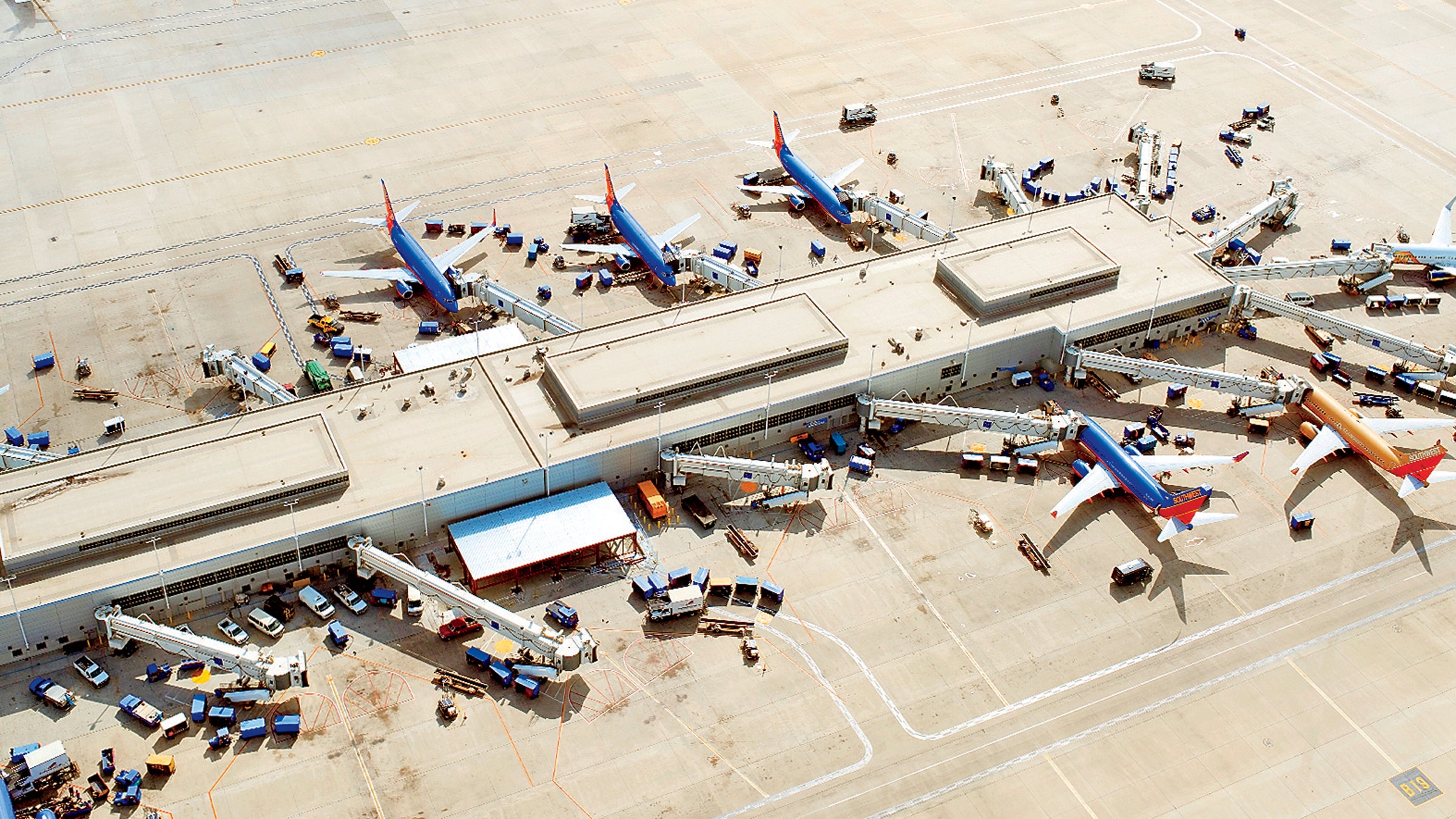
It's getting easier to travel quickly and stay connected while doing it—but there are higher fares and the usual hazards of getting out there to deal with. (Photo: Tony Nagy/Gallery Stock)
We’ve come a long way from 2011’s Tarmacgate, when 100-odd JetBlue passengers were stranded for seven hours on the runway. Delays are down, airlines are investing in posh new terminals, and the app revolution and sharing economy mean that there are more options than ever when it comes to flights, lodging, and staying connected.
Still, it’s not all gravy. Airfares are up, partly due to a spate of mergers, and United, American, Delta, and Southwest now account for the majority of domestic seats. What does that mean? There’s no simple way to game the system, and airlines will gouge you for food, bags, and legroom. Then there are the challenges of staying healthy and safe while abroad. Follow these indispensable rules and they will change the way you travel. Oh, and one more thing: airlines are about to jack up fares for Thanksgiving and Christmas, so book your holiday flights now. Right now.
ADVERTISEMENT
Score the Best Fare
- Start with Hopper, which sifts through more than ten million fare searches and more than a billion flights per day, then crunches the data to tell you the average cost of a flight from, say, Denver to Vancouver over the next six months. Hopper will show you the least expensive route at any given time, then transfer you to the carrier’s website to book it.
- When traveling internationally, “look at intermediate destinations,” says Patrick Surry, chief data scientist at Hopper. “You can often fly somewhere nearby for half the money.” Flying into Madrid is expensive. Portugal? Not so much, and there are connecting trains. You can save upwards of $500 per ticket.
- Beware of domestic discount carriers like Spirit and Frontier. They look cheap on Expedia and Orbitz, but you’ll wind up paying extra for everything from your seat to carry-on luggage ($50 at the gate on Spirit).
- Flights into hubs that serve multiple airlines, such as Denver and Atlanta, are more competitively priced than single-airline hubs like American-dominated Dallas–Fort Worth.
Breeze Through Security…
Clear, a service offering a private, expedited security line, has been promising to revolutionize the way people travel for more than five years, but it’s available in only ten hubs—and four are in Texas. Instead opt for TSA’s precheck program. The application process is downright old-school—you get fingerprinted at a TSA-designated center—but once your known-traveler number arrives a week later, you can enter faster security lanes at 118 airports, from Anchorage to Boston. “Once you do it, you’re hooked,” says Jami Counter, senior director for TripAdvisor Flights. “I get in and out of security at Boston Logan in less than five minutes.” $85.
ADVERTISEMENT
…And Customs
Frequent globe-trotters should consider Global Entry. The application process is rigorous, involving a sit-down interview with a U.S. Customs agent, but once you’re approved you’ll whiz through customs when returning from overseas—and automatically qualify for TSA precheck domestically. $100.
Splurge Smart
A cramped coach seat on a multi-hour flight takes years off your life. To get more room:
- Consider premium economy, available on Air New Zealand, Air Canada, Air France, and Lufthansa. You’ll pay about $500 above standard economy, but the seats are wider and offer more legroom (an extra 20 percent on Air France). Plus, you’re seated in a separate cabin, you board early, you can check two bags for free, and you have access to the airline’s lounge. “U.S. carriers call it the same thing,” says Counter at TripAdvisor Flights, “but they’ve just taken the front of the economy cabin and added a couple inches of legroom.”
- Stateside, show up early. According to Counter, airlines that don’t sell out their business-class seats will often sell affordable upgrades at the gate.
Swipe It
If you’re a business traveler who lives near an airline’s hub (like Delta-dominated Salt Lake City), it’s worth getting a credit card with that airline (Delta’s SkyMiles). You’ll gain status and be able to upgrade on flights or rebook quickly in the event of a canceled one. Everyone else: go with the Chase Sapphire card, which allows you to transfer points to a host of airlines, covers your rental-car insurance, and has no annual fee.
ADVERTISEMENT
Seat Yourself
These days, airlines are billing the skies as a second office or an entertainment center. But it all depends on the plane. Example: American Airlines’ Airbus A319 offers seat-back on-demand TV, Wi-Fi, and an outlet for charging electronics. American’s Bombardier CRJ 200 has none of the above. Before booking, go to SeatGuru and plug in the airline, route, and date of flight. It’ll show you exactly what the plane offers.
Stay Charged…
With Brunton’s new Revolt XL 9000 portable charger, you can power up your smartphone six times while on the run. $110.
…And Always Have the Right Plug
We like Eagle Creek’s Dual Wattage International Converter set. It has five plugs that work from Chile to Belgium and packs into a compact case. $48
ADVERTISEMENT
Eat Here Now
If there’s a better domestic airport-dining experience than Root Down, a farm-to-table restaurant in Denver’s Terminal C, we have yet to find it. The order: Colorado lamb sliders with a seasonal Great Divide on tap.
Avoid These Major Airports
They have the most delayed departures in the country, according to a June 2014 Department of Transportation consumer report.
ADVERTISEMENT
Chicago Midway (MDW): 32.6 percent of flights delayed
Newark (EWR): 31 percent of flights delayed
Baltimore-Washington (BWI): 26.6 percent of flights delayed
Work the Competition
More airlines flying internationally means potentially lower fares. Southwest now flies to Aruba, Jamaica, and Mexico. And the budget airline Norwegian has started crossing the pond, with flights from L.A., NYC, and Fort Lauderdale to London for as little as $250.
Document Everything
Take photos of your passport and credit cards to store in your smartphone and e-mail.
Be Prepared
Depending on where you’re going, carry some combination of these in your first-aid kit:
- Antibiotic ointment
- Band-Aids in two sizes
- Duct tape or occlusive dressing (for blisters)
- Steri-Strips (to close wounds)
- Advil
- Benadryl (if you have an anaphylactic reaction, it may buy time to get to an EpiPen)
- Cipro (a cure-all antibiotic)
- Pepto-Bismol
- Imodium
- Emergen-C ElectroMix hydration powder (packed with potassium and magnesium)
- SteriPen Freedom (to sterilize water)
- Thermometer
- Swiss Army knife with tweezers and scissors
- Purell hand sanitizer
ADVERTISEMENT
Get in the Door
Need a last-minute visa to enter a country? Consider VisaHQ, an expediting service. It costs a little more than going through an embassy—prices vary based on the destination—but pays off. We use it when we need to get writers into, say, Tajikistan on short notice. It will also add pages to your passport with same-day service for $200. (For international travel, you often need four empty passport pages at all times.)
ADVERTISEMENT
Come Back Alive…
If you take even one trip to a semi-sketchy area each year, get a $329 medical membership with Global Rescue. This emergency medevac service has former military personnel on staff and will get you out of Tahiti or Egypt. (Trust us: we’re clients.) Plug in your travel details and an emergency contact pre-trip at globalrescue.com and you’re good to go.
…And Ignore Uncle Sam
Heed the State Department’s travel warnings exclusively and you’ll never go to Mexico. Global Rescue’s risk-rating system (for members only) is easier to navigate, is less conservative, and offers smart information that’s updated constantly. If you’re not traveling to a dicey zone, search for news on Twitter.
Walk Away from the Help Desk
When faced with a canceled flight or missed connection, the natural urge is to harass someone at the nearest service desk. Resist. Skip the agents in airline lounges, too—they’re likely surrounded by entitled business travelers. The best strategy? Rebook through your airline’s app, 800 number, or dedicated 800 number if you have elite status. Or consult the free TripIt app, suggests Tim Ferriss, author of The 4-Hour Work Week. “It’s amazing for suggesting replacement flights and spotting problems before they’re announced on the intercom,” he says.
ADVERTISEMENT
Game the Mileage System
Major airlines are moving away from mileage programs and offering perks based on how much money you’ve spent. “If you’re an infrequent leisure traveler, it’s going to be a lot harder to earn enough miles to get a free ticket,” says Tim Winship, editor and publisher of Frequentflier.com. Here’s the best way to use those miles.
- Burn ’em now. “Hoarding for one big trip is dangerous,” says Winship. “The longer you hold onto them, the less they’ll be worth, because the award prices keep going up.”
- Use them on flights—not cars or hotels. “The value of a frequent-flier mile used for rental or hotel rewards is significantly less than a penny,” says Winship. “A frequent-flier mile redeemed for a flight is closer to 1.2 or 1.3 cents.”
- Use them for last-minute domestic trips. The number of miles you need to book a reward flight—usually 25,000—doesn’t change as the departure date gets closer.
- Beware of upgrades. Stashing for a bump up to business class used to be a go-to strategy, but these days some airlines are charging cash fees on top of the requisite miles (15,000 each way on domestic flights, up to 50,000 each way internationally). “For an upgrade to Europe,” Winship says, “you could be looking at hundreds of dollars over and above the miles you have to redeem.”
- Lounge around. If you regularly travel internationally, cashing in the 50,000 or so miles it takes to gain yearlong access to your airline’s lounge is worth it. “If I’m in an airport for ten hours, I’ll spend $50 to $70 on magazines, food, and Internet access,” says Natasha Martin, the online-marketing specialist at travel company Solimar International. “Getting into a lounge”—where most of those things are free—“saves money.”
ADVERTISEMENT
Balance Your Accounts
Cash or credit? Here’s how to manage your money abroad.
- Use plastic. “Cards are more secure and make it easier to keep track of spending,” says Lonely Planet CEO Daniel Houghton. Plus credit card rates, even with international surcharges, are usually more favorable than rates at local currency exchanges.
- Notify your bank or issuing company before you leave the country so they won’t flag your ATM or credit cards as stolen.
- Carry a couple hundred U.S. in cash as backup in a pinch.
- Keep cards and cash separate.
- In places with tons of red tape—here’s looking at you, Russia!—prepay for as much as possible, like hotels.
Have a Toy Strategy
Fly rods fit in the overhead compartment, but airlines will charge you for bikes and surfboards, and the fees vary widely. Most airlines make you pay for another checked bag if your bike is under 50 pounds and 62 inches. If it’s more than that, American will hit you up for $150 per bike each way, Southwest for $75. US Airways charges $150 each way for each surfboard, even if they’re packed in one bag. Then there are the additional fees airlines often tack on at check-in for size and weight (longboarders, look out). “Always research fees in advance, and show up at check-in with a printed copy of the airline’s rules,” recommends contributing editor Aaron Gulley, who conducts Outside’s annual bike test. If you’re looking at a high fee for your airline of choice, consider one of these options.
- Ship. Get a flat fee from a shipping service. Bikeflights.com and ShipBikes.com offer the most affordable rates for cyclists, and FedEx ground is good for surfboards.
- Rent. Spinlister, originally an owner-to-renter bike service like Airbnb, has expanded into snow and beach sports, offering ski, snowboard, and SUP rentals in 60 destinations.
Handle with Care
If you do fly with your toys, get the right bag for them. For surfboards, shaper Jon Wegener recommends Vitamin Blue, which will customize a bag to your board (from $68). “I like to stick a little cardboard on the top and bottom to strengthen it,” Wegener says. For bikes, we like Evoc’s Travel Bag, a burly soft shell that keeps your ride safe without adding much weight ($475).
ADVERTISEMENT
Roam Free
It’s easier than ever to stay in touch from afar, but the options are overwhelming. Here’s how to simplify.
For quick trips: If you and your friends and family use Apple products, switch your iPhone to airplane mode—which turns off roaming charges and data—turn on Wi-Fi, and use FaceTime. It costs nothing.
For business travel: Skype. Some travelers prefer Viber, which has a better smartphone interface, but you can connect for free only with other Viber users. Skype has greater reach.
For frequent urban globe-trotting: T-Mobile’s new Simple Choice plan with Simple Global (from $50 per month) covers domestic use and offers unlimited data and texting in 120 countries. “It’s the best international plan I know of,” says G Adventures CEO Bruce Poon Tip. Other options require having your phone unlocked by your provider, which is now easier to do with most major carriers. Then you can either purchase a local prepaid SIM card to access in-country networks or use KnowRoaming. Install the $35 SIM-card sticker and download the free app to pay for minutes online as you need them, with close-to-local rates in 220 countries.
For expeditions: DeLorme’s InReach Explorer is a text- and e-mail-only satellite communicator with 100 percent global coverage, and it’s cheaper than a sat phone. When you’re in the back of beyond, you don’t need to make small talk. $380.
ADVERTISEMENT
Know the Road Rules
Renting cars internationally is tricky. “Each country has separate regulations, and each car-rental company may differ in their basic policies,” says Paula Lyons, a former rental agent and founder of Best-Car-Rental-Tips.com. “Fully research your preferred provider for a particular city or country for all rules.” A few other pointers:
- Always book with the car company rather than an outfit like Expedia in case something goes wrong. The rental company is less likely to help if you booked through another site.
- U.S. auto-insurance typically won’t cover international rentals, but if you have a decent travel credit card—like Chase Sapphire or American Express Platinum—you’re taken care of for theft and collision damage. Just be sure and call to confirm specific policies.
- If you’re accident-prone, opt for the pricier rental-company insurance. If you don’t and you wreck, you’ll likely be billed for every day the rental isn’t in service, among other charges.
- In developing countries, consider hiring a driver. “In India or even Tanzania, I tend to get a car with a driver,” says M. Sanjayan, executive vice president of Conservation International. “The added cost is relatively small, and a local driver becomes a guide for everything from parking to police stops designed to extract a little money.”
Download These Apps
TripIt: Still the best for trip planning and storing all your itinerary info in one place. Free; Android and iOS
PathWrangler: Streamlines group travel with everything from shared finances to shared photos. Free; Android and iOS
Evernote Premium: “For storing offline trip info, maps, spreadsheets, and photo notes, it’s my most important app,” says Kathy Dragon, executive director of Whole Journeys, Whole Foods’ new travel outfitter. $5; Android and iOS
HotelTonight: Offers last-minute deals on unsold rooms in 450 destinations worldwide. Free; Android and iOS
Currency: For accurate, real-time exchange rates. $1; iOS
GateGuru: Simplifies day-of air travel, from recommending restaurants to tracking your flight. Free; Android and iOS
