Published July 19, 2018 12:00AM
If you buy through our links, we may earn an affiliate commission. This supports our mission to get more people active and outside.Learn about Outside Online's affiliate link policy
The Most Surprising Ways to Use Outdoor Gear
A stove to repair a dent and other totally unexpected uses for stuff you own
Sometimes the best secondary uses for gear aren’t listed on the tag.
Versatile gear is great. Having a pack that is as good for travel as it is for backpacking means you have one less bag in your closet. But the best alternative uses for products are rarely listed in manufacturers’ descriptions. So I called on several professional athletes to see how they've used well-known items in unexpected ways. Their responses were interesting to say the least.
Jetboil Flash System for Removing Dents
Darin McQuoid, Kayaker and Photographer
McQuoid put a hefty dent in the front of his whitewater kayak while paddling in Japan in 2012. After he overestimated the depth of a pool at the base of a 40-foot waterfall, the bow connected hard with the bottom—“pig-nosing,” in kayaking terms—and caving in about six inches. McQuoid was about a week into the trip with a week and a half more to go, so he used his Jetboil stove to heat up some water, which he let sit in the plastic nose of the kayak. That loosened it up enough for him to pop out the dent.
ADVERTISEMENT
Therm-a-Rest Foam Pad for Camera Padding and Shoe Insoles
Eric Larsen, Polar Explorer
“RidgeRest sleeping pads are the ultimate Swiss Army knife, I use them for everything,” Larsen says. He lines his packs and duffel bags with the foam pads for gear protection when he travels, even making a rectangular box out of one (with liberal amounts of duct tape) in 2014 as protection for his Handycam. He also used a pad to fashion insoles. “I had a guy on one of my South Pole trips who was experiencing discomfort in his boots and getting blisters,” Larsen says. “We cut out insoles from the RidgeRest and they worked really great for a little more insulation and comfort.”
ADVERTISEMENT
Dental Floss for Stitching Up a Tent
Lexi DuPont, Skier
“I went on my first big overnight expedition in Svalbard, Norway, and my friend brought along dental floss,” DuPont says. “A crazy storm with strong winds came through and ripped the wall of our tent in half. We were able to sew the tent back together with the floss. We would have been sleeping in the elements without it.” She’s still using the tent ten years later. “Floss is structurally sound for fixing your gear. Like duct tape, you just don’t leave home without it.”
ADVERTISEMENT
Inflatable Sleeping Pad for a Floaty
Brody Leven, Ski Mountaineer
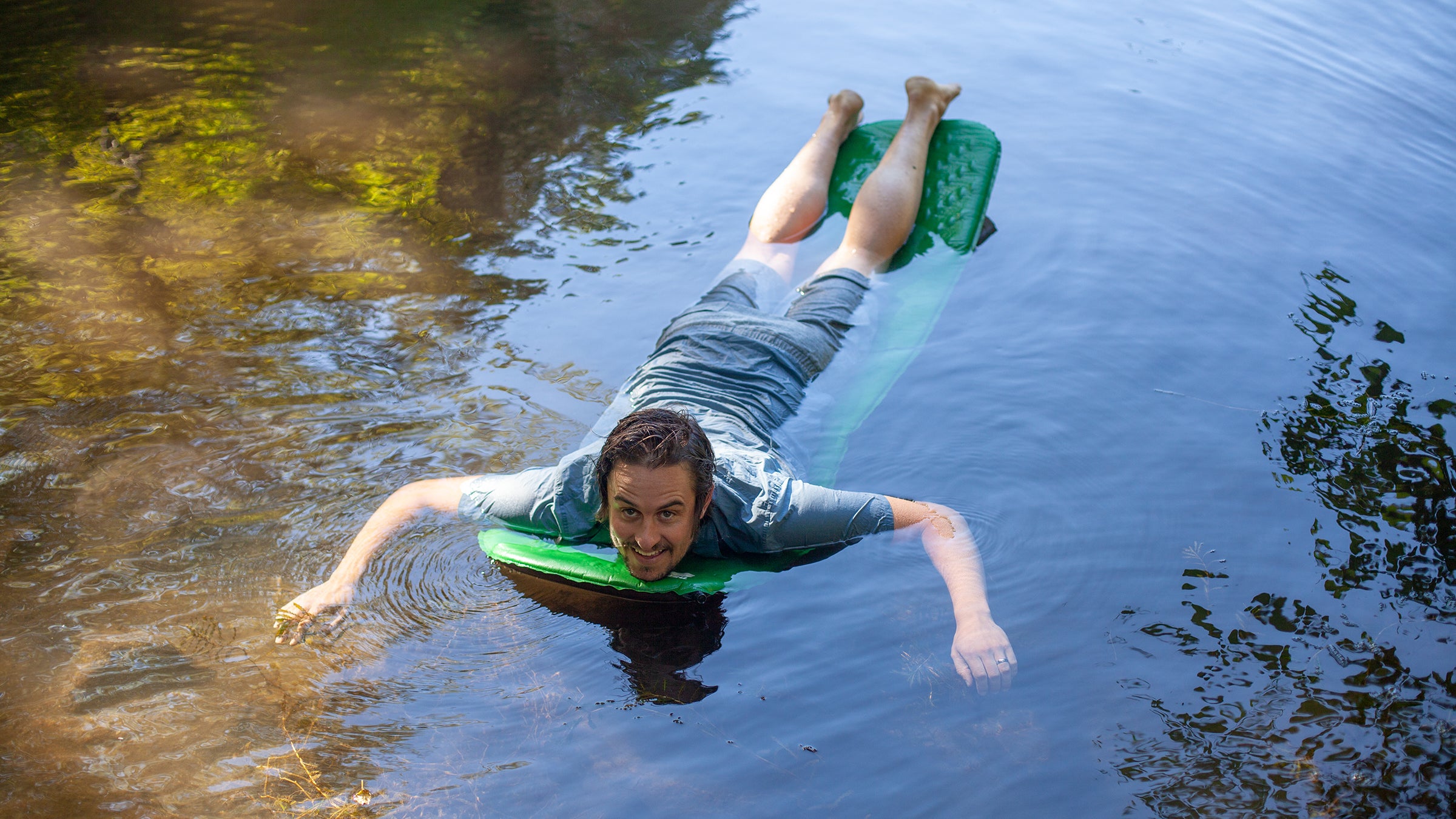
Leven likes to use his pad to relax on the water during warm trips. “They sink a little, so you submerge enough to cool off,” he says. Think of it as a packable pool toy for alpine lakes. I’m partial to the Therm-a-Rest Trail Scout.
ADVERTISEMENT
Arm Warmers as Ice Packs
Stephanie Violett, Ultrarunner
Turns out that something meant to keep your forearms warm also does a pretty great job of cooling you down. “I have taken arm warmers, filled them with ice, tied off the ends, and wrapped them around my neck as a kind of ice bandana,” Violett says. She does this on hot training runs using ice from an insulated bottle, but Violett says dipping the arm warmers in a stream also works for a quick cooling fix. Any pair, like Buff’s UV Arm Sleeves ($25), will do.
