Published March 17, 2015 12:00AM
Paleo Performance Recipe: Cherry Cashew Protein Bars
A new cookbook breaks some traditional Paleo rules. Result: It's packed with recipes you'll actually want to make.
Stephanie Gaudreau's paleo plan is nutrient-dense but doesn't require calorie-counting.
Published a decade ago this year, The Paleo Diet For Athletes is the Bible for Stone Age sports enthusiasts.
Written by Colorado State University professor Loren Cordain and TrainingPeaks co-founder Joe Friel, the book brought the Paleo diet to runners and cyclists by allowing otherwise verboten carbohydrates like bread and refined sugar in limited amounts. The changes gave athletes a source of quick-burning fuel before, during, and after exercise, while still mostly cutting out potentially inflammatory grains.
But while eating like a caveman can benefit some athletes—particularly with weight-loss goals—it can also be damned boring. When Outside’s then-senior editor John Bradley tried the diet for eight weeks in 2008, the endless parade of meat and vegetables left him feeling unsatisfied and starving. “I grew so tired of the approach that boredom or upset stomachs would end meals before I had eaten enough,” he wrote.
Bradley's not alone. “Steamed fish and broccoli for breakfast doesn’t exactly do it for most people,” says Stephanie Gaudreau, author of The Performance Paleo Cookbook. Her strategy to keep the Paleo diet interesting: blow it up with tasty, world-influenced recipes that anyone, not just starving athletes, would want to eat.
“I didn’t want people to have to think, ‘Oh, let me think about the glycemic index of this melon before I eat it.’ That’s not how real people operate.”
ADVERTISEMENT
Gaudreau, a former champion downhill mountain biker who taught high school science for 12 years, discovered Paleo six years ago when a racing buddy introduced her to the diet. Originally skeptical, she became a convert after she logged a new personal best in the 56.5-mile Vision Quest mountain bike race and experienced chronic health problems, like bike-induced back pain, fade while on the diet.
“We’re subjecting ourselves to so much wear and tear and so much inflammation as it is that the quality of what we eat is really important,” says Gaudreau. “So aside from just thinking of food as protein, carbs, and fat, it’s the nutrient density of the foods that are in the Paleo diet that are going to help.”
Now a competitive Olympic-style weightlifter, Gaudreau says she originally decided to write The Performance Paleo Cookbook when she realized that Cordain and Friel’s book was geared toward endurance sports rather than strength and power sports.
“The nutritional requirements and foundations and the template look kind of the same,” she says, “but the fueling requirements are different.”
ADVERTISEMENT
Much of The Paleo Diet For Athletes' protocols focus on training the body to feed off of its fat reserves, a readily accessible and energy-dense source of fuel. But while that's a solid strategy for marathoners worried about hitting the wall when their muscles deplete their glycogen stores, it's less useful for power athletes like CrossFitters who need to stock up on easily digestible energy in the form of carbs.
“What the power and high-intensity community is finding is that they need more carbohydrate intake than they can get from a sweet potato or some other kind of starchy vegetable,” says Gaudreau. “And I think that they’re having a hard time thinking outside the box.”
To that end, one of Gaudreau’s main goals in writing The Performance Paleo Cookbook was to turn readers on to novel, Paleo-sources of carbs that they might have missed. Lotus root, the holepocked vegetable familiar to most Americans as a garnish at Asian restaurants, gets fried into crispy chips, while sunchokes sub for roasted potatoes in one dish.
Traditional carb-heavy foods aren't necessarily forbidden, either: white potatoes make an appearance in the cookbook, done up with duck fat and fermented black garlic. While spuds have typically been on Paleo dieters’ hit list, Gaudreau writes that “if your blood sugar regulation and body composition are good, there’s no good reason to keep them out of your diet, unless you're intolerant of nightshade.”
ADVERTISEMENT
In the end, Gaudreau’s goal is to create a Paleo program that anyone can stick to. “I didn’t want people to have to think, ‘Oh, let me think about the glycemic index of this melon before I eat it,’” she says. “That’s not how real people operate.”
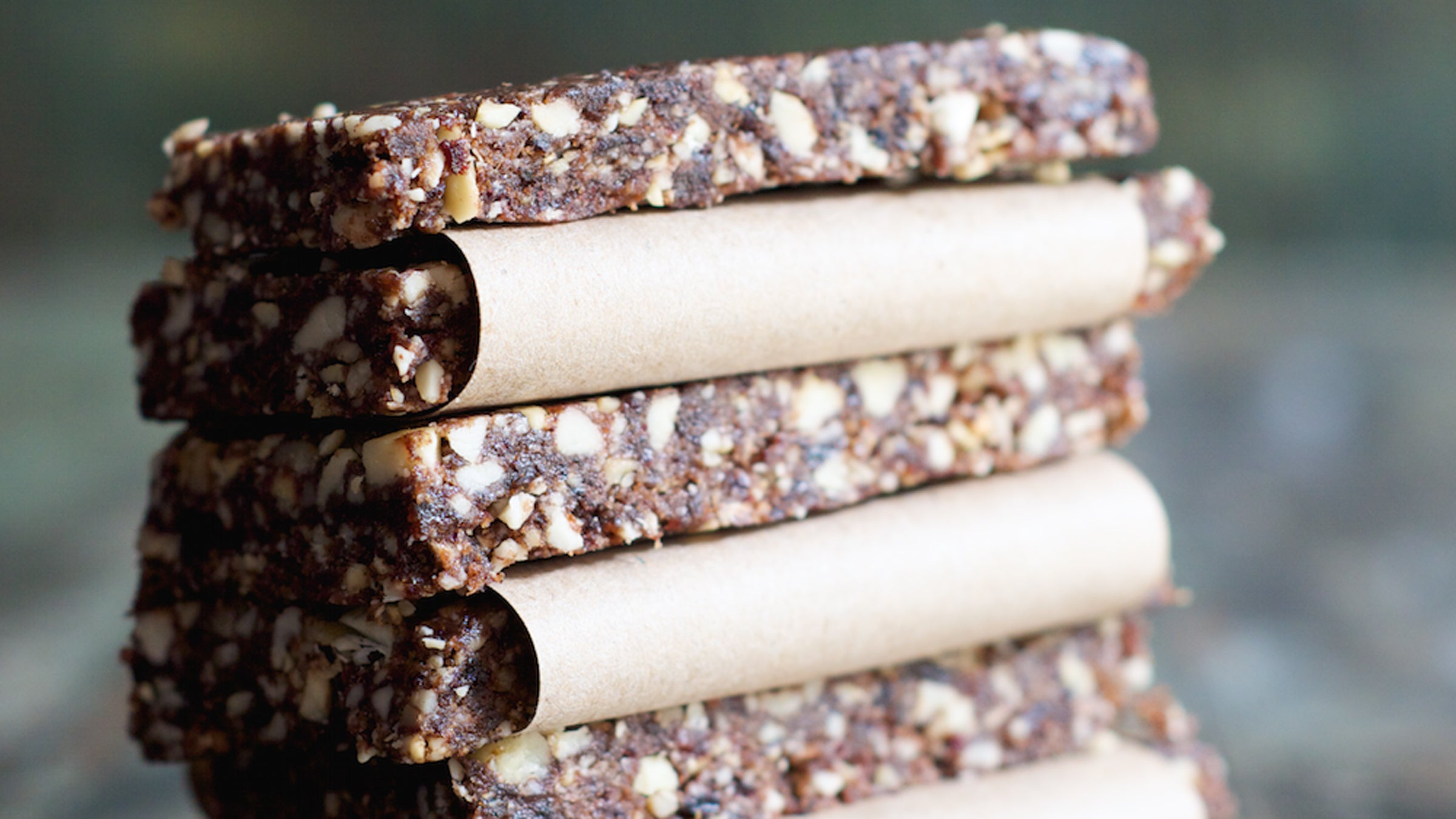
Recipe: Cherry Cashew Protein Bars
“People were always asking me, “I need a dairy-free, egg-free protein bar that’s not meat,” says Gaudreau. “And I was like, well, you could try crickets.” The creepy-crawlies are one of the world’s most sustainable sources of animal protein and one that would have been easy for prehistoric people to catch.
Pound-for-pound, they’re also higher in iron, calcium and B vitamins than beef. You can buy cricket flour (just dried ground-up crickets) online. (Gaudreau gets hers from an organic supplier in Canada.)
Ingredients:
- 3⁄4 cup chopped unroasted cashews
- 1⁄4 cup cashew flour
- 1⁄2 cup cricket flour
- 1⁄4 tsp sea salt
- 6 large Medjool dates, pitted
- 1⁄2 cup dried blueberries
- 3⁄4 cup dried cherries
- 1 tsp vanilla extract
- Coconut oil
Preparation:
- Line an 8-inch x 8-inch glass dish with plastic wrap or waxed paper and set aside.
- Place the chopped cashews, cashew flour, cricket flour, and sea salt in a food processor and pulse until they form coarse crumbs. Some pieces of the nuts may be larger and some smaller—that’s okay. Pour out into a medium bowl.
- Now add the dates, blueberries, cherries, and vanilla extract to the food processor and process this until it comes together and forms a sticky ball. Add this to the chopped nut mixture. Add a few drops of coconut oil to your hands to keep everything from sticking. Work the fruit and nuts together with your hands until everything is combined. You’ll have to work at it a bit! Place it into the glass dish, and press it down until it’s one even layer. Freeze this for 30 minutes, then turn it out onto a cutting board and slice into bars with a sharp knife. Wrap them in plastic for storage.
- Store in the freezer for up to a month.
