Published May 19, 2020 05:35PM
How to Open Up Your Shoulders So You Can Run Tall
Two easy arm swing stretches to waken your shoulders after hours hunched over computers and phones.
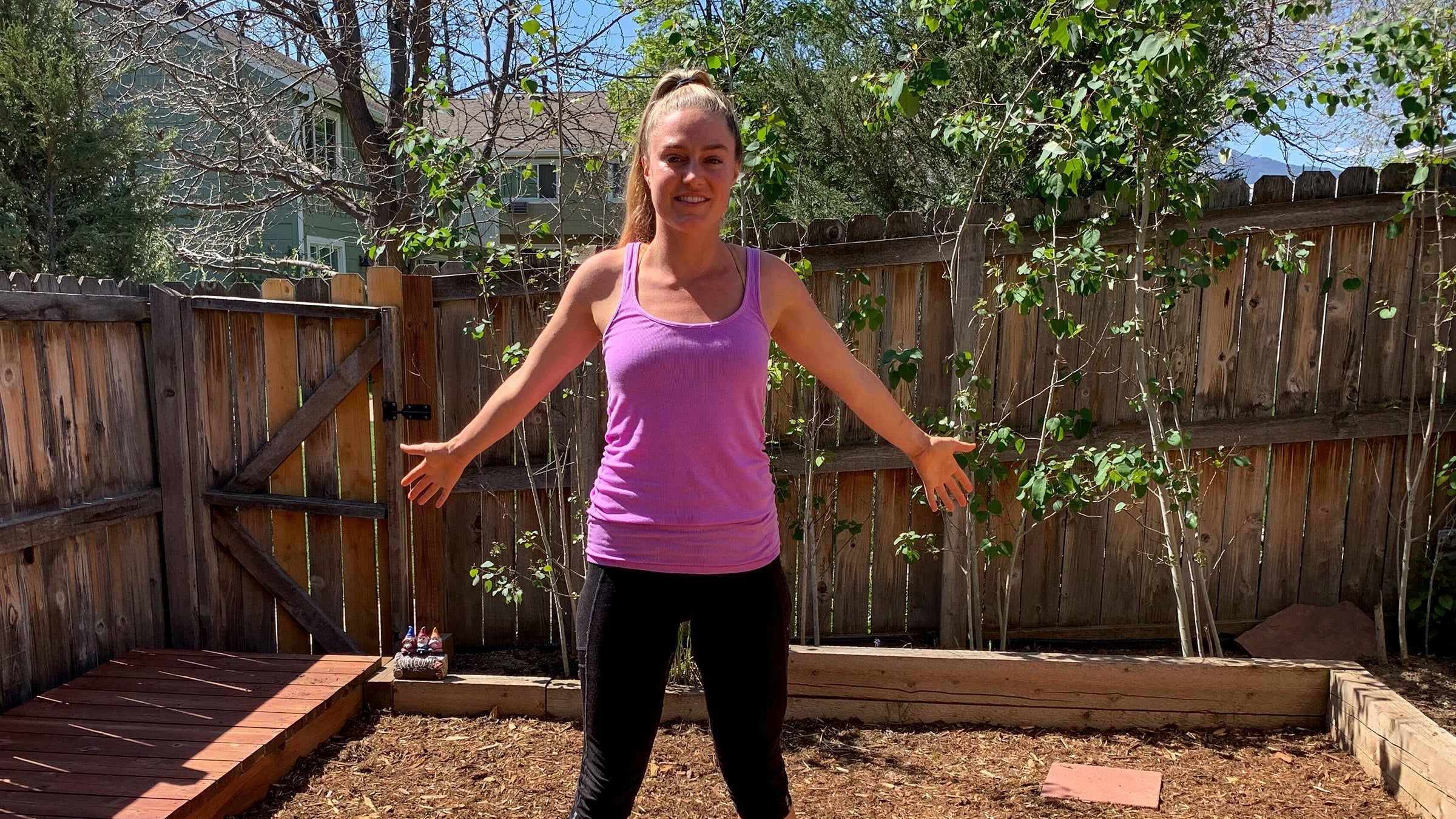
(Photo: Erin Paul)
Chances are, as you’re reading this, you’re sitting, hunched forward over a computer or phone. That’s part of modern life, even in “normal” times. Today, with all of our conversations, meetings, work, entertainment, parties and more conducted online it is even worse; we rarely look up and step away.
And that’s a problem. “I’m realizing I feel awful, because I’m not moving except for runs and a couple walks here and there,” Mary Cain told Jen Ator of Women’s Running last week. We need movement, and, in this abnormal context, we need to take active measures to ensure we give our bodies chances to open up to the range of motion they would have in the outdoor, physical, diverse context they are supposed to be in.
With that in mind, we would all do well to adopt a plan to activate our bodies with regularly scheduled, strategic drills and stretches to counteract what sitting is doing to our posture and mobility. These are exercises we should be doing anyway, and stay-at-home regulations provide both an incentive and a new context where we might be able to do them more comfortably.
Shoulders, Pivotal But Overlooked
Some days I’m more disciplined than others when it comes to an all-day mobility routine, but I’m finding that, more than ever, I need to at least open my shoulders and get myself upright before I can run comfortably.
Shoulders are too often overlooked by runners. You wouldn’t think that they’d be that important, compared to legs that support and power us, or even arms that drive. But shoulders are for the arms what hips are for the legs, pivotal connection points, and they too get compromised in our current environment.
“Everything we do is forward,” says Laura Bergman, rehabilitation specialist and owner of Fascia Lines clinic in Winchester, Va. “If we look at life as a workout, we’re doing a whole bunch of forward exercises, so that muscles get really short in the forward position.” Our shoulders get rotated so far forward that we can’t comfortably swing our arms backwards.
“You try to have an arm swing, and you can’t because your shoulder can’t go back,” says Bergman. So your arms end up staying in front, reaching forward or rotating and moving across the front of your body. When your arms stay forward, your weight stays forward, your leg swing has to come forward to support you, you tend to bend at the waist, and because your hips are unnaturally rotated, you can’t drive your leg back for an effective push off. To get your elbows back consistently may require some release and retraining to create the necessary range of motion and postural endurance.
ADVERTISEMENT
Shoulder Swings To Do Now, Before Every Run
Even if you’re not ready to invest the time for more robust shoulder intervention, every runner can benefit from doing dynamic warm-up moves before every run. Physios Jim and Phil Wharton recommend two arm swing stretches to cue an upright posture, get shoulders back, and activate the muscles that will keep them there.
During years as a cross-country coach, these were the first things our squads did every day, transitioning young runners from they day spent over desks and books. I still find them particularly effective and important now as I uncrumple myself from hours hunched over my computer screen and phone to prepare to run tall.
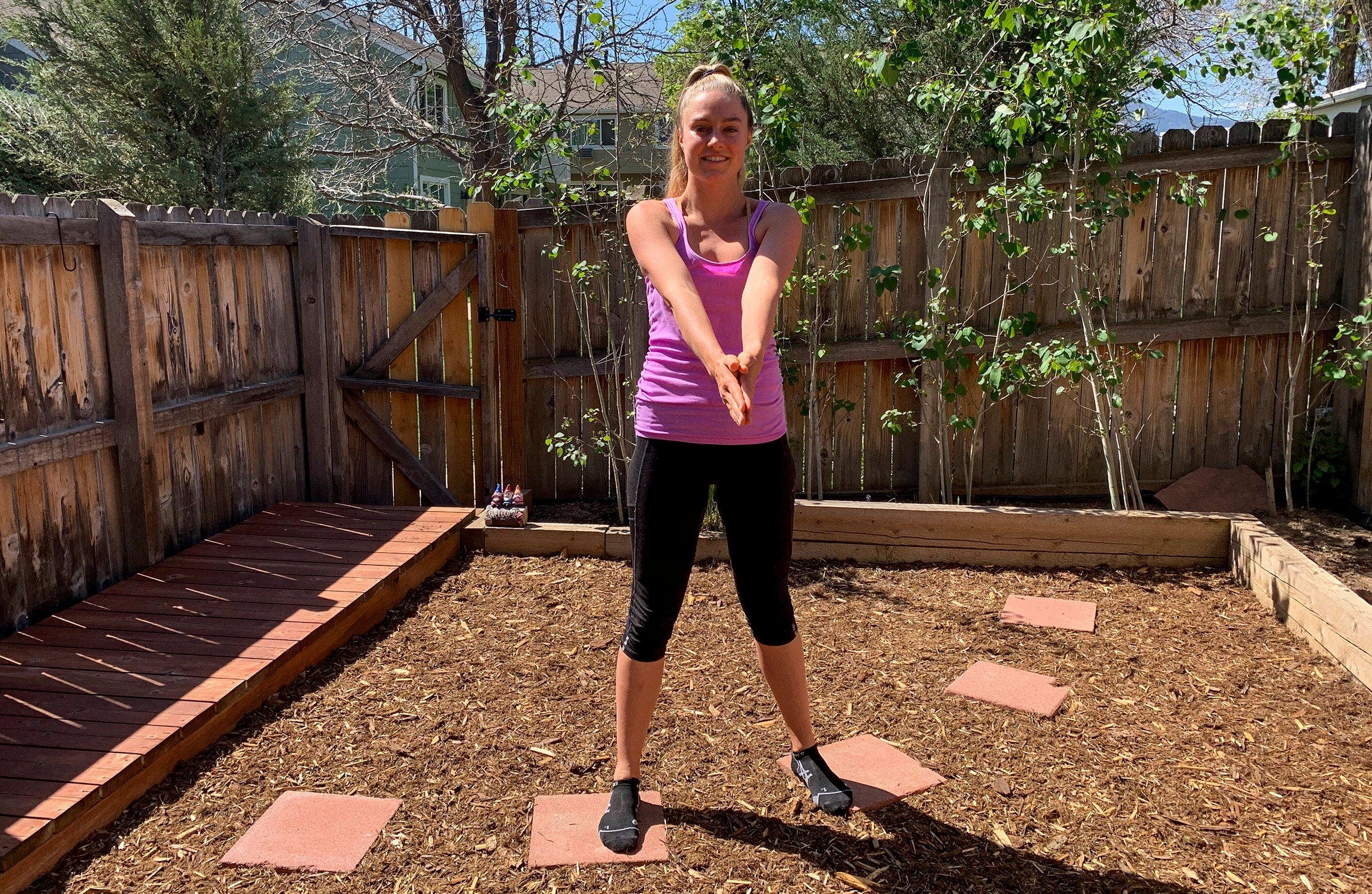
Photo: Erin Paul
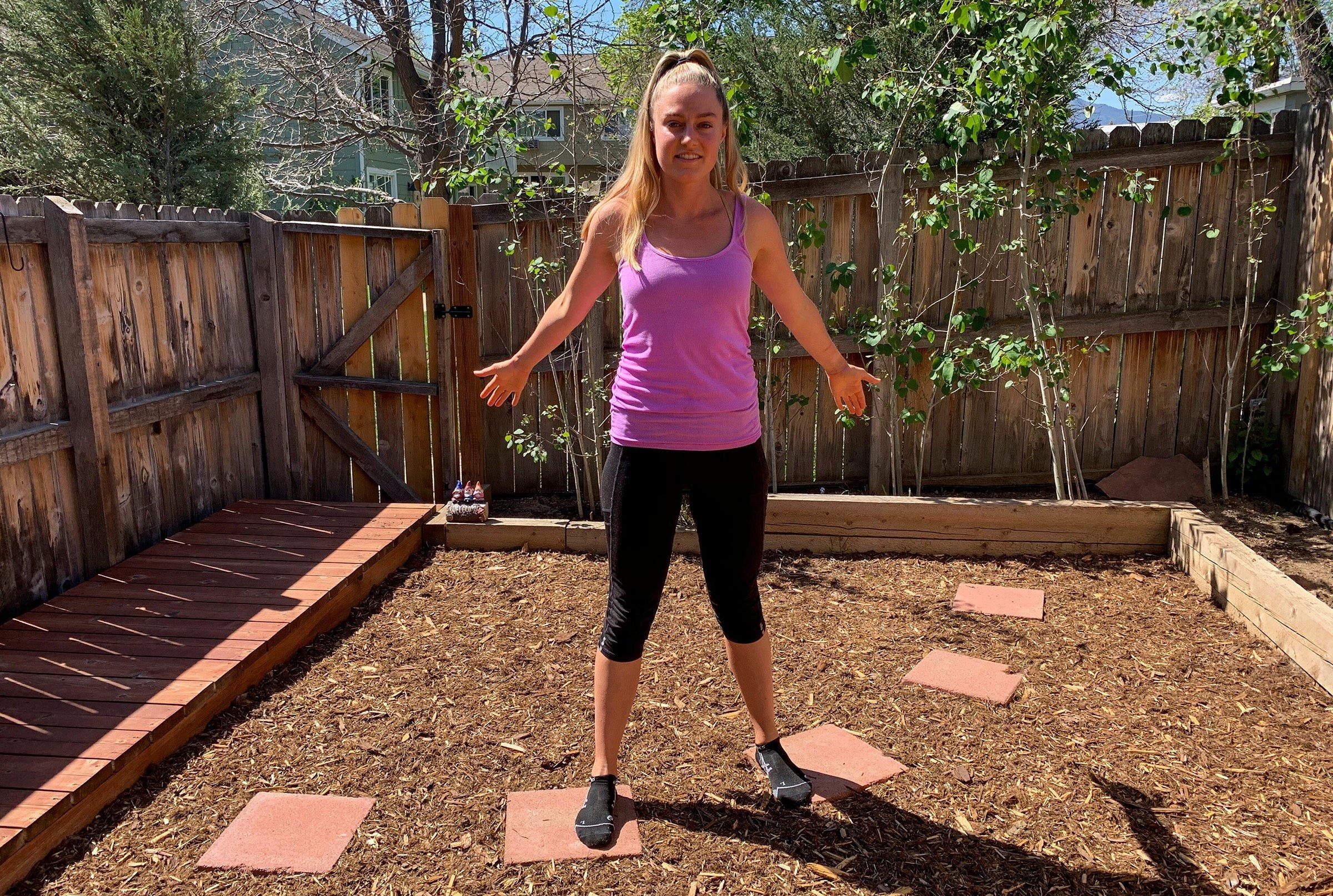
Photo: Erin Paul
Start with a series of open-arm swings designed to stretch the muscles in the chest and shoulders using the opposing muscles between your shoulder blades.
- Stand tall with feet shoulder-width apart.
- With arms straight, bring your hands together in front of you at about waist height.
- Inhale.
- Open your arms and swing them back as far as they can go, contracting the muscles in the middle of your upper back so that it brings your shoulder blades together.
- Exhale.
- Swing your arms forward and repeat, raising them slightly every time until you reach shoulder height.
- Drop your arms back to the starting position, at waist height, and work up the body a second time.
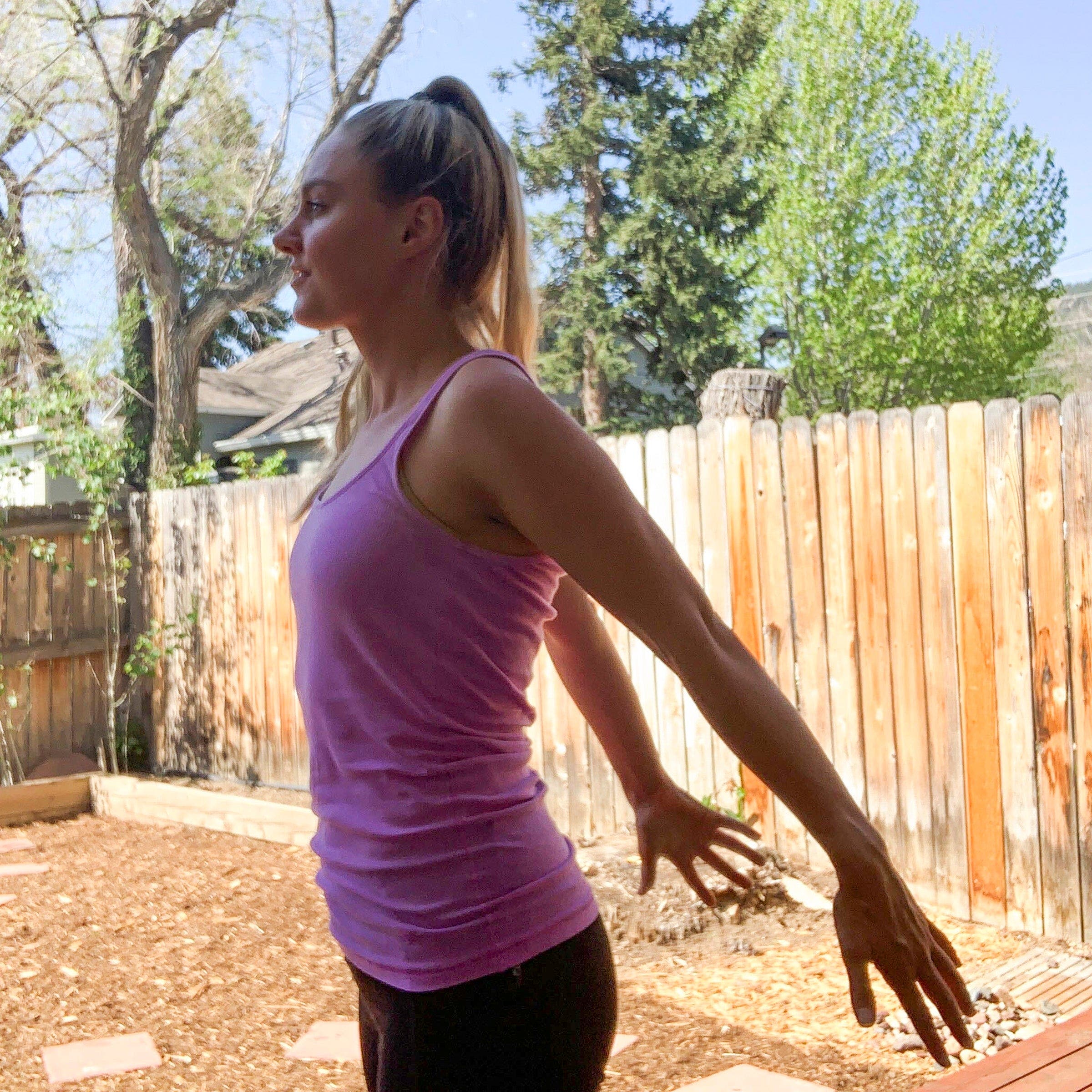
Photo: Erin Paul
Second, do a series of arm swings that stretch the front of your upper arms and shoulders while working the muscles on the backside, similar to the running motion.
- Start standing tall with feet shoulder-width apart and hands comfortably by your sides.
- Swing your arms straight back, keeping your elbows locked and palms facing each other. Keep your shoulders low and relaxed.
- After a few swings to open up, touch your fingertips together at the back of the stretch or gently interlace them.
- Keeping your elbows locked straight, gently raise your hands slightly while pulling your shoulders back and down, squeezing your shoulder blades together.
- Hold for 2 seconds and release. Do 10 reps.
Shoulders activated, reach up to the sky and stretch to your full height, then drop your arms down and back while keeping your posture tall—and run lightly and efficiently down the street.