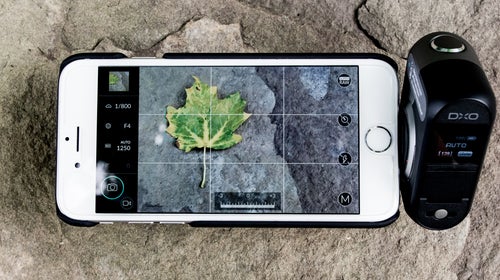

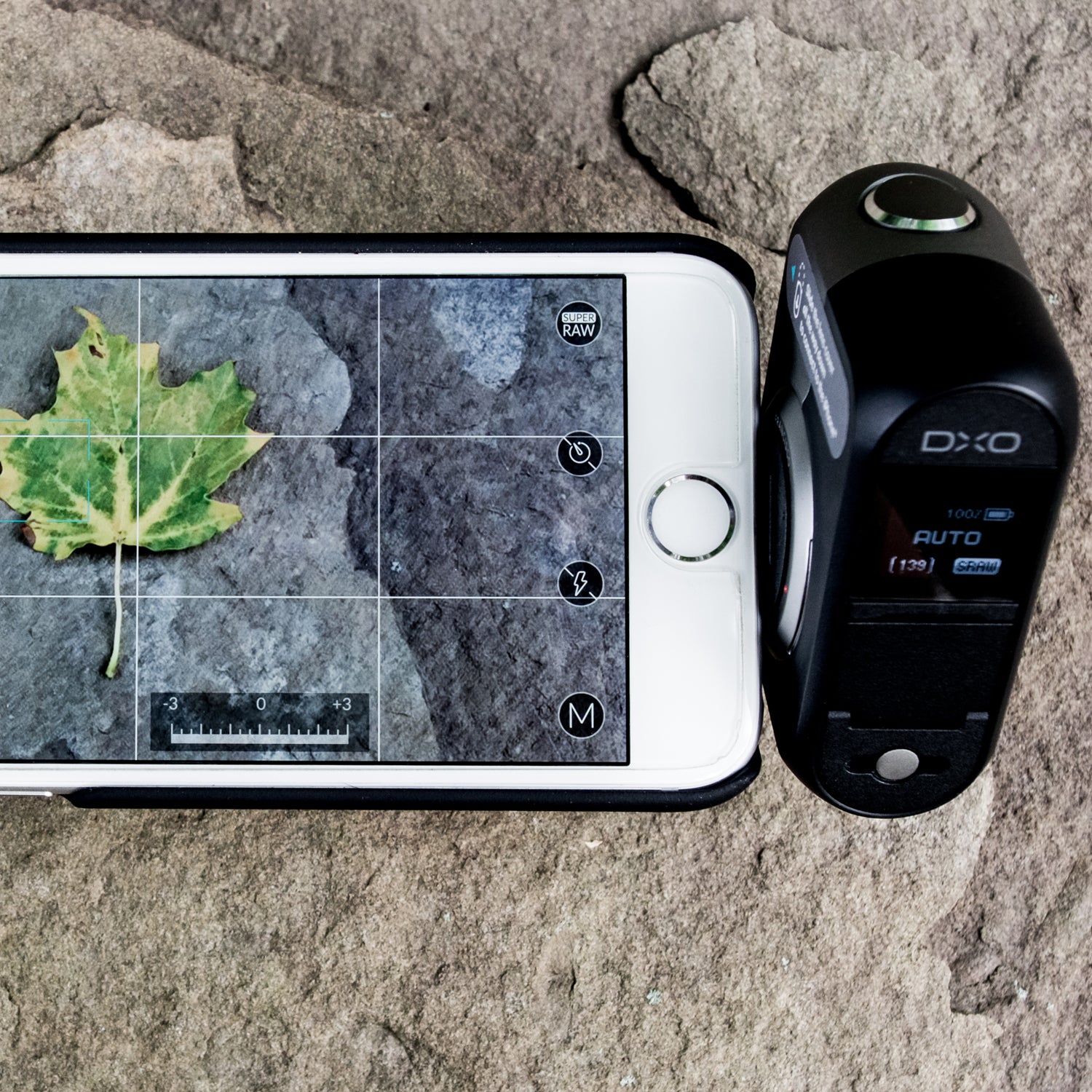
In June, DxO released a device that turns your phone into a camera rivaling some high-end mirrorless options on the market. After a month of testing, I’ve found this little device—smaller than a GoPro Hero4—to work brilliantly.
The One plugs into the Lightning port on your iPhone (sorry, currently no Android compatibility), converting the phone into a 20.2-megapixel powerhouse that snaps pictures that are nearly as good as those from a camera like the $1,000 Nikon 1 V3.
Your phone controls the camera through an app, with the screen acting as viewfinder. The gorgeous, full-size RAW images (for better clarity and easier editing) and HD video the camera produces are stored in a microSD that slots into the DxO. Smaller JPEGs get stored on your phone and can be instantly uploaded to social channels.
At $600 (without the phone), the DxO costs about $400 less than the Nikon 1 V3, but it’s still pricey. It doesn’t have all the functionality of that camera, but it does have pro-level camera controls, including an adjustable shutter that goes all the way from 15 seconds for long exposures down to 1/8000th for capturing high-speed action. The aperture opens to F1.8 for low-light situations, and there’s an astounding ISO range, from 100 to 51,200. I was impressed with how clean the high-ISO images looked, as they typically tend to be grainy. Of course, there are also shutter and aperture presets and a full automatic mode.
Plus, the DxO One comes with excellent desktop-editing software, including DxO’s FilmPack 5, basically a set of Instagram filters on steroids. The images are big enough and high-res enough that they can be easily touched up in Lightroom or Photoshop.
There are some downsides: I found the DxO hard to hold onto in certain situations, so I’d like to see a better grip built into future versions. And the DxO’s shutter is slow to refresh, which means the continuous shooting mode is weak. Nonetheless, I’ve yet to find a reason to leave this camera at home.